As the Internet of Things (IoT) continues to permeate every industry—from precision agriculture in rural India to smart factories in urban centers—the architectural choices made at the start of a project have long-lasting implications. For engineers and architects, the primary decision often involves selecting a framework that is both flexible and scalable. In 2026, open-source IoT frameworks have reached a level of maturity that rivals proprietary solutions, offering the added benefits of community support and no vendor lock-in.
This guide compares the top open-source IoT frameworks designed for building scalable, enterprise-grade architectures.
1. ThingsBoard: The Professional Choice for Device Management
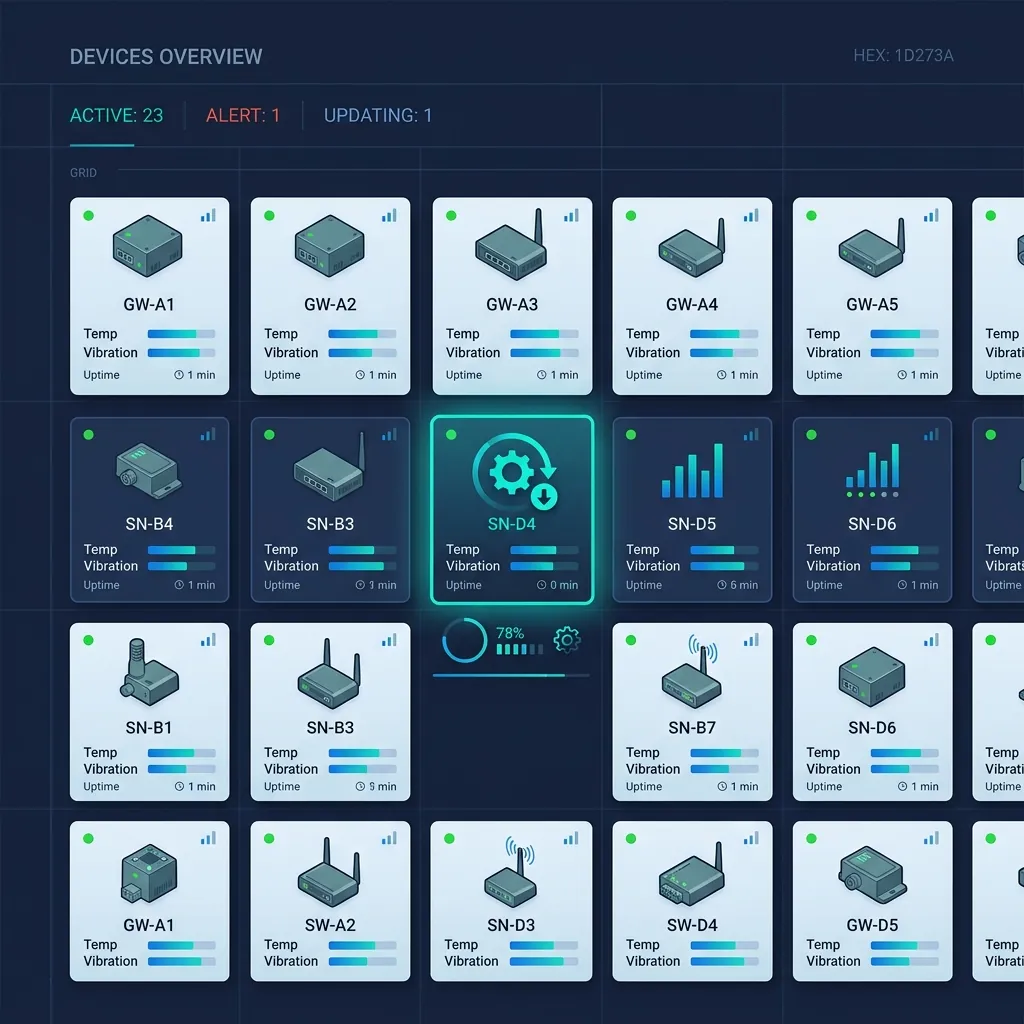
ThingsBoard remains a heavyweight in the open-source world, particularly for its powerful device management and visualization capabilities. It provides a comprehensive solution for device connectivity, data collection, processing, and visualization. Its rule engine is particularly robust, allowing for complex data processing flows with minimal coding. In 2026, its support for multi-tenancy and highly scalable microservices architecture makes it the go-to for multi-site manufacturing deployments.
2. Eclipse Kura: Edge Computing Excellence
For projects that require significant processing at the edge, Eclipse Kura is a leading choice. It is a Java/OSGi-based framework for IoT gateways. Kura provides a set of services for managing gateways, configuring network interfaces, and communicating with IoT devices. Its strength lies in its modularity and its ability to act as an "edge compute" layer, reducing the need for constant cloud connectivity and lowering latency for critical operations.
3. Mainflux: The Modern Cloud-Native Framework
Mainflux is a modern, high-tech, and scalable open-source IoT platform written in Go. Its microservices-based architecture is designed for the cloud, and its use of Go ensures high performance and low resource consumption. Mainflux is particularly well-suited for large-scale deployments where high throughput and security are paramount. It supports multiple protocols (MQTT, HTTP, WebSocket) and provides a multi-tenant environment out of the box.
4. DeviceHive: High-Performance Data Processing
DeviceHive excels in handling massive volumes of data from thousands of connected devices. It offers a rich set of APIs and supports a wide range of devices and platforms. For architects building systems that require real-time data analytics and high-velocity data ingestion, DeviceHive's integration with Big Data tools like Spark and Cassandra makes it a powerful contender.
5. Kaa: Multi-Protocol and Carrier-Grade Scalability
The Kaa IoT platform is built for high availability and carrier-grade scalability. It supports a vast array of protocols and provides a highly flexible middleware for building complex IoT ecosystems. Its point-and-click configuration makes it accessible for faster prototyping, while its underlying architecture allows it to scale to millions of devices as the project matures.
Technical Comparison Table
| Framework | Language | Key Strength | Best For |
|---|---|---|---|
| ThingsBoard | Java | Visualization & Rules | Enterprise Device Mgmt |
| Eclipse Kura | Java/OSGi | Gateway Management | Edge/IIoT Gateways |
| Mainflux | Go | Cloud-Native Performance | High-Throughput SaaS |
| DeviceHive | Java/C++ | Big Data Integration | Real-time Analytics |
Conclusion: Selecting the Right Foundation
The "best" framework depends entirely on your project's specific constraints. If visualization and rapid rule deployment are critical, ThingsBoard is the clear winner. For edge-heavy industrial gateways, Eclipse Kura is unsurpassed. If you are building a modern, cloud-native SaaS for IoT, Mainflux offers the best performance-to-resource ratio.
AdaptNXT specialization in IoT architecture helps you choose, deploy, and scale these open-source foundations. Connect with our IoT architects to design your next scalable system.