
By an industry veteran with 30 years in tech.
In technology, there is no such thing as a free lunch. Every giant leap forward casts a shadow, and the Internet of Things (IoT) casts a particularly long one.
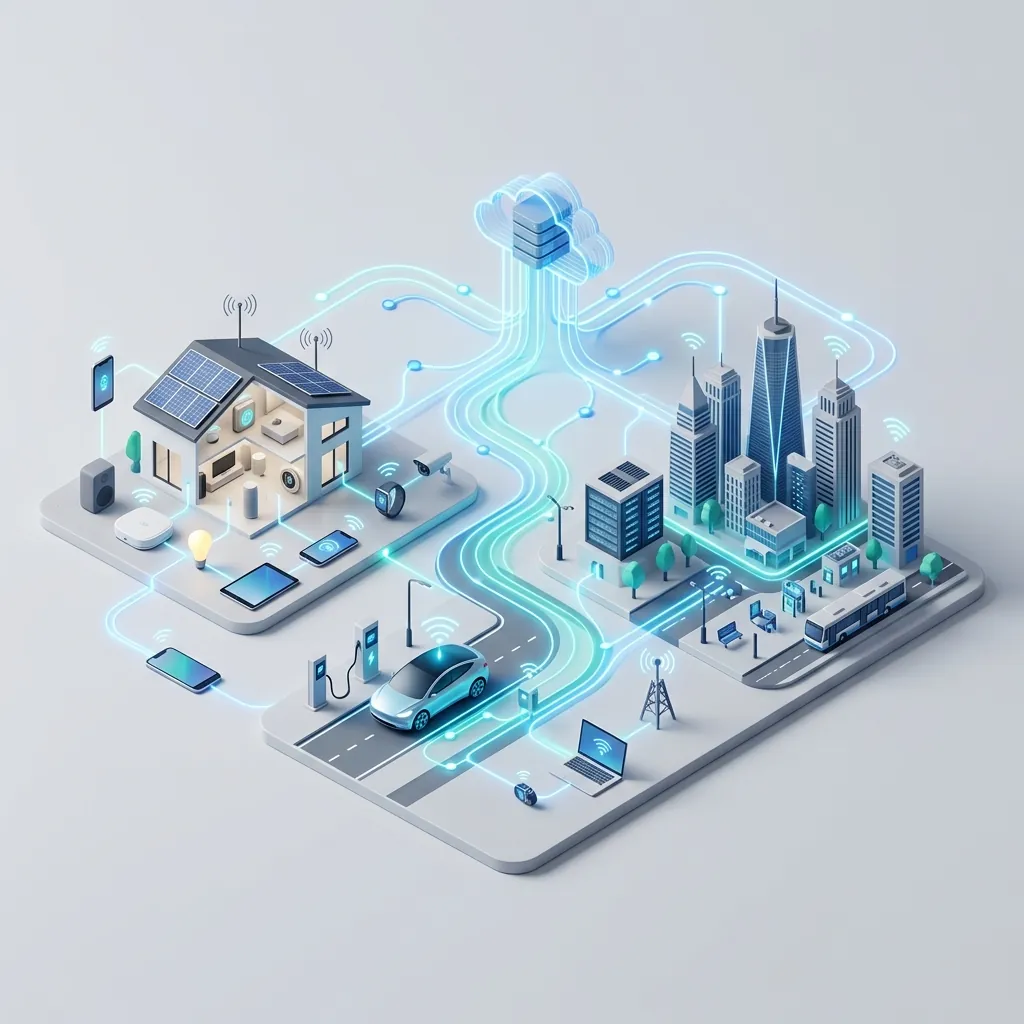
We are currently connecting physical objects to the internet at a staggering rate of over 120 new devices every single second. By the end of this decade, there will be tens of billions of connected devices blanketing the globe.
This hyper-connected reality promises a utopian vision of efficiency and convenience. But it also introduces vulnerabilities on a scale we have never seen before. To truly understand IoT, we have to strip away the marketing hype and take a hard, honest look at both sides of the coin.
Here are the greatest advantages and the most alarming disadvantages of the IoT revolution.
The Advantages: Why We Are Building It
The adoption of IoT isn't driven by a desire for cool gadgets; it is driven by undeniable, hard ROI (Return on Investment).
1. Unprecedented Efficiency and Automation
This is the holy grail of IoT. By allowing machines to communicate with one another, we remove the bottleneck of human intervention. A smart factory can monitor its own assembly line, identify a bottleneck, and adjust the speed of the conveyor belt automatically. Less human intervention means faster processes, fewer manual errors, and a massive boost in productivity.
2. Massive Cost Savings
Efficiency directly translates to saved money. For consumers, smart thermostats learn habits and reduce energy bills. For enterprises, the savings are astronomical. Predictive maintenance allows airlines to fix jet engines before they fail, saving them from the catastrophic costs of delayed flights and grounded planes.
3. Data-Driven Decision Making
Before IoT, businesses operated largely in the dark, relying on historical data and gut feelings. IoT turns the lights on. It provides a real-time, 360-degree view of operations. A retailer knows exactly how many people walk past an aisle, and a farmer knows the exact moisture level of their soil, allowing for hyper-optimized decision-making.
4. Improved Quality of Life and Safety
In healthcare, IoT is literally saving lives through continuous remote patient monitoring. In cities, connected infrastructure reduces traffic accidents and speeds up emergency response times. At home, it provides peace of mind and frees us from mundane chores.
The Disadvantages: The Storm Clouds on the Horizon
Despite the incredible benefits, the rush to connect everything to the internet has created a perfect storm for potential disaster.
1. The Security Nightmare
This is the single greatest threat to IoT. When you connect a device to the internet, you give hackers a potential door into your network. The problem? Many IoT devices (like cheap smart lightbulbs or baby monitors) are built with terrible security protocols. In 2016, hackers used millions of unsecured IoT cameras to launch a massive cyberattack that took down major websites like Twitter and Netflix. If a hacker gains access to your smart home, they know when you leave for work; if they gain access to a smart hospital, lives are at stake.
2. The Death of Privacy
IoT is, by definition, a mass surveillance network. Your smart TV knows what you watch, your smartwatch knows your heart rate, and your car knows everywhere you go. The sheer volume of highly personal, granular data being collected by mega-corporations is staggering. The question of who owns this data, who they sell it to, and how it is used for targeted advertising (or political manipulation) is the great ethical battleground of our time.
3. Complexity and Fragmentation
The IoT ecosystem is a mess of competing standards. Device A runs on Wi-Fi using one protocol, while Device B runs on Bluetooth using another. Trying to get devices from different manufacturers to communicate smoothly can be incredibly frustrating for consumers and complex for IT departments to manage.
4. Over-Dependence and System Failures
As we automate critical infrastructure, we become dangerously dependent on it. What happens when a glitch in the cloud takes a smart city's traffic light system offline? Or a power outage severs the connectivity of a highly automated factory? The more we rely on these interconnected systems, the more catastrophic the consequences of a simple bug or network outage become.
The Verdict
The Internet of Things is a double-edged sword. It is the most powerful tool for efficiency humanity has ever created, but it is being built on an inherently insecure foundation of the public internet.
We cannot put the genie back in the bottle—nor should we want to. The benefits are simply too great. But as we move forward, the focus must shift from simply connecting things, to securing the things we connect.