
By an industry veteran in tech.
If you ask an enterprise software salesperson, "What is the best AI solution for manufacturing quality control?", they will invariably tell you that their platform is the best.
In reality, the question is flawed. There is no single "best" AI solution for manufacturing because manufacturing is not a single process. Assembling a smartphone motherboard is a fundamentally different physical process than mixing a vat of pharmaceutical chemicals.
To find the best AI solution for your specific factory floor, you must first categorize your manufacturing process into one of two buckets: Discrete Manufacturing or Process Manufacturing. Your answer dictates the AI architecture you need.
Scenario A: Discrete Manufacturing (The Assembly Line)
Discrete manufacturing involves building distinct, individual items that can be touched, counted, and assembled—think cars, smartphones, toys, or circuit boards.
If you are in discrete manufacturing, the best AI solution for quality control is overwhelmingly Computer Vision (CV) using deep learning models.
How it Works
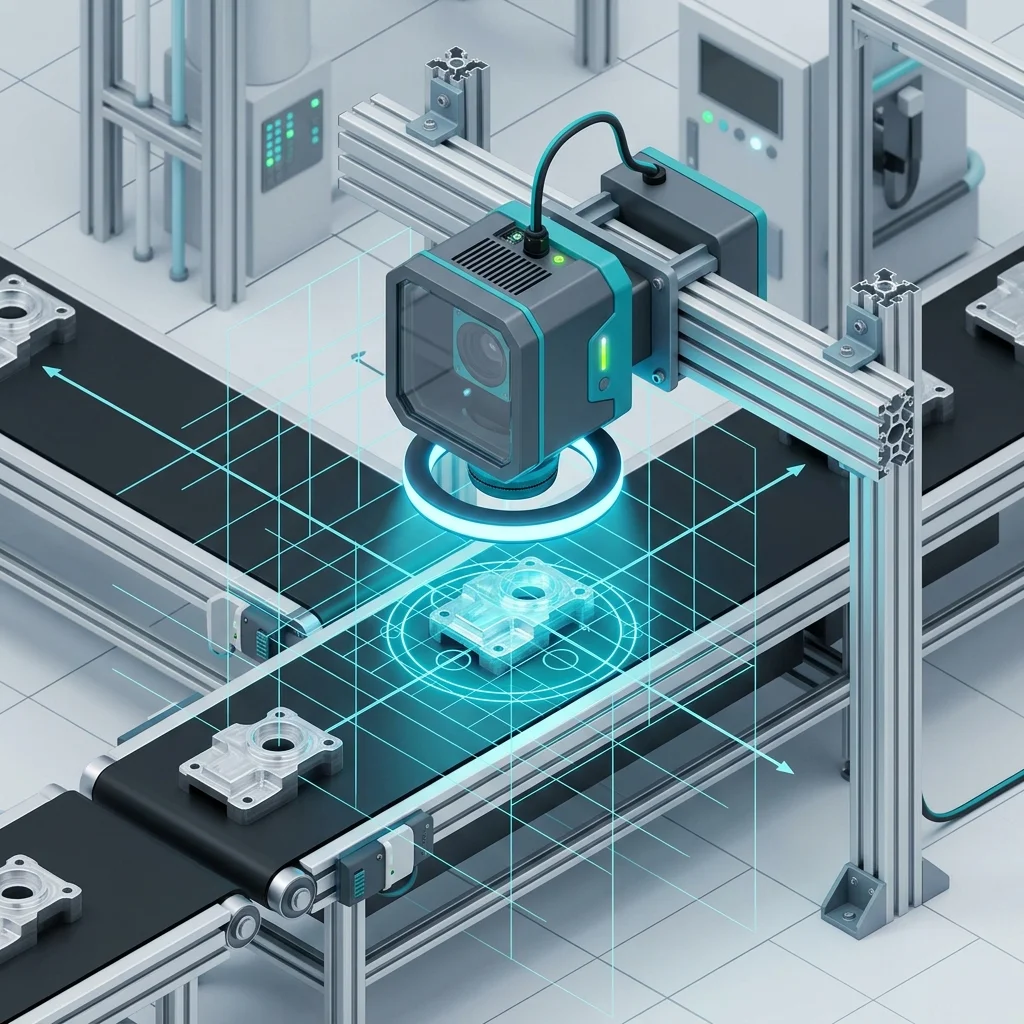
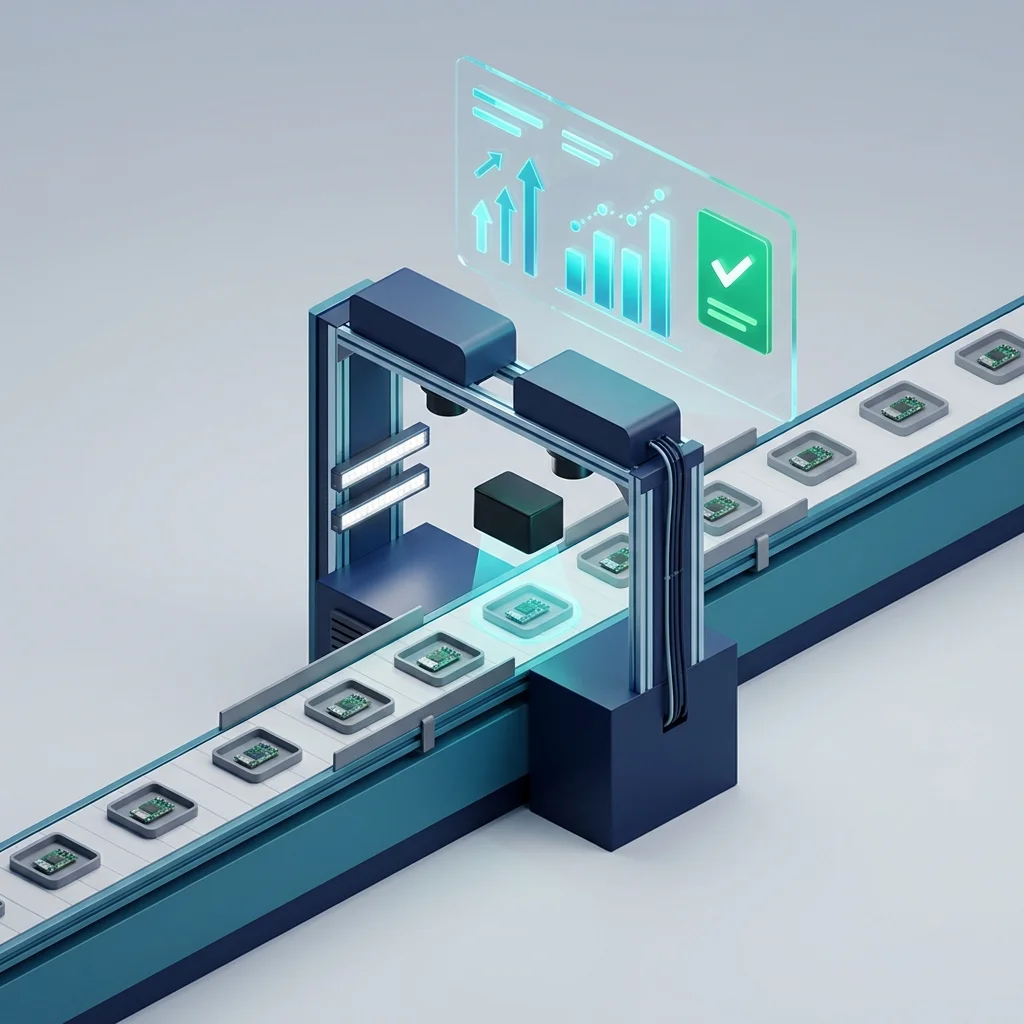
High-resolution industrial cameras are mounted above the assembly line. As parts move past, the cameras capture images at high speed. A deep learning model (like a Convolutional Neural Network) processes these images locally on an Edge device.
The AI is trained on thousands of images of "perfect" products and thousands of images of defective products (e.g., a scratched screen, a missing screw, a misaligned weld). It learns to instantly spot visual anomalies that a human inspector, fatigued after an eight-hour shift, would easily miss.
The Best Vendor Approach
For CV, look for vendors that offer "No-Code" or "Low-Code" vision platforms. You shouldn't need a PhD in data science to use it. The best solutions allow a floor manager to take photos of a new defect, upload them to the system via an iPad, and retrain the model in an afternoon.
Scenario B: Process (Continuous) Manufacturing
Process manufacturing involves formulas and recipes rather than discrete parts—think oil refining, chemical processing, food and beverage, or plastics manufacturing. You aren't inspecting a single "part"; you are monitoring a continuous flow of material.
In this scenario, Computer Vision is mostly useless. You can't visually see if the chemical composition of a liquid is wrong just by looking at a video feed of a pipe. Here, the best AI solution is Time-Series Anomaly Detection using machine learning.
How it Works
Instead of cameras, this solution relies on thousands of IoT sensors tracking pressure, temperature, viscosity, flow rate, and chemical mixture. This data forms a continuous "time-series" stream.
The AI algorithm (often using models like Random Forests or LSTMs) ingests this massive stream of data. It learns the complex, hidden correlations between all these variables that result in a "perfect" batch.
The Best Vendor Approach
If, for example, the temperature in Vat A drops by 0.2 degrees while the pressure in Pipe B increases by 2%, a human operator might not notice, but the AI instantly recognizes this specific combination as an anomaly that will lead to a ruined batch an hour down the line. It alerts the operator to adjust the valve before the waste occurs.
For process manufacturing, the best AI solutions are often bespoke or highly customized platforms offered by specialized industrial IoT consultants, as the data models must be tailored exactly to your proprietary chemical or physical processes.
The Bottom Line
Don't fall for generic AI marketing. If you make "things," your best AI solution is a high-speed Computer Vision platform. If you make "stuff," your best AI solution is a Time-Series Anomaly Detection model crunching IoT sensor data.
Choose the architecture that matches your physics, and the ROI will follow.