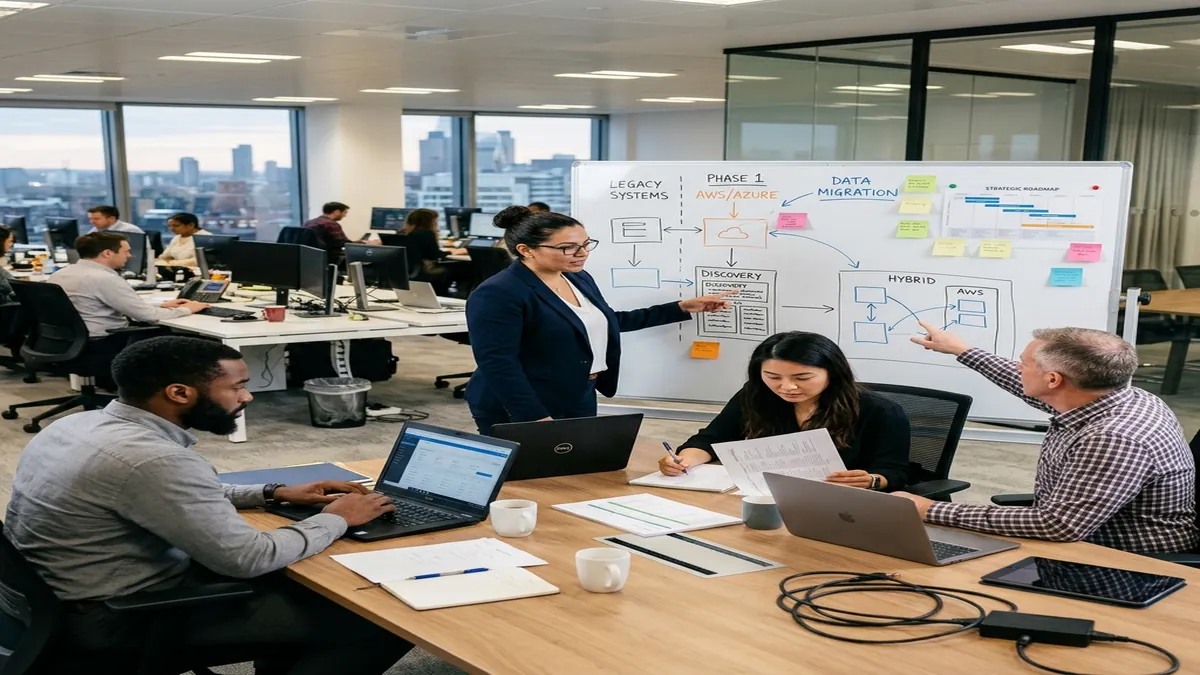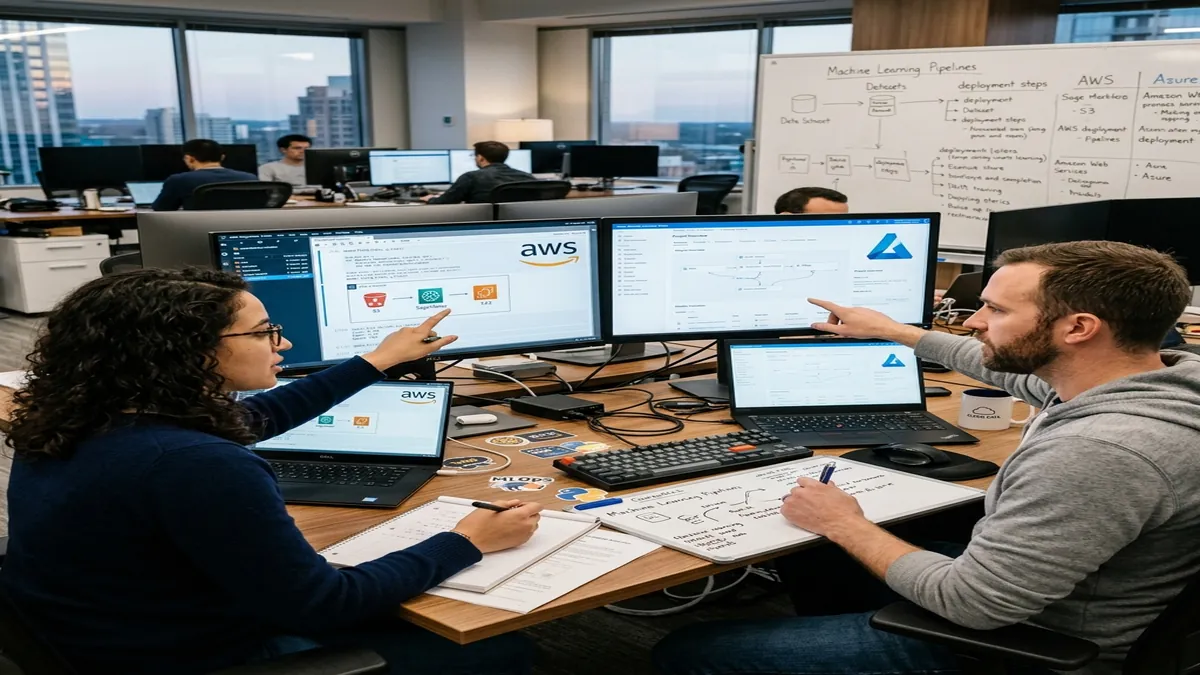

In the contemporary digital landscape, cloud computing is no longer a strategic differentiator but a fundamental operational necessity. However, the paradigm shift from Capital Expenditure (CapEx) to Operational Expenditure (OpEx) has introduced a complex, multifaceted challenge: cloud sprawl and unchecked spending. Cloud cost optimization is not merely about finding the cheapest instances or applying a one-off discount. It is a deeply technical, multidisciplinary approach encompassing financial operations (FinOps), architectural redesign, automation, and cultural shifts within engineering teams. This massive, comprehensive guide explores deeply technical cloud cost optimization strategies across major providers like AWS, Azure, and Google Cloud Platform (GCP). We will dive into architectural patterns, right-sizing methodologies, commitment strategies, and automated lifecycle management designed to maximize return on investment (ROI) without compromising application performance, system reliability, or enterprise security.
Key Takeaways
- Architectural Efficiency: Transitioning from monolithic infrastructures to microservices, containerized deployments, or serverless architectures can dramatically reduce baseline costs and idle time.
- FinOps Integration: Establishing a robust FinOps culture aligns engineering, finance, and business operations for better cloud financial management and accountability.
- Resource Right-sizing & Autoscaling: Continuously matching compute instance types, memory footprints, and storage IOPS to actual workload requirements prevents chronic over-provisioning.
- Commitment Discounts & Spot Instances: Leveraging Reserved Instances (RIs), Savings Plans, and preemptible compute resources strategically can yield up to 90% savings on compute expenditures.
- Data Lifecycle Management: Automating data tiering, snapshot retention, and archival policies minimizes explosive storage expenditures over time.
Summary Overview
| Optimization Domain | Core Strategy & Execution | Potential Savings |
|---|---|---|
| Compute Infrastructure | Aggressive right-sizing, auto-scaling groups, and modern processor architectures (e.g., ARM/Graviton) | High (30-50%) |
| Financial Pricing Models | Compute Savings Plans, Enterprise Agreements, and Spot Instance Fleets | Very High (up to 90% for Spot) |
| Storage & Databases | Automated lifecycle policies, intelligent tiering, and IOPS optimization for block storage | Medium to High (20-60%) |
| Cloud Architecture | Serverless refactoring (FaaS), Kubernetes pod right-sizing, and event-driven architectures | Variable (Highly dependent on baseline architecture) |
| Networking | VPC endpoint routing, CDN caching for egress mitigation, and optimized cross-AZ traffic | Medium (15-35%) |
1. The Foundation: Visibility, Allocation, and FinOps Governance
Before any technical team can implement cost-reduction measures, an organization must achieve complete, unadulterated visibility into its cloud spend. This requires a robust tagging strategy, granular cost allocation, and the enterprise-wide adoption of FinOps principles. Without granular telemetry on which specific team, microservice, or environment is consuming resources, optimization efforts are functionally blind and often counterproductive.
1.1 Implementing a Comprehensive Tagging Strategy
A successful cloud cost optimization strategy begins fundamentally with metadata. Tags (AWS/Azure) or labels (GCP) are key-value pairs assigned to cloud resources. Enforcing a strict tagging policy allows organizations to allocate costs accurately to specific business units. Essential tags include Environment (e.g., production, development, staging), CostCenter, ApplicationID, and Owner. Using Infrastructure as Code (IaC) tools like Terraform, Pulumi, or AWS CloudFormation, these tags must be mandated at the time of resource creation.
Need an Expert Opinion?
Stop guessing. Speak directly with a senior AdaptNXT engineer about your architecture, timeline, and feasibility.
In AWS, you can enforce this using Service Control Policies (SCPs) in AWS Organizations to deny resource creation if specific tags are missing. Furthermore, activating "Cost Allocation Tags" in the billing console is mandatory for these tags to appear in cost and usage reports (CUR).
"You cannot optimize what you cannot measure. A rigorous, automated tagging strategy transforms opaque cloud bills into actionable financial intelligence and drives engineering accountability." - Lead FinOps Architect
1.2 The Role of FinOps and Anomaly Detection
FinOps is an evolving cloud financial management discipline and cultural practice. It brings financial accountability to the variable spend model of the cloud, enabling distributed engineering teams to make business trade-offs between speed, cost, and quality. A mature FinOps team typically involves stakeholders from platform engineering, finance, and product management.
By utilizing native tools like AWS Cost Explorer, Azure Cost Management, or sophisticated third-party solutions (e.g., CloudZero, Apptio Cloudability), organizations can create highly granular dashboards, set budgets at the microservice level, and establish machine-learning-based anomaly detection alerts. Catching a spending spike—such as a rogue lambda function stuck in an infinite retry loop—within hours rather than at the end of the billing cycle can save tens of thousands of dollars.
2. Deep Dive: Compute Optimization and Elasticity
Compute resources (e.g., Amazon EC2, Azure VMs, GCP Compute Engine, and Kubernetes nodes) typically constitute the largest portion of any cloud bill. Consequently, it presents the most significant opportunities for deep technical optimization.
2.1 Algorithmic Right-sizing and Modern Architectures
Right-sizing involves analyzing historical instance performance metrics (CPU utilization, memory swapping, network throughput, disk I/O limits) and modifying the instance family or size to better match the workload's actual statistical needs. Developers often over-provision resources "just in case," leading to severe underutilization.
Tools like AWS Compute Optimizer utilize machine learning to analyze up to 14 days of utilization metrics and recommend optimal instance types. For example, moving a memory-intensive caching application from a general-purpose m5.xlarge to a memory-optimized r5.large can reduce costs while simultaneously improving performance. Furthermore, modernizing architectures by migrating to ARM-based processors (such as AWS Graviton3 or GCP Tau T2A) can yield up to a 40% price-performance improvement over comparable x86-based instances with zero code changes for interpreted languages like Python or Node.js.
2.2 Leveraging Spot Instances and Preemptible Capacity at Scale
Spot Instances (AWS), Spot VMs (Azure), and Preemptible VMs (GCP) offer spare compute capacity at extreme discounts—often up to 90% compared to On-Demand prices. The caveat is that the cloud provider can reclaim these instances with minimal notice (typically a two-minute warning). Therefore, they are strictly for stateless, fault-tolerant, and flexible workloads.
Advanced implementations utilize tools like AWS Auto Scaling Groups (ASG) with mixed instance policies. A fleet can be configured to maintain a baseline of On-Demand or Reserved capacity, bursting into Spot capacity for peak loads. Additionally, utilizing node-termination handlers in Kubernetes (like the AWS Node Termination Handler or Karpenter) ensures that when a Spot instance is reclaimed, pods are gracefully drained and rescheduled onto new nodes with zero downtime.
2.3 Strategic Utilization of Commitment Discounts
For predictable, steady-state, always-on workloads (like core databases or monolithic backends), On-Demand pricing is highly inefficient. All major providers offer financial commitment-based discounts:
- AWS Savings Plans and RIs: Compute Savings Plans offer immense flexibility, applying discounts based on a commitment to a specific dollar amount per hour (e.g., $10/hour) for 1 or 3 years. These apply globally across instance families, sizes, regions, and even across compute platforms like Fargate and Lambda. Standard Reserved Instances (RIs) are more restrictive but can be bought and sold on the AWS Marketplace.
- Azure Reserved VM Instances: Azure provides deep discounts for 1- or 3-year commitments, with the added benefit of Azure Hybrid Benefit, allowing enterprises to bring existing Windows Server and SQL Server licenses to the cloud for further savings.
- GCP Committed Use Discounts (CUDs): GCP offers both spend-based (flexible) and resource-based (specific vCPU and memory) models, offering significant savings for sustained usage without upfront payment requirements.
"The true art of cloud cost optimization lies in balancing the elasticity of On-Demand resources with the financial prudence of Savings Plans and the extreme efficiency of Spot Instance fleets." - VP of Cloud Infrastructure
3. Advanced Storage Optimization: Taming the Data Deluge
As applications scale globally, storage costs can quietly spiral out of control. Optimizing storage requires deep technical understanding of data access patterns, IOPS requirements, and leveraging highly specific storage tiers.
3.1 Object Storage Lifecycle Policies and Intelligent Tiering
Services like Amazon S3, Azure Blob Storage, and Google Cloud Storage offer multiple storage classes based on access frequency, retrieval time, and availability requirements. Keeping petabytes of infrequently accessed log data in the "Standard" tier is a massive financial anti-pattern.
Organizations must implement infrastructure-as-code lifecycle rules to automatically transition objects. For instance, massive log files can be ingested into S3 Standard, moved to S3 Standard-Infrequent Access (IA) after 30 days, and finally archived to S3 Glacier Deep Archive (which costs roughly $1 per terabyte per month) after 90 days. For unpredictable or unknown access patterns, AWS S3 Intelligent-Tiering automatically monitors and moves data between frequent and infrequent access tiers based on usage patterns, optimizing costs without manual management overhead.
3.2 Block Storage (EBS/Disk) IOPS Optimization
Unattached or orphaned block storage volumes (e.g., AWS EBS, Azure Managed Disks) continue to incur charges even when the associated compute instance is terminated. Implementing automated Lambda functions or Azure Automation runbooks to identify, snapshot (for compliance), and delete unattached volumes weekly is crucial.
Furthermore, tuning the volume type is essential. Not every database requires high-performance Provisioned IOPS (AWS io2). Migrating from older `gp2` volumes to the newer `gp3` volumes in AWS can reduce costs by 20% while allowing you to provision IOPS and throughput independently of storage capacity. For log processing or data warehousing nodes, throughput-optimized HDDs (st1) offer massive savings compared to SSDs.
4. Decrypting and Mitigating Network Transfer Costs
Data transfer costs—specifically egress fees—are often the hidden "gotchas" in complex cloud billing architectures. Moving data out of the cloud provider's network, or even between different Availability Zones (AZs) or regions, incurs significant charges that can cripple profitability for data-heavy applications.
4.1 Caching and Edge Delivery
Architecting applications to minimize cross-region or internet-bound traffic is critical. When static or dynamic data must be served to end-users globally, leveraging a Content Delivery Network (CDN) like Amazon CloudFront, Cloudflare, or Akamai is highly effective. CDNs cache content at edge locations geographically closer to users. This dramatically reduces the data transferred directly from the origin server (which is billed at standard egress rates). CloudFront, for example, offers free data transfer from AWS origin resources to the edge.
4.2 VPC Endpoints and Internal Routing
A common architectural flaw involves routing internal traffic through the public internet. When resources within a private Virtual Private Cloud (VPC) subnet need to communicate with provider-managed services (like Amazon S3, DynamoDB, or Kinesis), routing this traffic through NAT Gateways incurs hourly processing charges and per-GB data transfer fees.
Implementing VPC Endpoints (Gateway endpoints for S3/DynamoDB, and Interface endpoints via PrivateLink for others) ensures that traffic remains strictly within the provider's highly optimized internal network. This eliminates NAT Gateway processing costs entirely, reduces latency, and significantly hardens network security posture.
5. Architectural Modernization for Ultimate Efficiency
The most profound and lasting cost optimizations often require complete architectural shifts. "Lift and shift" (rehosting) migrations from on-premises data centers typically result in higher costs because they fail to leverage cloud-native elasticity.
5.1 Embracing Serverless (FaaS) Architectures
Serverless computing platforms like AWS Lambda, Azure Functions, and Google Cloud Functions fundamentally shift the billing model from "pay for allocation" (servers running 24/7) to "pay for execution" (billing per millisecond of actual compute time used). For applications with highly variable, unpredictable, or spiky traffic (like batch processing jobs or event-driven webhooks), serverless architectures eliminate the costs associated with idle capacity.
"Serverless is not just an operational paradigm; it is a profound financial optimization strategy. You pay precisely for the business value generated, down to the millisecond, with zero waste." - Chief Cloud Architect
5.2 Kubernetes Optimization and Rightsizing (K8s)
Containerizing applications and orchestrating them with Kubernetes (Amazon EKS, Azure AKS, Google GKE) allows for exponentially higher resource density. Multiple microservices can share the same underlying compute nodes, reducing the total number of VMs required. However, poorly tuned Kubernetes clusters can become massive financial liabilities.
Tools like Kubecost or OpenCost provide granular, namespace-level visibility into cluster spend. Optimization requires strict enforcement of Kubernetes Resource Requests and Limits to prevent pods from hoarding node resources. Utilizing the Cluster Autoscaler alongside the Horizontal Pod Autoscaler (HPA) ensures that the cluster scales dynamically based on actual CPU/Memory load. Advanced teams implement Karpenter (an open-source node provisioning project) to rapidly launch perfectly sized, cost-optimized nodes (including Spot instances) in milliseconds in response to unschedulable pods.
6. Continuous Automation and Shift-Left FinOps
Cloud environments are highly dynamic; resources are spun up and down constantly by automated CI/CD pipelines. Therefore, cloud cost optimization is not a one-time audit or project; it is a continuous, automated lifecycle.
Automating cost optimization processes is essential. This includes scheduling automated start/stop times for non-production environments (e.g., shutting down all development and QA clusters on weekends), implementing automated right-sizing recommendations using AWS Systems Manager, and enforcing tagging compliance through policy-as-code tools like Open Policy Agent (OPA) or Checkov.
By integrating cost awareness directly into the CI/CD pipeline—a concept often referred to as "Shift-Left FinOps"—platform engineering teams can estimate and optimize the financial impact of architectural changes (e.g., via tools like Infracost) before the Terraform code is even merged to the main branch. This proactive approach prevents cost overruns before they are deployed to production.
Conclusion: Building a Culture of Cost Efficiency
Mastering cloud cost optimization strategies across enterprise environments requires a deeply technical, multifaceted approach that blends financial discipline, architectural ingenuity, and continuous operational vigilance. By implementing robust FinOps tagging practices, aggressively right-sizing resources, strategically leveraging commitment discounts, taming network egress, and modernizing legacy architectures towards serverless and containerized paradigms, enterprises can effectively tame cloud sprawl. Ultimately, effective cloud cost optimization ensures that every dollar spent in the cloud directly contributes to business value, scalability, agility, and technical innovation.
Frequently Asked Questions (FAQ)
What is FinOps and why is it critical for modern cloud computing?
FinOps (Financial Operations) is an evolving cloud financial management discipline and cultural practice that enables organizations to get maximum business value. It breaks down silos, helping engineering, finance, product, and executive teams collaborate on data-driven spending decisions, ensuring cloud spend aligns with business objectives.
How do Cloud Spot Instances (or Preemptible VMs) save money, and what are the risks?
Spot Instances allow you to bid on a cloud provider's spare computing capacity at steep discounts (often 70% to 90% off On-Demand prices). The primary risk is interruption: the cloud provider can reclaim these instances with minimal notice (usually two minutes) if they need the capacity back. They are best suited for stateless, fault-tolerant workloads like batch processing, containerized microservices, and big data analytics.
Why are cloud network egress charges often so unexpectedly high?
Cloud providers generally do not charge for data entering their network (ingress), but they heavily monetize data leaving their network (egress) to the internet or transferring between different cloud regions. These costs can easily blindside teams. They can be mitigated by routing traffic through internal VPC Endpoints, utilizing Content Delivery Networks (CDNs) to cache edge data, and optimizing application architectures to minimize inter-region communication.
What is the technical difference between right-sizing and autoscaling in cloud infrastructure?
Right-sizing involves analyzing performance data to select the most appropriate, cost-efficient instance type and size (CPU, memory, storage IOPS) for a specific workload's baseline needs, preventing chronic over-provisioning. Autoscaling, on the other hand, is the automated, dynamic process of adding or removing those instances (scaling out or scaling in) to handle real-time fluctuations in application demand.
How does migrating to Serverless architecture optimize cloud costs?
Serverless computing (like AWS Lambda or Azure Functions) shifts the billing model from paying for provisioned server uptime (paying 24/7 regardless of traffic) to paying strictly for execution time (billing per millisecond). This completely eliminates the cost of idle capacity, making it exceptionally cost-effective for variable, unpredictable, or low-volume workloads.