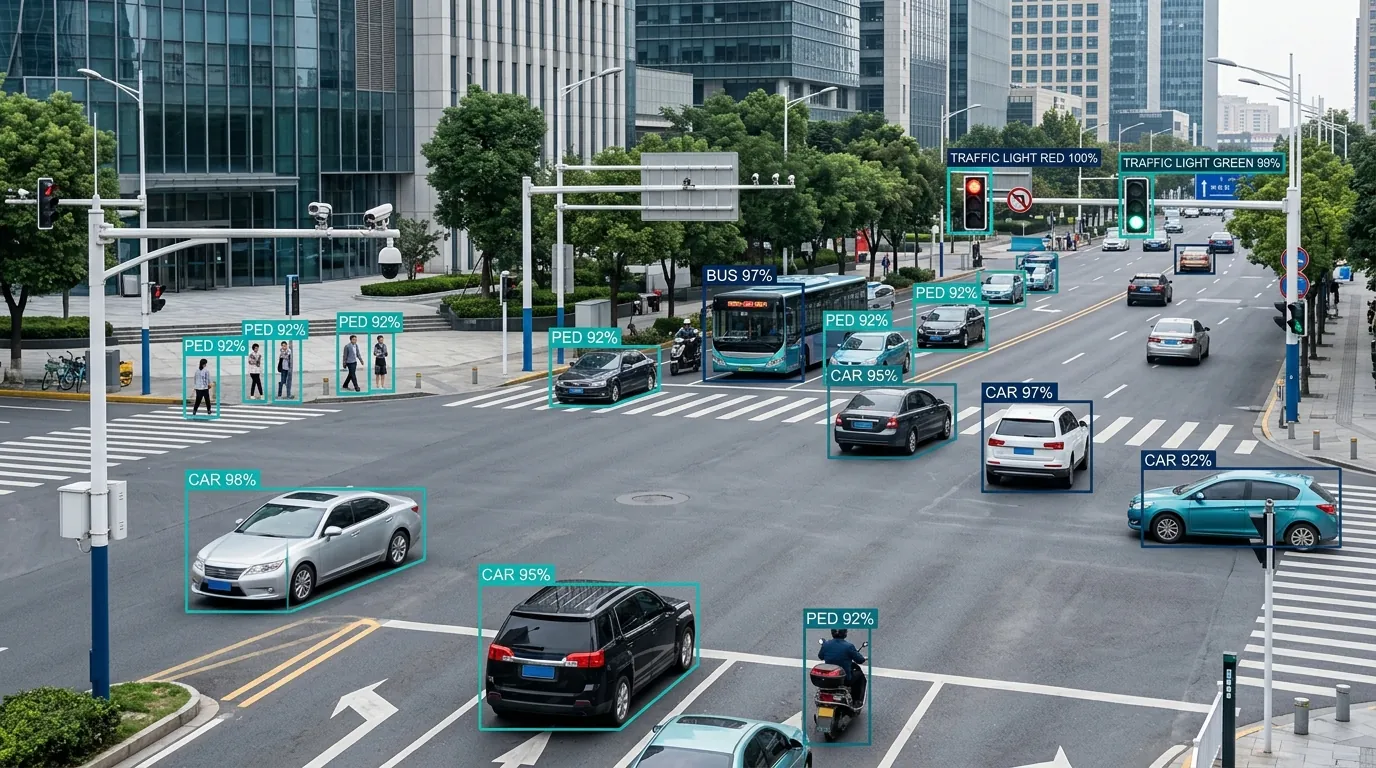

The landscape of modern manufacturing is undergoing a profound transformation, driven largely by the integration of advanced artificial intelligence and computer vision technologies. At the forefront of this revolution is real-time defect detection manufacturing, a critical capability that empowers factories to maintain unparalleled quality control at speeds previously thought impossible. Traditional human Quality Assurance (QA) processes, while historically reliable, are increasingly becoming bottlenecks in high-throughput environments. Human inspectors are susceptible to fatigue, cognitive overload, and subjective judgment, leading to inconsistent defect identification and, ultimately, compromised product quality. Computer vision systems, conversely, offer a tireless, objective, and hyper-accurate alternative, capable of scrutinizing complex components and assemblies with microscopic precision in fractions of a second.
The Imperative for Automated Defect Detection
In highly competitive sectors such as automotive, electronics, and pharmaceuticals, even the slightest manufacturing anomaly can result in catastrophic failures, costly recalls, and severe damage to brand reputation. The imperative for automated defect detection is not merely about cost reduction; it is fundamentally about risk mitigation and the assurance of uncompromising quality. By leveraging sophisticated computer vision pipelines, manufacturers can achieve 100% inline inspection, ensuring that every single unit rolling off the assembly line adheres to exact specifications. This continuous monitoring paradigm allows for the immediate identification and isolation of defective products, preventing them from proceeding further down the manufacturing line where value (and consequently, the cost of scrap) increases exponentially.
Furthermore, the data generated by these real-time defect detection systems provides invaluable insights into the overall health and performance of the manufacturing process itself. By analyzing the frequency, type, and location of defects, process engineers can identify upstream root causes—such as machine wear, raw material inconsistencies, or environmental fluctuations—and implement corrective actions proactively. This shift from reactive quality control to proactive process optimization is a hallmark of Industry 4.0 and a key driver of continuous improvement initiatives. The implementation of robust computer vision services is therefore a strategic investment that yields dividends across the entire manufacturing value chain.
Moreover, the scalability of computer vision solutions allows manufacturers to easily adapt to changing production requirements and new product introductions. Unlike human inspectors who require extensive retraining for new tasks, an AI model can be updated and redeployed rapidly to detect novel defect types or inspect entirely different product geometries. This agility is crucial in today's dynamic market environment, where product lifecycles are shrinking, and customization is becoming the norm rather than the exception.
Moreover, the scalability of computer vision solutions allows manufacturers to easily adapt to changing production requirements and new product introductions. Unlike human inspectors who require extensive retraining for new tasks, an AI model can be updated and redeployed rapidly to detect novel defect types or inspect entirely different product geometries. This agility is crucial in today's dynamic market environment, where product lifecycles are shrinking, and customization is becoming the norm rather than the exception.
Moreover, the scalability of computer vision solutions allows manufacturers to easily adapt to changing production requirements and new product introductions. Unlike human inspectors who require extensive retraining for new tasks, an AI model can be updated and redeployed rapidly to detect novel defect types or inspect entirely different product geometries. This agility is crucial in today's dynamic market environment, where product lifecycles are shrinking, and customization is becoming the norm rather than the exception.
Moreover, the scalability of computer vision solutions allows manufacturers to easily adapt to changing production requirements and new product introductions. Unlike human inspectors who require extensive retraining for new tasks, an AI model can be updated and redeployed rapidly to detect novel defect types or inspect entirely different product geometries. This agility is crucial in today's dynamic market environment, where product lifecycles are shrinking, and customization is becoming the norm rather than the exception.
Moreover, the scalability of computer vision solutions allows manufacturers to easily adapt to changing production requirements and new product introductions. Unlike human inspectors who require extensive retraining for new tasks, an AI model can be updated and redeployed rapidly to detect novel defect types or inspect entirely different product geometries. This agility is crucial in today's dynamic market environment, where product lifecycles are shrinking, and customization is becoming the norm rather than the exception.
Moreover, the scalability of computer vision solutions allows manufacturers to easily adapt to changing production requirements and new product introductions. Unlike human inspectors who require extensive retraining for new tasks, an AI model can be updated and redeployed rapidly to detect novel defect types or inspect entirely different product geometries. This agility is crucial in today's dynamic market environment, where product lifecycles are shrinking, and customization is becoming the norm rather than the exception.
Moreover, the scalability of computer vision solutions allows manufacturers to easily adapt to changing production requirements and new product introductions. Unlike human inspectors who require extensive retraining for new tasks, an AI model can be updated and redeployed rapidly to detect novel defect types or inspect entirely different product geometries. This agility is crucial in today's dynamic market environment, where product lifecycles are shrinking, and customization is becoming the norm rather than the exception.
Moreover, the scalability of computer vision solutions allows manufacturers to easily adapt to changing production requirements and new product introductions. Unlike human inspectors who require extensive retraining for new tasks, an AI model can be updated and redeployed rapidly to detect novel defect types or inspect entirely different product geometries. This agility is crucial in today's dynamic market environment, where product lifecycles are shrinking, and customization is becoming the norm rather than the exception.
Moreover, the scalability of computer vision solutions allows manufacturers to easily adapt to changing production requirements and new product introductions. Unlike human inspectors who require extensive retraining for new tasks, an AI model can be updated and redeployed rapidly to detect novel defect types or inspect entirely different product geometries. This agility is crucial in today's dynamic market environment, where product lifecycles are shrinking, and customization is becoming the norm rather than the exception.
Data Generation and Model Training Strategies
The efficacy of any machine learning model is intrinsically tied to the quality and quantity of the data upon which it is trained. In the context of defect detection, acquiring a sufficiently large and diverse dataset of defective parts presents a significant challenge. By definition, manufacturing processes aim to minimize defects; thus, naturally occurring examples of flaws (such as scratches, dents, misalignments, or structural anomalies) are often rare. Relying solely on historical data collection can severely delay the development and deployment of an AI solution.
The Role of Synthetic Data
To overcome this data scarcity hurdle, the use of synthetic data generation has become a cornerstone of modern computer vision development. By leveraging advanced 3D rendering engines and generative AI techniques, developers can create photorealistic images of parts with various simulated defects under diverse lighting and environmental conditions. This approach allows for the rapid creation of massive, meticulously annotated datasets, covering a wide spectrum of potential failure modes, including those that have never actually occurred in production. Synthetic data not only accelerates the training process but also enhances the robustness and generalization capabilities of the resulting model, ensuring it performs reliably in the face of unforeseen variations.
Supervised Learning vs. Anomaly Detection
When selecting a modeling approach, engineers typically choose between supervised learning and anomaly detection paradigms. Supervised learning involves training a model (such as a Convolutional Neural Network, or CNN) on a labeled dataset containing both pristine and defective examples, explicitly teaching the model to identify specific classes of flaws. While highly accurate for known defect types, supervised models can struggle when presented with novel anomalies not represented in the training data.
Conversely, anomaly detection models (such as autoencoders or One-Class SVMs) are trained exclusively on images of "good" parts. These models learn the underlying statistical distribution of a flawless product and subsequently flag any significant deviation from this norm as a potential defect. Anomaly detection is particularly valuable for identifying unexpected or emerging failure modes, although it may generate a higher rate of false positives compared to fine-tuned supervised models. Often, a hybrid approach combining both methodologies yields the most robust and comprehensive defect detection system.
Conversely, anomaly detection models (such as autoencoders or One-Class SVMs) are trained exclusively on images of "good" parts. These models learn the underlying statistical distribution of a flawless product and subsequently flag any significant deviation from this norm as a potential defect. Anomaly detection is particularly valuable for identifying unexpected or emerging failure modes, although it may generate a higher rate of false positives compared to fine-tuned supervised models. Often, a hybrid approach combining both methodologies yields the most robust and comprehensive defect detection system.
Conversely, anomaly detection models (such as autoencoders or One-Class SVMs) are trained exclusively on images of "good" parts. These models learn the underlying statistical distribution of a flawless product and subsequently flag any significant deviation from this norm as a potential defect. Anomaly detection is particularly valuable for identifying unexpected or emerging failure modes, although it may generate a higher rate of false positives compared to fine-tuned supervised models. Often, a hybrid approach combining both methodologies yields the most robust and comprehensive defect detection system.
Conversely, anomaly detection models (such as autoencoders or One-Class SVMs) are trained exclusively on images of "good" parts. These models learn the underlying statistical distribution of a flawless product and subsequently flag any significant deviation from this norm as a potential defect. Anomaly detection is particularly valuable for identifying unexpected or emerging failure modes, although it may generate a higher rate of false positives compared to fine-tuned supervised models. Often, a hybrid approach combining both methodologies yields the most robust and comprehensive defect detection system.
Conversely, anomaly detection models (such as autoencoders or One-Class SVMs) are trained exclusively on images of "good" parts. These models learn the underlying statistical distribution of a flawless product and subsequently flag any significant deviation from this norm as a potential defect. Anomaly detection is particularly valuable for identifying unexpected or emerging failure modes, although it may generate a higher rate of false positives compared to fine-tuned supervised models. Often, a hybrid approach combining both methodologies yields the most robust and comprehensive defect detection system.
Conversely, anomaly detection models (such as autoencoders or One-Class SVMs) are trained exclusively on images of "good" parts. These models learn the underlying statistical distribution of a flawless product and subsequently flag any significant deviation from this norm as a potential defect. Anomaly detection is particularly valuable for identifying unexpected or emerging failure modes, although it may generate a higher rate of false positives compared to fine-tuned supervised models. Often, a hybrid approach combining both methodologies yields the most robust and comprehensive defect detection system.
Conversely, anomaly detection models (such as autoencoders or One-Class SVMs) are trained exclusively on images of "good" parts. These models learn the underlying statistical distribution of a flawless product and subsequently flag any significant deviation from this norm as a potential defect. Anomaly detection is particularly valuable for identifying unexpected or emerging failure modes, although it may generate a higher rate of false positives compared to fine-tuned supervised models. Often, a hybrid approach combining both methodologies yields the most robust and comprehensive defect detection system.
Hardware Architecture: Vision Systems and Edge Inference
A sophisticated AI model is only as effective as the physical infrastructure that supports it. The hardware architecture of a real-time defect detection system comprises two primary components: the image acquisition setup (cameras and lighting) and the processing unit.
Optimizing Image Acquisition
The phrase "garbage in, garbage out" is profoundly applicable to computer vision. Acquiring high-contrast, consistently illuminated images is paramount. Lighting design is often the most critical and challenging aspect of a machine vision deployment. Depending on the material properties of the inspected object (e.g., reflective metal vs. matte plastic) and the nature of the defect (e.g., surface scratch vs. structural void), engineers must employ specialized lighting techniques such as darkfield illumination, brightfield illumination, or structured light projection. Similarly, camera positioning and lens selection must be meticulously calibrated to optimize the field of view, resolution, and depth of field, ensuring that microscopic defects are clearly resolved by the image sensor.
The Necessity of Edge Inference
In high-speed manufacturing environments, latency is the enemy. Sending high-resolution video streams to a centralized cloud server for processing introduces unacceptable network latency and bandwidth constraints, making real-time, deterministic control impossible. Therefore, the computation must be moved as close to the data source as possible—a paradigm known as edge computing. Partnering with a specialized edge AI development company is crucial for architecting solutions that meet these stringent latency requirements.
Deploying AI models on robust edge devices, such as the NVIDIA Jetson platform, enables sub-millisecond inference times directly on the factory floor. These specialized embedded systems combine powerful GPU architectures with energy-efficient designs, allowing them to execute complex deep learning algorithms in real-time, completely independent of external network connectivity. This localized processing ensures that defective products can be instantly identified and mechanically diverted from the line without disrupting the overall production flow.
"The deployment of edge AI for real-time defect detection represents a paradigm shift from retrospective quality auditing to proactive, autonomous process control, fundamentally redefining the boundaries of manufacturing efficiency."
Conclusion
Real-time defect detection using computer vision is no longer a futuristic concept but a tangible, strategic imperative for modern manufacturers seeking to maintain a competitive edge. By mastering the complexities of synthetic data generation, selecting the appropriate modeling methodologies, and deploying optimized edge inference hardware, organizations can construct highly robust quality assurance pipelines. These intelligent systems not only eradicate human error and reduce waste but also provide the granular data necessary to continuously refine and perfect the manufacturing process itself. As computer vision technologies continue to mature and become more accessible, their adoption will inevitably become the standard for achieving operational excellence and delivering uncompromising product quality across the global manufacturing landscape.
Real-time defect detection using computer vision is no longer a futuristic concept but a tangible, strategic imperative for modern manufacturers seeking to maintain a competitive edge. By mastering the complexities of synthetic data generation, selecting the appropriate modeling methodologies, and deploying optimized edge inference hardware, organizations can construct highly robust quality assurance pipelines. These intelligent systems not only eradicate human error and reduce waste but also provide the granular data necessary to continuously refine and perfect the manufacturing process itself. As computer vision technologies continue to mature and become more accessible, their adoption will inevitably become the standard for achieving operational excellence and delivering uncompromising product quality across the global manufacturing landscape.
Real-time defect detection using computer vision is no longer a futuristic concept but a tangible, strategic imperative for modern manufacturers seeking to maintain a competitive edge. By mastering the complexities of synthetic data generation, selecting the appropriate modeling methodologies, and deploying optimized edge inference hardware, organizations can construct highly robust quality assurance pipelines. These intelligent systems not only eradicate human error and reduce waste but also provide the granular data necessary to continuously refine and perfect the manufacturing process itself. As computer vision technologies continue to mature and become more accessible, their adoption will inevitably become the standard for achieving operational excellence and delivering uncompromising product quality across the global manufacturing landscape.
Real-time defect detection using computer vision is no longer a futuristic concept but a tangible, strategic imperative for modern manufacturers seeking to maintain a competitive edge. By mastering the complexities of synthetic data generation, selecting the appropriate modeling methodologies, and deploying optimized edge inference hardware, organizations can construct highly robust quality assurance pipelines. These intelligent systems not only eradicate human error and reduce waste but also provide the granular data necessary to continuously refine and perfect the manufacturing process itself. As computer vision technologies continue to mature and become more accessible, their adoption will inevitably become the standard for achieving operational excellence and delivering uncompromising product quality across the global manufacturing landscape.
Real-time defect detection using computer vision is no longer a futuristic concept but a tangible, strategic imperative for modern manufacturers seeking to maintain a competitive edge. By mastering the complexities of synthetic data generation, selecting the appropriate modeling methodologies, and deploying optimized edge inference hardware, organizations can construct highly robust quality assurance pipelines. These intelligent systems not only eradicate human error and reduce waste but also provide the granular data necessary to continuously refine and perfect the manufacturing process itself. As computer vision technologies continue to mature and become more accessible, their adoption will inevitably become the standard for achieving operational excellence and delivering uncompromising product quality across the global manufacturing landscape.
Real-time defect detection using computer vision is no longer a futuristic concept but a tangible, strategic imperative for modern manufacturers seeking to maintain a competitive edge. By mastering the complexities of synthetic data generation, selecting the appropriate modeling methodologies, and deploying optimized edge inference hardware, organizations can construct highly robust quality assurance pipelines. These intelligent systems not only eradicate human error and reduce waste but also provide the granular data necessary to continuously refine and perfect the manufacturing process itself. As computer vision technologies continue to mature and become more accessible, their adoption will inevitably become the standard for achieving operational excellence and delivering uncompromising product quality across the global manufacturing landscape.