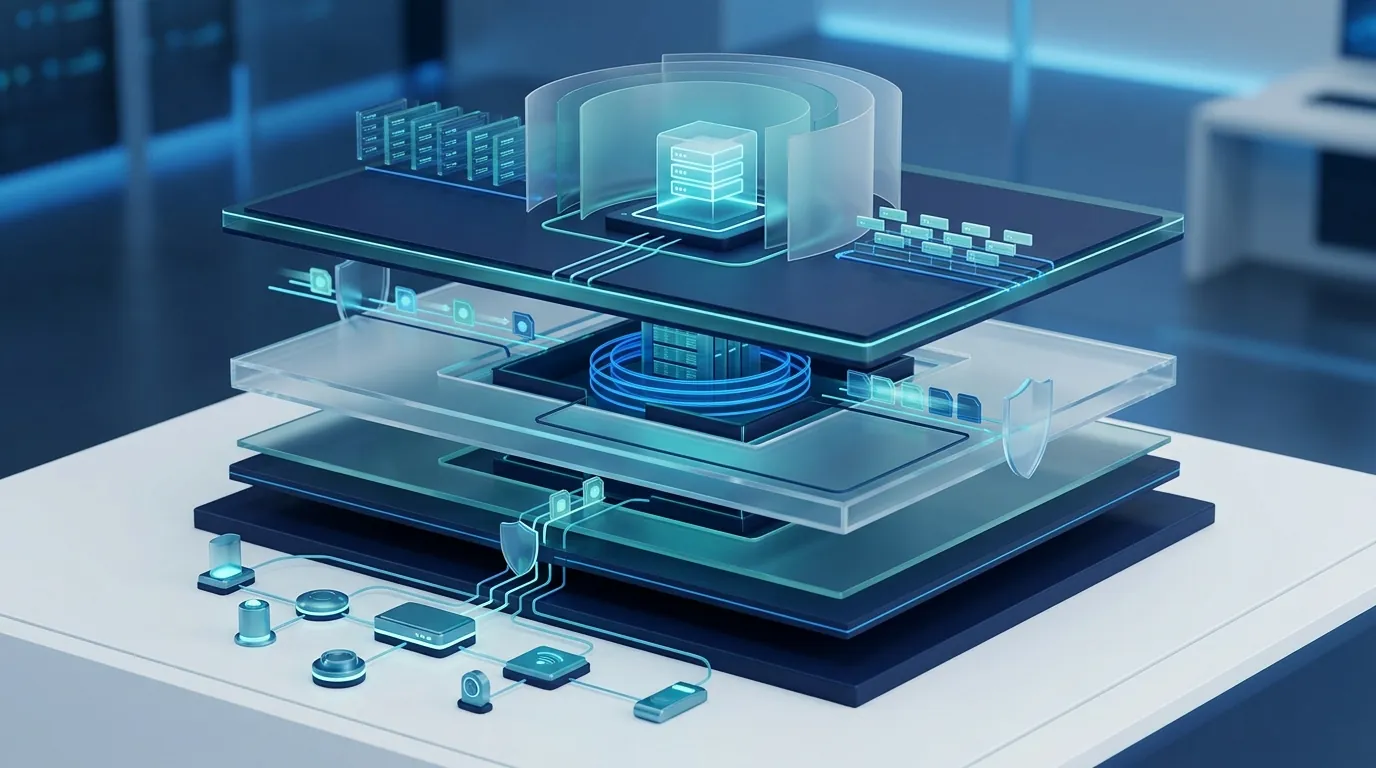

Designing a robust Internet of Things (IoT) ecosystem requires significantly more than just connecting sensors and devices to a network. It demands a highly structured, systematic approach to ensure massive scalability, ironclad security, seamless interoperability, and high-performance data processing across wildly diverse physical and digital environments. Central to achieving this operational harmony is the 7 layer architecture of IoT, a comprehensive reference model that guides the development, deployment, and management of complex connected systems. This conceptual framework, originally conceptualized and formalized by organizations like the IoT World Forum (IoTWF), standardizes the incredibly complex web of technologies that constitute a modern IoT deployment, ensuring that every individual component—from the smallest, power-constrained edge sensor to the most powerful, globally distributed cloud analytics engine—works in perfect, orchestrated harmony.
Why Do We Need a Standardized IoT Architecture?
The contemporary IoT landscape is notoriously fragmented and complex. Engineering teams are confronted with countless hardware vendors, myriad communication protocols (such as MQTT, CoAP, AMQP, HTTP/REST), disparate networking standards (ranging from Wi-Fi and Bluetooth to Zigbee, LoRaWAN, NB-IoT, and 5G), and varying cloud service providers. Without a standardized, universally understood reference architecture, building an IoT system often leads to isolated operational silos, unmanageable technical debt, brittle integrations, and significant, systemic security vulnerabilities.
The 7 layer architecture of IoT elegantly solves this challenge by breaking down a massive, unwieldy system into distinct, manageable logical tiers. Each layer has specific, bounded responsibilities, clear interfaces with adjacent layers, and defined security perimeters. This modularity allows enterprise engineering teams to upgrade, scale, or swap out components at one specific layer (for example, upgrading the networking infrastructure from 4G LTE to 5G at the connectivity layer) without having to completely redesign and redeploy the entire technology stack.
Deep Dive: Deconstructing the 7 Layer Architecture of IoT
The 7 layer architecture provides a rigorous, standardized framework that helps systems engineers, software developers, and enterprise architects conceptualize and build sophisticated, future-proof enterprise solutions. Let's explore each critical layer in extreme technical detail, examining their functions, common technologies, and critical best practices.
Layer 1: Physical Devices and Controllers (The Edge)
This foundational layer is where the digital realm physically interacts with the real world. It represents the absolute edge of the network. This tier includes the myriad sensors that gather physical data (temperature, barometric pressure, fluid motion, flow rates, acoustic vibration, optical input) and the actuators that perform physical actions (opening valves, driving motors, closing relays, flipping switches).
Technical Deep Dive: The hardware ecosystem at this layer is vastly diverse. It ranges from incredibly simple, battery-operated environmental sensors (often based on ultra-low-power microcontrollers like the ARM Cortex-M0+ series) to highly complex, high-power programmable logic controllers (PLCs) and remote terminal units (RTUs) found in heavy industrial manufacturing. The primary function at this layer is raw data generation, initial analog-to-digital signal conditioning, and direct physical interaction.
Best Practices for Layer 1:
- Aggressive Power Management: For battery-operated remote devices, implement aggressive sleep cycling protocols (e.g., eDRX, PSM in cellular IoT) to maximize battery lifespan to 10+ years.
- Hardware-Level Security: Utilize physical hardware roots of trust (like Trusted Platform Modules - TPMs, or dedicated secure elements) to securely store cryptographic keys necessary for mutual TLS (mTLS) authentication.
- Calibration and Drift Management: Implement sophisticated mechanisms for over-the-air (OTA) remote calibration and self-diagnostics to dynamically handle sensor drift and degradation over time.
Layer 2: Connectivity (Communications and Processing Units)
Once raw data is generated at the physical edge, it requires a secure and reliable pathway. This layer encompasses the communication protocols, networking hardware, and transmission media that transport data from the edge devices to the next architectural tier (typically an edge gateway or industrial router). It effectively covers the Physical (PHY) and Media Access Control (MAC) layers of the OSI model, alongside some network-layer routing capabilities.
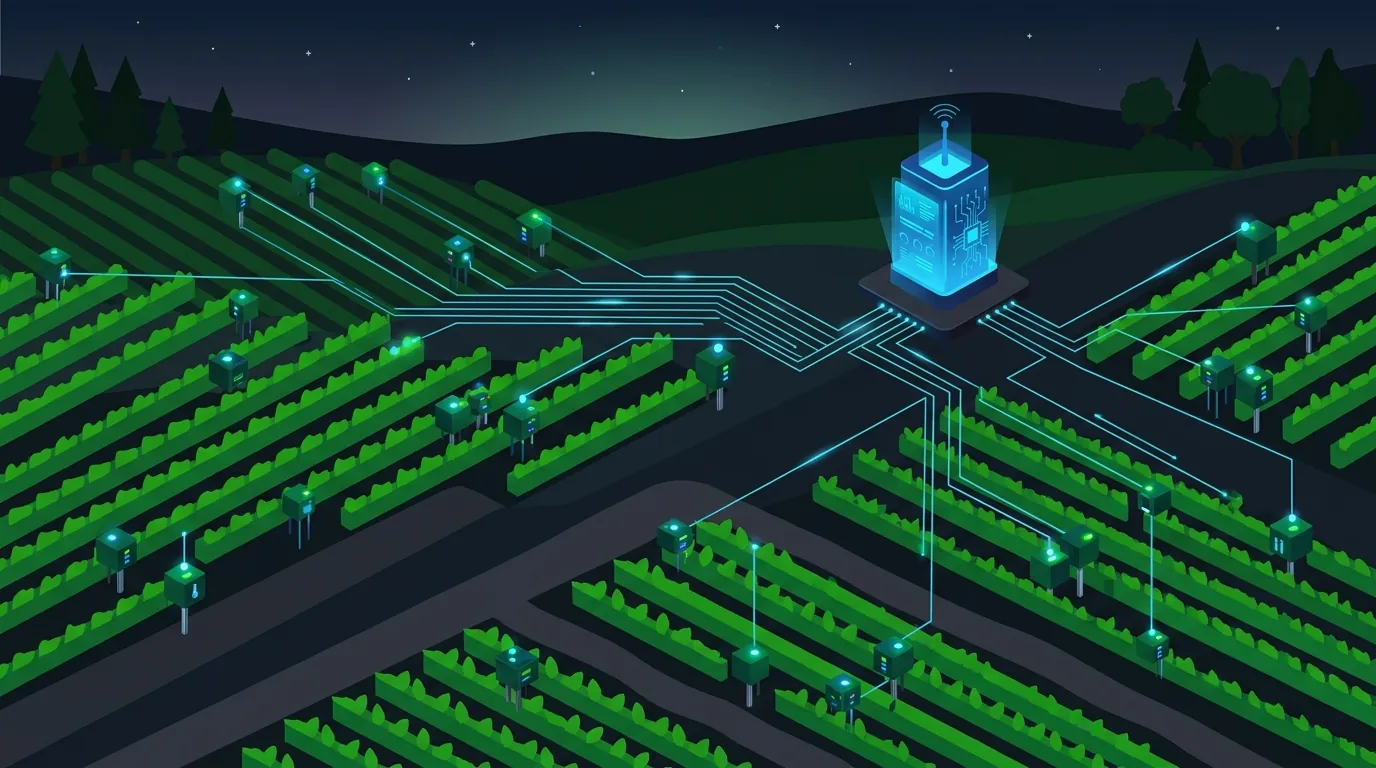
Technical Deep Dive: Selecting the optimal connectivity protocol involves a complex engineering trade-off between physical range, data bandwidth, and power consumption. For short-range, high-bandwidth requirements (like high-definition video surveillance for quality control), Wi-Fi 6 or hardwired Industrial Ethernet is appropriate. Conversely, for long-range, ultra-low-power, low-bandwidth applications (like agricultural soil moisture monitoring across thousands of acres), Low Power Wide Area Network (LPWAN) technologies such as LoRaWAN, Sigfox, or NB-IoT are the preferred choices. Heavy industrial environments often mandate ruggedized fieldbuses or deterministic Industrial Ethernet protocols (PROFINET, EtherCAT, Modbus TCP).
Best Practices for Layer 2:
- Rigorous Protocol Matching: Carefully match the network technology strictly to the use case requirements. Avoid using power-hungry cellular connections for simple battery-powered sensors if a local LoRaWAN network is viable.
- Network Resiliency: Implement robust retry logic, exponential backoffs, and local data buffering to gracefully handle temporary network outages without data loss.
- End-to-End Encryption: Ensure absolutely all data in transit is cryptographically secured using robust, modern standards like AES-256 and TLS 1.3 or DTLS 1.2 for constrained environments.
Layer 3: Edge (Fog) Computing
Transmitting all raw, high-frequency telemetry data directly to the centralized cloud is often highly inefficient, prohibitively expensive regarding bandwidth, and introduces unacceptable latency for real-time control systems. Edge computing (frequently referred to as Fog computing in Cisco's terminology) solves this by pushing compute, storage, and networking services closer to where the data is physically generated.
Technical Deep Dive: This computational layer typically resides on industrial edge gateways—robust, hardened computing devices capable of running lightweight operating systems (like Yocto Linux or Ubuntu Core) and containerized micro-applications (orchestrated via Docker or Kubernetes Edge/K3s). Here, raw, high-frequency data streams (e.g., 10,000 Hz acoustic vibration data from a turbine) are filtered, decimated, or aggregated. For instance, rather than transmitting millions of raw vibration data points per minute, the edge gateway might perform a complex Fast Fourier Transform (FFT) locally, analyzing the frequency domain, and only transmit an alert to the cloud if specific, anomalous frequencies indicative of bearing wear are detected.
Best Practices for Layer 3:
- Extreme Latency Optimization: Process critical, time-sensitive data and execute emergency control loops (e.g., emergency pressure shutoff commands) locally at the edge to ensure immediate, deterministic response times, completely bypassing unpredictable cloud latency.
- Intelligent Bandwidth Reduction: Filter out redundant "noise" and normal baseline operational data; transmit only anomalies, significant state changes, or highly aggregated statistical summaries to the cloud infrastructure.
- Resilient Local Autonomy: Architect the edge system to continue operating safely and executing local control logic even if the WAN connection to the central cloud is entirely severed for extended periods.
Layer 4: Data Accumulation (Storage and Ingestion)
At this critical transition stage, data ceases to be merely "in motion" and becomes data "at rest." This layer acts as the massive centralized clearinghouse, converting wildly disparate data streams into standard, normalized formats, handling both highly volatile short-term and massive long-term storage, and preparing the telemetry for deeper, asynchronous processing. This is typically the entry point into the enterprise data center or public cloud environment.
Technical Deep Dive: This layer involves constructing incredibly robust, high-throughput data ingestion pipelines. Message brokers and event streaming platforms like Apache Kafka, RabbitMQ, or managed cloud-native equivalents (AWS IoT Core, Azure IoT Hub, Google Cloud Pub/Sub) are utilized to handle millions of concurrent messages. Data is dynamically routed based on payload inspection: high-frequency telemetry often flows into specialized time-series databases (like InfluxDB, TimescaleDB, or Amazon Timestream) optimized for rapid querying of chronological trends, while unstructured data, large payloads (like diagnostic images), or raw historical archives might be dumped into cheap, scalable object storage (like Amazon S3 or Azure Blob Storage) forming a data lake.
- Data Normalization and Transformation: Converting disparate data streams (e.g., normalizing temperature readings from Fahrenheit, Celsius, and Kelvin into a single standard) into a unified enterprise schema.
- Tiered Storage Architecture: Utilizing fast, expensive memory for hot data (real-time dashboards), SSD-backed databases for warm data (recent historical analysis), and cheap object storage for cold data (compliance archiving and long-term ML training).
- Intelligent Routing: Dynamically routing telemetry data to the appropriate downstream processing engines or serverless functions based on message topics, source origin, or specific payload contents.
Layer 5: Data Abstraction (Aggregation and Access)
Here, the system aggregates and synthesizes data from multiple disparate storage repositories, making it seamlessly accessible and semantically understandable for higher-level business applications. It serves as the vital translation bridge between raw, technical data accumulation and high-level business logic, effectively abstracting away the immense complexity of the underlying database technologies.
Technical Deep Dive: This layer frequently implements a robust, centralized API gateway (utilizing technologies like GraphQL for flexible querying or traditional RESTful microservices). This allows higher-level applications to query "Asset Status" without needing to know whether the temperature data resides in a time-series DB, the maintenance history is in a relational PostgreSQL DB, or the asset manuals are in NoSQL document stores. Crucially, this layer is where the concept of the Digital Twin is often realized—creating a comprehensive virtual, software-based representation of physical assets that aggregates live telemetry, historical maintenance records, and current operational state into a single, cohesive, easily queryable digital entity.
Best Practices for Layer 5:
- Standardized, Versioned APIs: Develop clear, strictly versioned APIs to completely decouple the fast-moving application layer from the slower-moving, underlying data storage infrastructure.
- Rigorous Data Governance: Implement strict, granular access controls (Role-Based Access Control - RBAC, or Attribute-Based Access Control - ABAC) directly at this layer to ensure that downstream applications, microservices, and end-users can only access the specific data subsets they are explicitly authorized to view.
- Dynamic Schema Management: Employ centralized schema registries to carefully manage the evolution of data structures over time, preventing upstream sensor changes from breaking downstream analytics applications.
Layer 6: Application (Analytics, Machine Learning, and Logic)
This is the sophisticated software layer where raw telemetry is mathematically analyzed and transformed into actionable, high-value business insights. It is fundamentally where the core Return on Investment (ROI) of the entire IoT system is realized. It encompasses advanced predictive analytics, complex machine learning models, distributed stream processing, and custom business logic tailored to specific industry verticals.
Technical Deep Dive: This layer heavily utilizes advanced big data analytics engines (like Apache Spark, Apache Flink) or managed cloud-native AI/ML services (like AWS SageMaker or Azure Machine Learning). For example, in a heavy manufacturing context, this layer might ingest years of historical vibration, temperature, and acoustic data to train a highly accurate predictive maintenance neural network. This trained model can then continuously monitor real-time telemetry streams, predicting a catastrophic machine failure weeks before it occurs, and automatically triggering a preventative maintenance ticket via an API call to the enterprise ERP system.
Best Practices for Layer 6:
- Decoupled Microservices Architecture: Build all analytical applications as independently deployable, loosely coupled microservices to ensure massive horizontal scalability and fault isolation.
- Automated CI/CD Pipelines: Implement robust Continuous Integration/Continuous Deployment (CI/CD) pipelines to rapidly iterate on analytics models, algorithms, and business logic without disrupting live operational monitoring.
- Comprehensive MLOps Integration: Leverage modern MLOps practices to strictly manage the entire lifecycle of machine learning models in production, including automated retraining pipelines, A/B testing of models, and continuous monitoring for statistical data drift.
Layer 7: Collaboration and Processes (People and Business Integration)
The ultimate architectural tier involves the human element and enterprise workflow integration. It encompasses the user interfaces, executive dashboards, automated business workflows, and deep integration with existing core enterprise IT systems (such as ERP, CRM, PLM, and SCADA) that empower people to interact with the system, gain situational awareness, and make rapid, informed decisions.
Technical Deep Dive: This layer includes modern, highly responsive web and mobile applications (often engineered with advanced frontend frameworks like React, Vue.js, Angular, or Flutter). Crucially, this layer is not just about rendering pretty charts; it is about providing actionable operational context. If an industrial pump begins to fail (an anomaly detected at Layer 1, processed at Layer 3, and analytically confirmed at Layer 6), Layer 7 might trigger a complex, automated Zapier or Apache Airflow workflow that instantly alerts the nearest qualified field technician via a push notification on their mobile app, automatically issues a purchase order for a replacement seal in the SAP ERP system, and updates the customer-facing SLA portal with a revised delivery estimate.
Best Practices for Layer 7:
- Persona-Centric UX/UI Design: Design highly intuitive, responsive dashboards explicitly tailored to specific user roles and cognitive loads (e.g., providing a high-level, aggregate financial overview for C-suite executives, while delivering deeply detailed, real-time diagnostic views for field engineers).
- Low-Code Workflow Automation: Utilize visual orchestration tools (like Node-RED, Apache Airflow, or enterprise low-code/no-code platforms) to empower business analysts to automate complex business processes based on real-time IoT event triggers without requiring deep software engineering expertise.
- Deep Enterprise Integration: Ensure seamless, bi-directional API integration with core enterprise IT systems to completely break down historical data silos between Operational Technology (OT) on the factory floor and Information Technology (IT) in the carpeted offices.
"A truly master-architected IoT system does not merely transport and store data; it systematically transforms raw, chaotic sensory input into strategic, actionable business value across all seven interconnected layers, permanently bridging the historical divide between Operational Technology (OT) and Information Technology (IT)."
Applying the Framework in Practice: A Real-World Smart Grid Scenario
To truly grasp the profound power and necessity of the 7-layer architecture, let's examine how it dictates the design of a massively complex industrial deployment: Modern Smart Grid Energy Distribution.
- Layer 1 (Physical): Millions of smart meters deployed at residential homes and industrial facilities continuously measure voltage, current, power factor, and consumption in real-time.
- Layer 2 (Connectivity): The individual meters communicate via a highly resilient Neighborhood Area Network (NAN) using RF mesh topologies (like Wi-SUN or Zigbee Smart Energy) routing back to a localized, hardened data concentrator on a utility pole.
- Layer 3 (Edge Computing): The local data concentrator immediately filters out routine, expected consumption data and instantly flags critical voltage sags or spikes, autonomously triggering localized smart relays to stabilize the microgrid segment without waiting for the central cloud to process the event.
- Layer 4 (Data Accumulation): Aggregated telemetry from thousands of regional concentrators is securely ingested into a massive, cloud-hosted Apache Kafka cluster and permanently stored in a horizontally scalable time-series database cluster.
- Layer 5 (Data Abstraction): A unified, secure GraphQL API provides a comprehensive 'Digital Twin' of the entire regional electrical grid, completely abstracting away the underlying hardware differences between various smart meter vendors for the upstream applications.
- Layer 6 (Application): Advanced Deep Learning AI models continuously analyze the data stream, forecasting peak load demand based on hyper-local weather patterns, historical usage trends, and real-time EV charging loads, dynamically optimizing energy distribution pathways and predicting imminent transformer failures.
- Layer 7 (Collaboration): Central grid operators monitor a massive, real-time, geospatial dashboard displaying overall grid health. Automated incident management workflows instantly notify dispatch repair crews of predicted transformer anomalies via mobile apps, while deeply integrated ERP billing systems automatically generate dynamic, time-of-use invoices for millions of consumers based on the aggregated data.
Critical Security Considerations Across the 7 Layers
In modern enterprise IoT, security absolutely cannot be treated as an afterthought bolted onto the final product; it must be intrinsically woven into the very fabric of every single layer of the architecture (Defense in Depth). A successful compromise at any single layer can quickly cascade and jeopardize the integrity and safety of the entire global system.
- Layer 1 & 2: Requires robust physical tampering protection (anti-tamper switches, epoxy potting), secure boot mechanisms to prevent malicious firmware flashing, and unbreakable network encryption (WPA3-Enterprise, TLS 1.3, IPSec).
- Layer 3: Demands severe hardening of edge operating systems (removing all unnecessary services), strict container security and signing, and rigorous network segmentation (deploying localized firewalls between the OT edge network and the broader IT internet).
- Layer 4 & 5: Necessitates pervasive data encryption at rest (using KMS for key management), incredibly strict Identity and Access Management (IAM) leveraging principle of least privilege, and robust API gateway security (enforcing strict rate limiting, payload inspection, and OAuth 2.0 / OIDC authentication).
- Layer 6 & 7: Focuses on rigorous application-level security (proactively preventing OWASP Top 10 vulnerabilities like injection and cross-site scripting), mandated secure coding practices (DevSecOps), comprehensive automated penetration testing, and immutable, centralized security auditing and logging (SIEM integration) to detect lateral movement.
Conclusion: Building for an Interconnected Future
Deeply understanding and rigorously applying the 7-layer architecture is an absolute necessity when designing, deploying, and maintaining large-scale, mission-critical IoT solutions. Adhering to this structured framework prevents the incredibly common pitfalls of "IoT pilot purgatory" by ensuring from day one that the system is meticulously engineered to scale infinitely, adapt to new technologies, and rigorously secure the immense, unprecedented volume of operational data it will inevitably generate. For forward-thinking enterprises looking to build upon this solid, proven foundation, utilizing a comprehensive, full-stack industrial IoT platform ensures that every single layer—from the physical connectivity at the edge to the advanced AI analytics in the cloud—operates in perfect, secure harmony, delivering maximum Return on Investment and achieving true, lasting operational excellence.