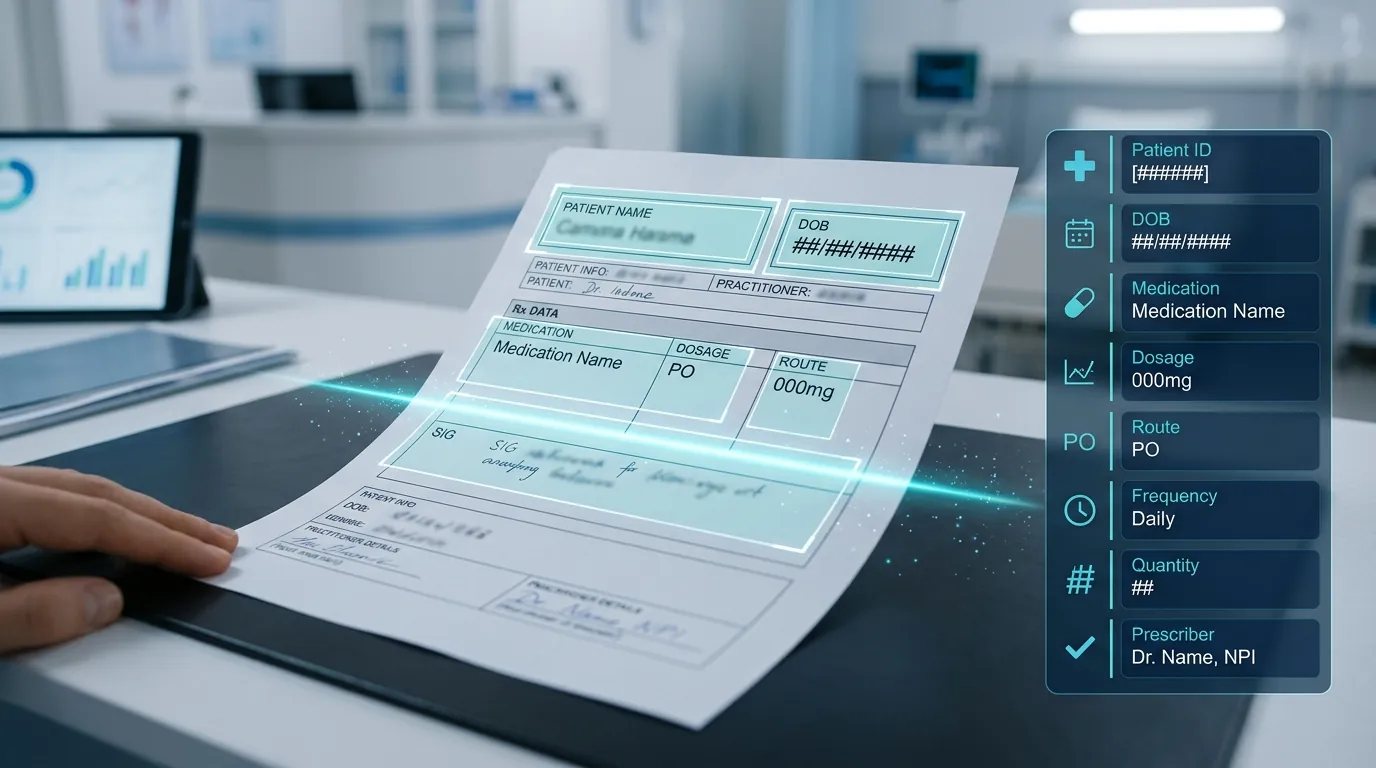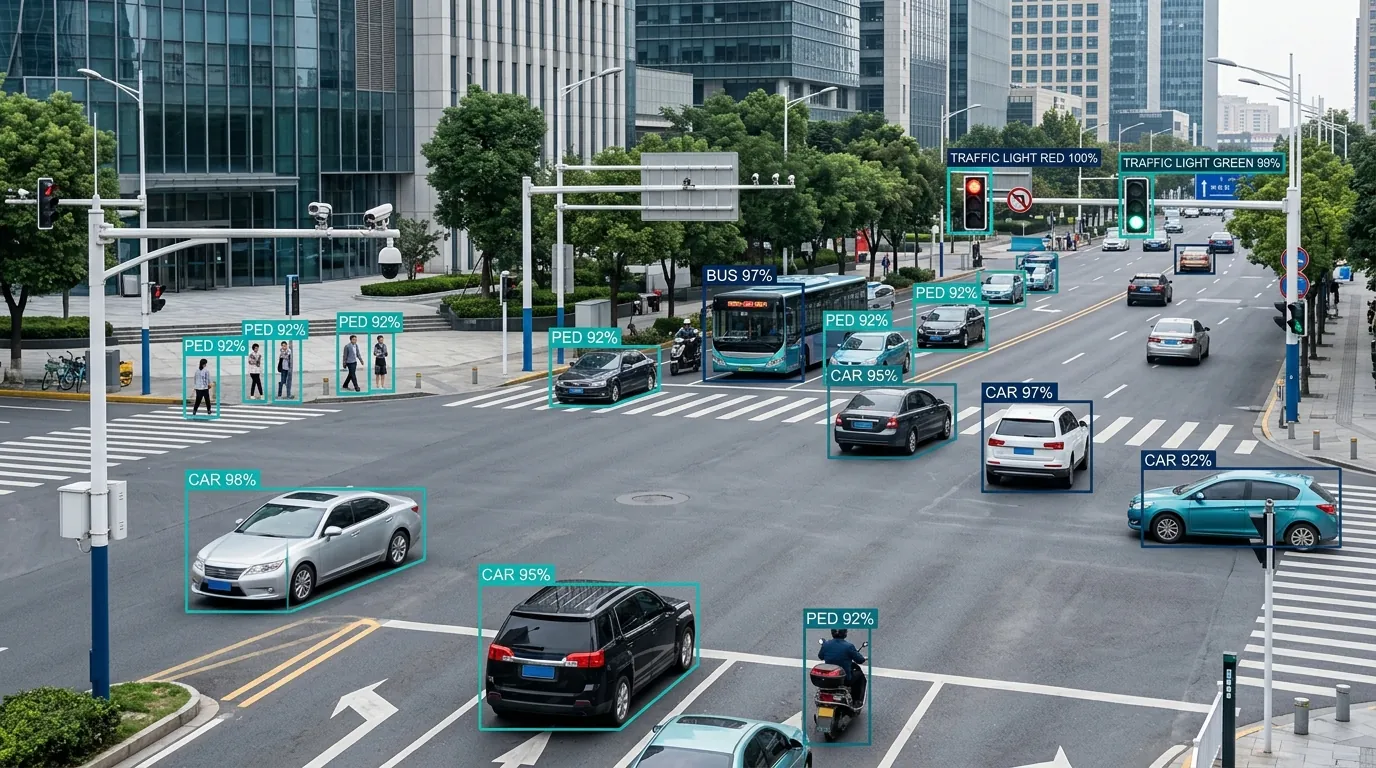

Computer vision is transforming every major industry by giving machines the ability to interpret and act on visual data in real time. From detecting microscopic surface defects on steel to tracking customer movement patterns in a supermarket, the applications span manufacturing, retail, logistics, and security. The deployment of these systems requires a meticulous approach to infrastructure and data pipelines, ensuring high-fidelity data acquisition to train robust models that generalize across varied environments.
| Industry | Primary Use Case | Key Technology | Typical ROI Driver |
|---|---|---|---|
| Manufacturing | Automated defect detection on production lines | Edge AI inference (NVIDIA Jetson) | Reduced scrap rate and recall risk |
| Retail | Customer movement heatmaps and shelf analytics | People re-identification, top-view tracking | Improved planogram compliance and sales lift |
| Logistics & Railways | Wagon/vehicle structural inspection | High-resolution cameras + anomaly detection | Reduced maintenance downtime and safety incidents |
| Security & Surveillance | Aggression and intrusion detection | Pose estimation, action recognition | Faster incident response and reduced guard costs |
-
What Are the Applications of Computer Vision in Manufacturing
Manufacturing relies heavily on automated inspection. See our steel surface defect detection case study.
The deployment of these advanced AI and computer vision systems requires a meticulous approach to infrastructure and data pipelines. Engineers must ensure high-fidelity data acquisition to train robust models capable of generalizing across varied environments. Edge AI deployment further complicates the architecture, necessitating optimized models that balance latency and accuracy. In enterprise settings, the integration of these models into legacy systems is paramount. Robust APIs, containerization, and continuous monitoring form the backbone of a successful implementation. The strategic value derived from these deployments goes beyond mere automation; it enables predictive capabilities, prescriptive analytics, and unparalleled operational visibility. As these technologies mature, their integration becomes not just a competitive advantage, but an operational necessity. The continuous feedback loop from edge devices to centralized training clusters ensures that models remain accurate despite environmental drift. Security and privacy must also be baked into the architecture from day one, employing techniques such as federated learning and differential privacy where applicable. Ultimately, the success of these systems hinges on a holistic approach that bridges the gap between theoretical algorithms and practical, scalable engineering solutions. When we look at enterprise architectures, maintaining high throughput for video streams is critical. The reliance on GPU acceleration at the edge ensures real-time processing capabilities, while cloud infrastructure handles heavy lifting for model retraining. The synergy between edge computing and centralized ML ops creates a resilient framework for mission-critical applications.
-
Computer Vision in Retail
Retail analytics is transforming. Explore our retail customer movement heatmaps.
The deployment of these advanced AI and computer vision systems requires a meticulous approach to infrastructure and data pipelines. Engineers must ensure high-fidelity data acquisition to train robust models capable of generalizing across varied environments. Edge AI deployment further complicates the architecture, necessitating optimized models that balance latency and accuracy. In enterprise settings, the integration of these models into legacy systems is paramount. Robust APIs, containerization, and continuous monitoring form the backbone of a successful implementation. The strategic value derived from these deployments goes beyond mere automation; it enables predictive capabilities, prescriptive analytics, and unparalleled operational visibility. As these technologies mature, their integration becomes not just a competitive advantage, but an operational necessity. The continuous feedback loop from edge devices to centralized training clusters ensures that models remain accurate despite environmental drift. Security and privacy must also be baked into the architecture from day one, employing techniques such as federated learning and differential privacy where applicable. Ultimately, the success of these systems hinges on a holistic approach that bridges the gap between theoretical algorithms and practical, scalable engineering solutions. When we look at enterprise architectures, maintaining high throughput for video streams is critical. The reliance on GPU acceleration at the edge ensures real-time processing capabilities, while cloud infrastructure handles heavy lifting for model retraining. The synergy between edge computing and centralized ML ops creates a resilient framework for mission-critical applications.
-
Logistics and Railways
Safety in transit is critical. Check out the goods train wagon inspection project.
The deployment of these advanced AI and computer vision systems requires a meticulous approach to infrastructure and data pipelines. Engineers must ensure high-fidelity data acquisition to train robust models capable of generalizing across varied environments. Edge AI deployment further complicates the architecture, necessitating optimized models that balance latency and accuracy. In enterprise settings, the integration of these models into legacy systems is paramount. Robust APIs, containerization, and continuous monitoring form the backbone of a successful implementation. The strategic value derived from these deployments goes beyond mere automation; it enables predictive capabilities, prescriptive analytics, and unparalleled operational visibility. As these technologies mature, their integration becomes not just a competitive advantage, but an operational necessity. The continuous feedback loop from edge devices to centralized training clusters ensures that models remain accurate despite environmental drift. Security and privacy must also be baked into the architecture from day one, employing techniques such as federated learning and differential privacy where applicable. Ultimately, the success of these systems hinges on a holistic approach that bridges the gap between theoretical algorithms and practical, scalable engineering solutions. When we look at enterprise architectures, maintaining high throughput for video streams is critical. The reliance on GPU acceleration at the edge ensures real-time processing capabilities, while cloud infrastructure handles heavy lifting for model retraining. The synergy between edge computing and centralized ML ops creates a resilient framework for mission-critical applications.
-
Security and Surveillance
Advanced security systems use AI. Read about aggression detection.
The deployment of these advanced AI and computer vision systems requires a meticulous approach to infrastructure and data pipelines. Engineers must ensure high-fidelity data acquisition to train robust models capable of generalizing across varied environments. Edge AI deployment further complicates the architecture, necessitating optimized models that balance latency and accuracy. In enterprise settings, the integration of these models into legacy systems is paramount. Robust APIs, containerization, and continuous monitoring form the backbone of a successful implementation. The strategic value derived from these deployments goes beyond mere automation; it enables predictive capabilities, prescriptive analytics, and unparalleled operational visibility. As these technologies mature, their integration becomes not just a competitive advantage, but an operational necessity. The continuous feedback loop from edge devices to centralized training clusters ensures that models remain accurate despite environmental drift. Security and privacy must also be baked into the architecture from day one, employing techniques such as federated learning and differential privacy where applicable. Ultimately, the success of these systems hinges on a holistic approach that bridges the gap between theoretical algorithms and practical, scalable engineering solutions. When we look at enterprise architectures, maintaining high throughput for video streams is critical. The reliance on GPU acceleration at the edge ensures real-time processing capabilities, while cloud infrastructure handles heavy lifting for model retraining. The synergy between edge computing and centralized ML ops creates a resilient framework for mission-critical applications.