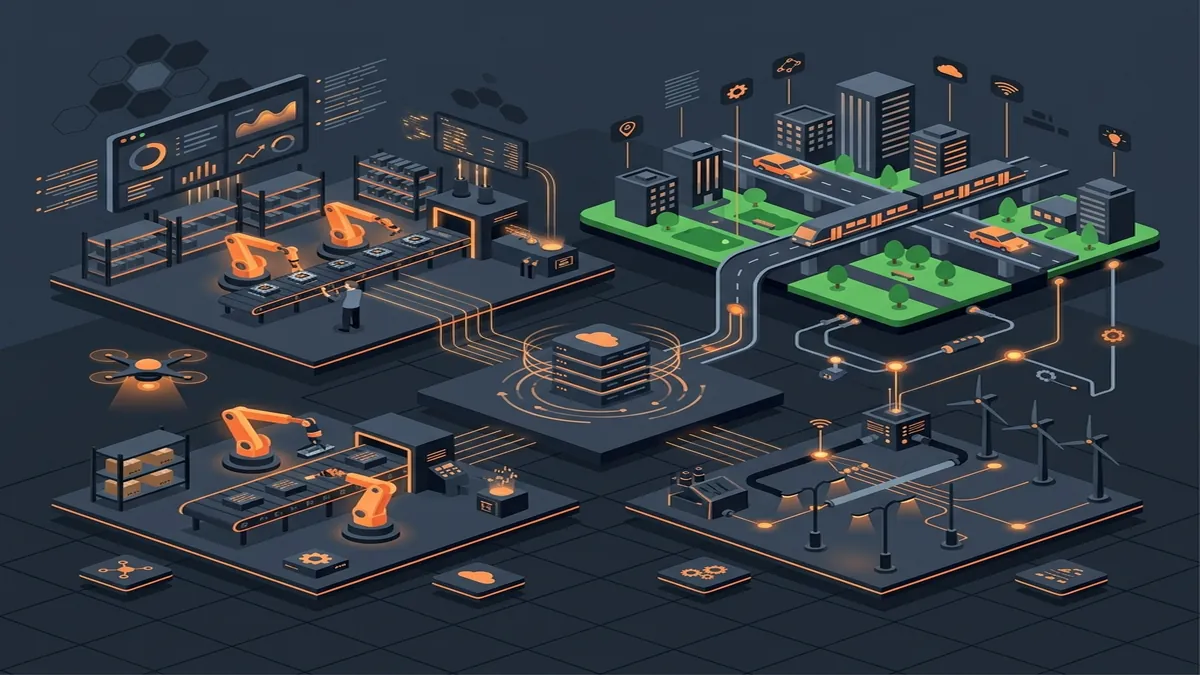

The fourth industrial revolution is turning factories into intelligent ecosystems. By connecting machines, sensors, and systems through IoT, manufacturers are achieving unprecedented levels of efficiency, quality, and agility.
Key Takeaways
- Real-Time Visibility: IoT networks replace manual clipboard data collection with continuous, automated data streams, unlocking precise Overall Equipment Effectiveness (OEE) tracking.
- Predictive Maintenance ROI: Switching from reactive to predictive maintenance can reduce unplanned downtime by up to 50% by fixing machines before they break.
- Digital Twins: Virtual replicas of physical assets allow plant managers to simulate production changes and optimize throughput without risking actual downtime.
- AI Quality Control: High-speed computer vision systems exceed human capabilities, achieving defect detection rates over 99.5%.
The Connected Factory Floor
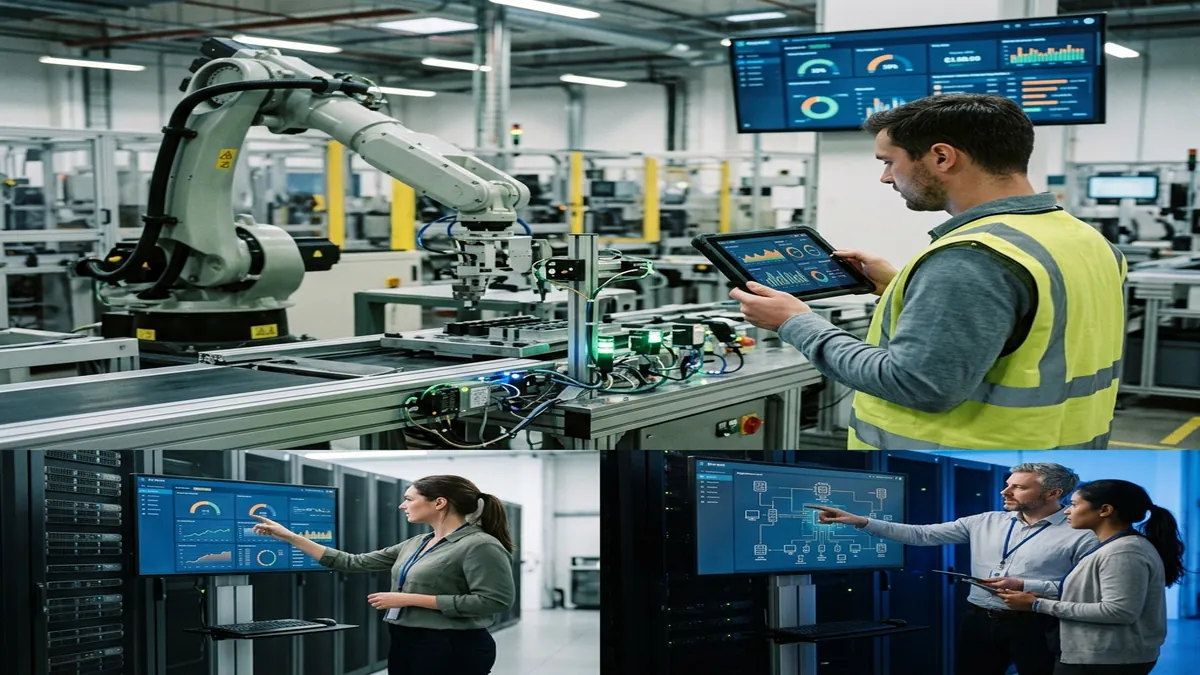
IoT sensors embedded in machinery continuously monitor temperature, vibration, pressure, and dozens of other parameters. This data flows through edge gateways to analytics platforms that provide real-time visibility into every aspect of production. For instance, automotive manufacturers use these real-time dashboards to orchestrate just-in-time parts delivery, ensuring that assembly lines never stall due to missing components. The connected floor transforms localized, blind operations into a cohesive, transparent network.
Predictive Maintenance
Instead of replacing parts on a fixed schedule (preventative maintenance) or waiting for failures (reactive maintenance), smart factories use IoT data to predict when equipment will need maintenance. This approach typically reduces unplanned downtime by 30-50% and extends equipment lifespan by 20-40%. Maintenance crews receive alerts with exact diagnoses, streamlining repair times.
Need an Expert Opinion?
Stop guessing. Speak directly with a senior AdaptNXT engineer about your architecture, timeline, and feasibility.
- Vibration Analysis: Detecting bearing wear, rotor imbalance, and misalignment weeks before a catastrophic motor failure occurs.
- Thermal Monitoring: Using IR sensors to identify overheating electrical components, friction points, or coolant failures in real-time.
- Oil Analysis: Monitoring lubricant viscosity and particulate contamination to optimize oil change intervals, saving material costs.
- Power Consumption: Spotting micro-fluctuations in electrical draw, which often serve as the earliest warning signal of mechanical binding or motor degradation.
| Maintenance Type | Trigger | Pros & Cons |
|---|---|---|
| Reactive | Machine Breaks Down | Cheap in short term; devastating downtime costs. |
| Preventative | Time/Usage Schedule | Reduces failures; wastes money replacing healthy parts early. |
| Predictive (IoT) | Real-time Sensor Data | Maximum uptime & lifespan; requires upfront sensor/AI investment. |
Digital Twins
A digital twin is a virtual replica of a physical asset, process, or entire production line. Fed by continuous IoT data, this twin mirrors the exact state of its physical counterpart. By simulating changes in the digital environment first, manufacturers can optimize processes, test configurations, and predict outcomes without disrupting real production. For example, if a plant manager wants to introduce a new product variant, they can simulate the material flow in the digital twin to identify potential bottlenecks before retooling the actual line. To understand this concept in depth, read our complete guide: What is a Digital Twin? A Beginner's Guide for Manufacturers.
"The factory of the future isn't just automated — it's aware. Every machine knows its state, every process knows its efficiency, and every decision is informed by data."
Quality Control with Computer Vision
Quality assurance is shifting from manual spot checks to 100% automated inspection. AI-powered cameras inspect products at speeds and accuracy levels impossible for human inspectors. Defect detection rates of 99.5%+ are now achievable on high-speed production lines, reducing waste and warranty costs significantly. These systems can instantly flag a scratched casing or a misaligned label, immediately rejecting the part and alerting technicians to a calibration issue.
Getting Started with Smart Manufacturing
The journey to a smart factory doesn't require a complete overhaul. The "rip and replace" method is risky and expensive. Instead, start by instrumenting critical bottleneck equipment, build a basic data pipeline, and use initial insights to prove ROI. AdaptNXT specializes in helping manufacturers design and implement phased IoT solutions that deliver measurable value at each step.
Frequently Asked Questions
1. What is the difference between automated factories and smart factories?
Automated factories use robots to perform repetitive tasks, but they operate blindly. Smart factories use IoT sensors and AI to collect data, allowing the machines to monitor their own health, adapt to changes, and communicate with other systems.
2. How does predictive maintenance save money?
It prevents catastrophic machine failures that cause expensive, unplanned downtime. It also reduces parts spending because components are only replaced when data indicates they are genuinely nearing the end of their useful life, rather than on a rigid time schedule.
3. Do I need to replace my legacy manufacturing equipment to build a smart factory?
No. Most legacy equipment can be retrofitted with aftermarket IoT sensors and edge gateways. These devices extract data from old PLCs (Programmable Logic Controllers) or monitor external variables like vibration and temperature, bridging the gap between old machines and modern cloud analytics.
Ready to transform your business? contact our team to learn more.