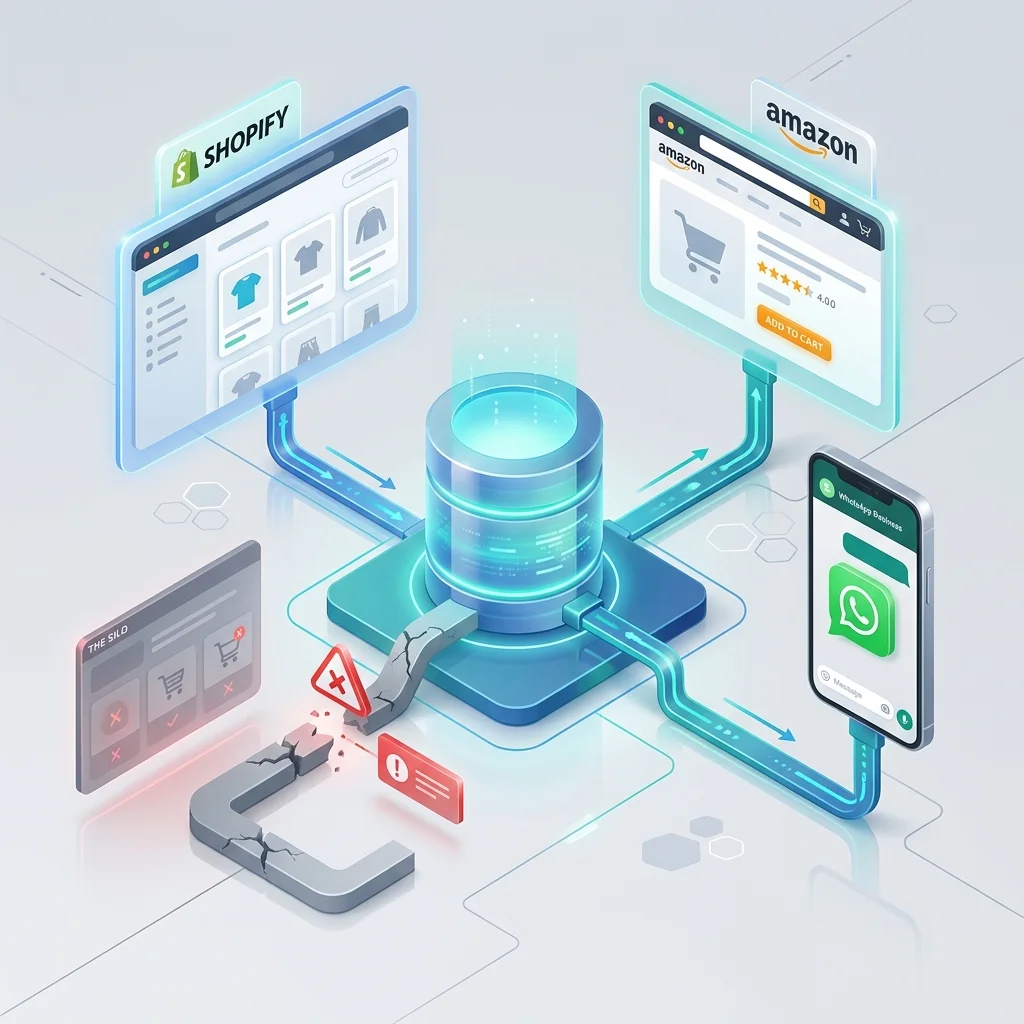

Welcome to this technical engineering guide on automating healthcare communications. Minimizing patient no-shows is a critical operational objective for healthcare providers. By integrating the WhatsApp Business API into clinic management systems, engineering teams can build reliable, high-engagement automated reminder workflows. This guide covers the architectural patterns and technical implementation details required for enterprise-grade deployments, focusing on high availability, security, and scalability in real-world clinic operations.
| Attribute | Cloud API (Meta-Hosted) | On-Premise API (Self-Hosted) |
|---|---|---|
| Infrastructure Management | Fully managed by Meta | Managed by internal DevOps team |
| Data Residency | Data transits Meta servers | Stays entirely within your VPC |
| Regulatory Compliance | May conflict with HIPAA/GDPR for healthcare | Full compliance control |
| Scalability | Automatic horizontal scaling | Manual cluster scaling required |
| Time-to-Deploy | Hours to days | Weeks to months |
| Operational Overhead | Minimal — no containers to manage | High — Docker, DB backups, security patches |
| Best For | Most clinics wanting rapid deployment | High-security healthcare networks |
1. Decoupling the Notification Engine
Directly sending API requests from the main application thread during an appointment booking leads to severe performance degradation and tight coupling within the application architecture. In monolithic designs, when an appointment is scheduled, the system immediately dispatches an HTTP POST request to the WhatsApp Business API. This synchronous approach blocks the primary thread—whether it is a PHP-FPM process or a Node.js event loop—forcing the end-user to wait for the third-party network response. If Meta's servers experience high latency, the core booking workflow slows down exponentially, resulting in connection timeouts, a frustrating user experience, and potential data inconsistency if transactions are left open.
Adopting a robust microservices approach ensures the core clinic operations remain highly responsive and completely isolated from external dependencies. By strategically extracting the notification logic into a standalone, independently deployable microservice, software development teams can horizontally scale the communication layer without allocating unnecessary compute resources to the core booking engine. This architectural shift typically involves introducing a highly available API Gateway, such as Kong or AWS API Gateway, to intelligently manage all ingress traffic. The core scheduling service can then communicate seamlessly with the newly decoupled notification service via lightweight protocols like gRPC or asynchronous messaging, minimizing network overhead and drastically improving overall system throughput during peak clinic booking hours.
Need an Expert Opinion?
Stop guessing. Speak directly with a senior AdaptNXT engineer about your architecture, timeline, and feasibility.
Furthermore, carefully decoupled architectures significantly facilitate the implementation of sophisticated resilience patterns, such as circuit breakers and bulkheads, which are essential for enterprise reliability. Utilizing popular, battle-tested libraries such as Netflix Hystrix, Resilience4j, or Polly, engineers can easily configure the dedicated notification service to intentionally fail fast if a massive WhatsApp API outage occurs. Instead of continuously attempting to connect and completely exhausting critical system resources, the configured circuit breaker trips, allowing the primary booking service to continue operating flawlessly. The failed notifications can be safely logged and reliably queued for later background processing, ensuring that not a single patient reminder is permanently lost while maintaining a perfectly seamless operational flow for busy clinic receptionists.
- The client application transmits a scheduling payload to the API Gateway using secure TLS encryption.
- The core booking microservice validates the temporal constraints, executes the database transaction, and safely updates the primary PostgreSQL relational database.
- A lightweight asynchronous signal is dispatched to the separate notification service indicating a successful scheduling event.
- The decoupled notification engine dynamically formats the message template and dispatches the required reminder entirely independently of the original client request.
2. Designing an Event-Driven Workflow
The most resilient pattern for handling high-volume notifications is adopting an asynchronous event-driven architecture, a cornerstone of modern distributed systems utilized by top engineering teams globally. When an appointment booking successfully completes, the primary scheduling service does not call the external notification service directly, nor does it wait for an acknowledgment. Instead, it emits a strongly-typed, immutable domain event—such as AppointmentConfirmed—to a centralized event bus or message broker. This publish-subscribe methodology completely removes direct synchronous dependencies between independent microservices, allowing any number of downstream consumers to react to the booking event instantly without requiring risky modifications to the upstream producer's source code or impacting core system latency.
In a real-world engineering scenario, designing this workflow requires strict attention to data contracts and schema validation to prevent integration failures. Teams often utilize serialization frameworks and tools like Apache Avro or Protocol Buffers to enforce strict schema registries, guaranteeing that the structure of the domain event remains completely consistent across all service boundaries. The emitted event payload must contain all necessary context—such as the patient's anonymized identifier, the selected clinic location, and the exact appointment timestamp—to construct the localized WhatsApp template perfectly without forcing the notification consumer to make expensive, synchronous callback queries to the core relational database, which would ultimately defeat the purpose of decoupling.
Additionally, event-driven designs inherently support advanced error handling and message durability, which are crucial for medical compliance. If the worker processing the WhatsApp reminder crashes unexpectedly due to an out-of-memory exception, a network partition, or a hardware failure, the message broker ensures the critical event is not permanently acknowledged and is subsequently redelivered. Experienced engineers typically implement robust Dead Letter Queues (DLQs) alongside their standard processing queues. If an event persistently fails to process after a predefined number of randomized exponential backoff retries, it is automatically routed to the DLQ. This allows site reliability operations teams to manually inspect the problematic poison pill messages, debug the underlying software issue, and safely replay the events, ensuring absolute guaranteed delivery of critical medical reminders.
- The domain logic constructs a serialized domain event payload containing the appointment metadata and all patient communication preferences.
- The publisher service pushes the structured event onto a specifically designated topic within the highly available distributed message broker infrastructure.
- A highly scalable consumer group exclusively dedicated to WhatsApp communications polls the topic and reliably receives the newly published event.
- The worker processes the payload, securely dispatches the HTTP request to Meta, and explicitly acknowledges the message upon receiving a successful 200 OK HTTP response.
2.1 Utilizing Message Brokers
Implementing enterprise-grade message brokers like Apache Kafka, RabbitMQ, or cloud-managed solutions such as AWS SQS allows the notification service to consume events reliably under heavy load. Kafka, with its append-only commit log architecture, is particularly suited for high-throughput environments where strict ordering and persistence are required. RabbitMQ offers flexible routing topologies via exchanges and bindings, ideal for complex scenarios where an appointment event might trigger multiple independent workflows (e.g., sending a WhatsApp message and generating an invoice). If the WhatsApp API experiences significant downtime or rate limiting, these brokers safely buffer the outgoing messages in persistent storage, ensuring zero data loss and enabling automated, staggered retries once the external API recovers.
2.2 Webhook Security Protocols
Handling incoming delivery receipts, read statuses, and patient replies requires exposing public-facing HTTPS endpoints to the internet. To prevent malicious actors from spoofing requests or launching denial-of-service attacks, these webhooks must validate the cryptographic payload signature provided by the WhatsApp API. Meta includes an X-Hub-Signature-256 header in every webhook request, containing an HMAC-SHA256 hash of the raw payload computed using the application's configured app secret. The receiving server must independently compute this hash and perform a constant-time string comparison to verify the request's authenticity before parsing the JSON data. Furthermore, implementing IP allowlisting and deploying web application firewalls (WAF) provides an essential defense-in-depth strategy against automated scraping and brute-force vulnerabilities.
3. Overcoming Integration Obstacles
Connecting a proprietary clinic backend to a third-party global messaging platform introduces unique technical hurdles that require sophisticated engineering solutions and robust error handling. One major operational challenge is managing strict external API rate limits during bulk reminder dispatch, such as sending thousands of automated notifications simultaneously for upcoming seasonal vaccination drives. Exceeding Meta's strictly defined throughput thresholds immediately results in HTTP 429 Too Many Requests errors, which can severely impact delivery rates. Engineering teams must design and implement an intelligent leaky bucket or token bucket algorithm directly within their distributed worker queues. By precisely controlling the exact rate of outbound HTTP requests and pairing it with a robust exponential backoff and randomized jitter strategy, the system can dynamically adapt to severe throttling events without dropping any critical patient reminders.
Another profound technical obstacle is managing complex conversational state across entirely asynchronous, distributed network replies. When a patient responds to an automated reminder requesting to reschedule, the incoming webhook request from Meta is completely stateless and lacks historical context. The application infrastructure must instantaneously reconstruct the full context of the ongoing conversation to provide a coherent, automated programmatic response. Modern architectural solutions involve utilizing an ultra-fast, distributed in-memory datastore like Redis or Memcached to persist user context, secure session identifiers, and detailed state machine progress. By storing a finite state machine representation of the entire conversation flow, the webhook handler can instantly retrieve the patient's exact current step, process natural language inputs accurately, and seamlessly transition to the next logical state, whether that involves offering alternative calendar time slots or intelligently escalating the interaction to a live human administrative agent.
Finally, guaranteeing idempotent operations is absolutely vital for maintaining data integrity and building user trust in distributed cloud environments. Inherent network unreliability can sometimes cause the WhatsApp API to successfully process an outbound message but fail to return the HTTP acknowledgment payload back to the clinic's internal worker node. If the worker pod unexpectedly restarts or the message broker aggressively re-delivers the unacknowledged event, a naive backend implementation would erroneously dispatch a duplicate reminder, frustrating the patient and damaging the clinic's reputation. Advanced engineers solve this distributed systems problem by generating a cryptographically secure, idempotent UUID for every single outbound message. Before attempting to process an event, the worker checks a highly available, fast key-value store to verify if the unique ID has already been executed. This guarantees that regardless of severe infrastructure hiccups, strict exactly-once processing semantics are consistently maintained for all automated patient communications.
- The scalable worker node effectively extracts the unique message identifier directly from the incoming domain event payload.
- A distributed lock is reliably acquired in the Redis cluster using the identifier to prevent concurrent duplicate processing by competing consumer threads.
- The backend system immediately queries the idempotency table to properly verify if this specific targeted reminder has already been successfully dispatched.
- If not processed, the outbound WhatsApp API request is fired, and upon success, the immutable idempotency record is permanently written to the secure database.
- Challenge: Hitting API rate limits during bulk reminder dispatch. Solution: Implement an intelligent leaky bucket algorithm and exponential backoff in the worker queues.
- Challenge: Managing conversational state across asynchronous replies. Solution: Utilize an in-memory datastore like Redis to persist user context and state machine progress.
- Challenge: Template approval friction. Solution: Abstract message payload generation so fallback SMS routes can be triggered if a WhatsApp template is rejected.
- Challenge: Guaranteeing idempotent operations. Solution: Store unique message IDs to prevent duplicate reminders if a worker pod restarts mid-processing.
4. Technical Comparison: Cloud API vs. On-Premise API
Meta offers vastly different deployment models for the WhatsApp Business API, forcing backend architecture teams to carefully evaluate fundamental trade-offs between ongoing operational overhead, infrastructure complexity, and critical data sovereignty. The Cloud API, which is hosted entirely directly by Meta, brilliantly abstracts away all the underlying infrastructure complexities and maintenance burdens. It provides a standardized RESTful interface accessible over standard HTTPS, completely eliminating the immediate need for internal engineering teams to manage complex Docker containers, provision dedicated databases, or write custom auto-scaling policies. This managed Software-as-a-Service model accelerates enterprise time-to-market significantly, allowing software development teams to focus purely on building unique business logic and conversational workflows rather than managing infrastructure maintenance. For the vast majority of modern clinics, the automatic horizontal scaling capabilities and robust high availability guarantees of the managed Cloud API make it the definitively preferred choice for rapid, reliable integration.
However, adopting the convenient Cloud API model inherently requires transmitting all sensitive patient communication metadata directly through Meta's external global servers, which can frequently conflict with incredibly stringent regional data residency regulations like HIPAA in the United States or GDPR in the European Union. For highly secure, privacy-focused healthcare networks requiring absolute, verifiable control over their patient data flow, the On-Premise API remains a highly viable, albeit significantly more complex, technical alternative. Deploying the On-Premise solution involves orchestrating a comprehensive cluster of specialized Docker containers—including core application nodes, high-performance Webhook services, and a dedicated, highly tuned MySQL or PostgreSQL relational database—entirely within the clinic's heavily secured private virtual private cloud (VPC) or internal bare-metal servers. This rigorous deployment strategy ensures that vital end-to-end encryption keys and all sensitive message payloads fundamentally never leave the healthcare organization's tightly controlled network perimeter.
Choosing the On-Premise deployment model necessitates a substantial, ongoing investment in dedicated DevOps and Site Reliability Engineering (SRE) operational resources. The internal infrastructure team ultimately becomes entirely responsible for continuously monitoring container health, promptly applying frequent critical security patches regularly released by Meta, managing automated database backups, and manually scaling the cluster horizontally to handle massive unexpected traffic spikes. Furthermore, setting up robust, geographically distributed disaster recovery protocols across multiple cloud availability zones becomes an extensive internal engineering burden that cannot be ignored. While the isolated On-Premise model offers absolutely unparalleled security isolation and strict compliance advantages for heavily regulated environments, the long-term total cost of ownership and operational complexity is substantially higher when directly compared to the streamlined, serverless nature of the fully managed Meta-hosted Cloud API.
- The internal architecture review board meticulously analyzes the specific compliance requirements and strict data residency laws absolutely applicable to the clinic's exact geographical location.
- The core engineering team provisions a highly secure VPC and accurately sets up all necessary network routing configurations for protected inbound and outbound traffic.
- DevOps engineers securely deploy the comprehensive On-Premise Docker containers using Kubernetes or Docker Compose, directly connecting them to an encrypted internal private database.
- Comprehensive integration tests are rigorously executed entirely against the private infrastructure to validate message delivery, latency expectations, and incredibly strict security isolation protocols.
- Pros of Cloud API (Meta hosted): Eliminates infrastructure maintenance, provides automatic scaling, and reduces initial deployment complexity.
- Cons of Cloud API: Less control over data residency, which can complicate strict regulatory compliance in certain regions.
- Pros of On-Premise API: Complete control over the deployment environment and data flow, ideal for highly secure healthcare networks.
- Cons of On-Premise API: Requires significant DevOps resources to manage Docker containers, database backups, and software updates.
5. Optimizing the Patient Experience
Beyond simply dispatching static, one-way appointment reminders, an advanced and highly optimized WhatsApp API integration dynamically processes natural language replies to create a truly interactive and engaging patient experience. Modern healthcare software systems increasingly leverage sophisticated conversational AI and advanced natural language processing (NLP) pipelines—such as Google Dialogflow, AWS Lex, or custom-trained transformer models—to accurately parse underlying user intent directly from complex free-text responses. This powerful capability empowers patients to easily reschedule, cancel, or securely confirm upcoming appointments directly within the familiar, ubiquitous chat interface without ever needing to navigate clunky external web portals or spend time calling the busy reception desk. By deeply and seamlessly integrating these accurately parsed intents back into the core clinic management backend system, administrative overhead is drastically reduced, staff efficiency is maximized, and the overall accuracy of the daily clinical schedule is vastly improved.
To properly implement this advanced interactive functionality, engineering teams must build sophisticated, highly concurrent webhook handlers capable of instantly routing all incoming messages directly to the distributed NLP engine. Once the specific patient intent is successfully identified—for example, correctly recognizing that a message stating 'Can we do tomorrow at 3 PM?' clearly signifies a desire to reschedule—the backend system synchronously queries the clinic's primary database for available calendar time slots via an internal, optimized API. The integration layer must then carefully format these available scheduling options into highly structured, interactive WhatsApp message types, such as intuitive list messages or quick reply buttons. These engaging interactive elements gently guide the patient through a heavily constrained, error-free conversational flow, significantly reducing the massive friction typically associated with traditional text-based parsing and drastically minimizing the likelihood of frustrating miscommunication.
Furthermore, fully optimizing the patient communication experience involves handling unexpected edge cases gracefully and ensuring a perfectly seamless, immediate handoff to live human operators whenever the automated system encounters conversational ambiguity. Implementing a robust, failsafe fallback mechanism is absolutely critical for maintaining patient trust and satisfaction. If the NLP engine fails to achieve a sufficiently high confidence score for a specific user intent, the intelligent system should instantly and automatically route the ongoing conversation to a dedicated, unified customer support dashboard, transferring the entire historical chat context simultaneously. This highly effective hybrid approach ensures that vulnerable patients always receive accurate, deeply empathetic assistance when required while simultaneously maximizing the automation of routine, repetitive scheduling tasks, ultimately leading to significantly higher patient satisfaction metrics and a massive reduction in daily operational bottlenecks for the clinic.
- The dedicated webhook receives a raw free-text reply directly from the patient and efficiently strips out all unnecessary formatting and unparseable emojis.
- The fully sanitized text is safely transmitted to an external or internal NLP service which successfully extracts the primary conversational intent and associated critical entities like dates or times.
- The core integration layer safely queries the internal scheduling API to dynamically fetch exclusively available appointment slots explicitly matching the previously extracted criteria.
- An engaging interactive WhatsApp message heavily featuring structured quick-reply buttons is properly generated and securely sent, actively allowing the patient to effortlessly select their absolute preferred new time.
"Automating patient reminders through the WhatsApp API reduces no-shows significantly, but requires a robust, event-driven backend architecture to handle high throughput and stateful interactions."
Frequently Asked Questions
What is the recommended architecture for integrating WhatsApp API with clinic software?
The most effective approach is a robust asynchronous, event-driven microservices architecture. By utilizing powerful message brokers like RabbitMQ or Kafka, you effectively decouple the core booking logic from the external notification delivery system. This crucially prevents third-party API latency or temporary network outages from severely impacting the main application's responsiveness while simultaneously providing robust retry mechanisms for any failed messages.
How can engineering teams handle WhatsApp API rate limits efficiently?
To actively avoid receiving HTTP 429 errors during massive bulk message dispatches, engineering teams should deliberately implement sophisticated rate-limiting algorithms, such as reliable token buckets or optimized leaky buckets, directly within their asynchronous worker queues. Strategically coupling these complex algorithms with intelligent exponential backoff and randomized jitter strongly ensures that outbound network requests are dynamically and accurately paced to perfectly respect Meta's threshold limits without ever dropping crucial patient reminders.
What are the primary differences between Cloud and On-Premise WhatsApp deployments?
The highly accessible Cloud API is fully hosted and scaled by Meta, entirely eliminating the immediate need for extensive internal infrastructure management and offering fully automatic scaling, making it substantially faster and easier to initially deploy. The rigorous On-Premise API, however, explicitly requires meticulously deploying and continuously managing customized Docker containers entirely on your own internal servers or private virtual cloud, effectively providing maximum possible control over absolute data sovereignty and regional compliance, but critically requiring significantly higher continuous DevOps overhead and dedicated operational maintenance.
Ready to streamline your operations and drive growth? Contact our team today to explore how our advanced solutions can be tailored to your business needs, or discover your potential savings with our ROI Calculator.