

By an industry veteran in technology delivery, e-commerce systems architecture, and retail channel management.
The hype surrounding WhatsApp Commerce powered by a WhatsApp shopping bot is completely justified.
With open rates averaging 98% and click-through rates often exceeding 20%, the WhatsApp Business API offers a direct, conversational connection to your customers that traditional email or SMS marketing simply cannot match. If you have read our Ultimate Guide to WhatsApp Commerce, you know that letting customers browse products, ask questions, and complete checkout within their favorite messaging app dramatically increases conversion rates.
Need an Expert Opinion?
Stop guessing. Speak directly with a senior AdaptNXT engineer about your architecture, timeline, and feasibility.
However, as e-commerce brands rush to launch WhatsApp shopping bots, many run straight into a major operational trap: they build them as isolated silos.
They treat their WhatsApp catalog as a separate store, distinct from their main Shopify site, their WooCommerce setup, or their seller accounts on Amazon and Flipkart. They launch a standalone chatbot that operates on its own database, completely disconnected from the rest of the business.
For the first few weeks, when you are processing five orders a day, this siloed approach is manageable. But the moment your conversational channel scales, the cracks in a disconnected architecture begin to show. Inventory discrepancies pile up, pricing mismatches confuse customers, and your operations team gets bogged down in manual copy-paste order entry.
As a technology consultant who has spent three decades designing high-scale retail architectures, I will share a fundamental truth: conversational commerce is not a standalone channel; it is a front-end extension of your existing business logic.
This guide breaks down why siloed WhatsApp storefronts fail, the operational friction they create, and how to design a unified, multi-channel e-commerce architecture that keeps WhatsApp, Shopify, Amazon, and WooCommerce in perfect synchronization.
The 4 Operational Failures of Siloed WhatsApp Shops
When you run your WhatsApp shopping bot on a separate, unconnected database, you introduce four major operational friction points that erode your margins and damage customer trust.
1. The Phantom Inventory Crisis (Double-Selling)
Imagine you have three units left of a high-demand SKU. A customer buys one unit on Shopify. A minute later, another customer buys two units on Amazon. At the exact same time, a customer is chatting with your WhatsApp bot, which still shows three units in stock because it has no connection to your Shopify or Amazon inventory logs. The customer completes the purchase on WhatsApp, pays, and expects shipping.
You have now double-sold your inventory. Your operations team must manually void the transaction, issue a refund, write an apology message, and deal with an angry customer. This is the natural result of lacking a single source of truth for your stock counts.
2. The Manual Order Entry Bottleneck
When a customer completes a purchase through a siloed WhatsApp bot, the order details reside within the chatbot platform's dashboard. To fulfill that order, a warehouse technician or customer service rep must manually copy the customer's name, shipping address, phone number, and SKU list, and type them into your main ERP or shipping management platform (like Shiprocket or Delhivery).
Manual data entry is slow, expensive, and prone to human error. A typo in a postal code leads to a returned shipment, extra shipping costs, and a delayed delivery. At scale, this manual bottleneck makes it impossible to grow your business without hiring a small army of data entry clerks.
3. Pricing Discrepancies and Promos
If you run a flash sale or update a product's price on Shopify, that change must instantly reflect across all channels. In a siloed setup, someone has to remember to log into Meta Commerce Manager and manually update the price in the WhatsApp catalog. If they forget, you will have customers complaining that the price they saw on Instagram or WhatsApp is different from what is listed on your website, leading to carts being abandoned at checkout.
4. Fragmented Customer Support History
A customer buys a product on WooCommerce. A week later, they message your WhatsApp bot asking: "Where is my order?"
If the bot is disconnected from WooCommerce, it cannot answer. It must escalate the query to a human agent. The agent then has to log into WooCommerce, find the tracking number, and paste it back into the WhatsApp chat. The customer is kept waiting, and your support labor costs rise.
Siloed vs. Integrated: The Architectural Shift
To understand how to resolve these issues, we must compare the two integration approaches:
| Operational Metric | Siloed WhatsApp Shop | Integrated Omnichannel Shop |
|---|---|---|
| Inventory Control | Manual updates or scheduled batch syncs. High risk of double-selling. | Real-time API sync. Inventory drops are instantly broadcast across all channels. |
| Order Processing | Manual copy-paste from chatbot dashboard to warehouse ERP. | Automated injection. Orders are pushed to Shopify/WooCommerce via webhooks instantly. |
| Catalog Management | Separate catalog database. Price changes must be entered manually in multiple places. | Unified Catalog. Shopify acts as the source of truth, auto-syncing to Meta. |
| Order Tracking | Requires human agents to manually look up tracking codes in external systems. | Self-Service. The bot queries the ERP API directly to give immediate shipping updates. |
Designing a Unified Multi-Channel Architecture
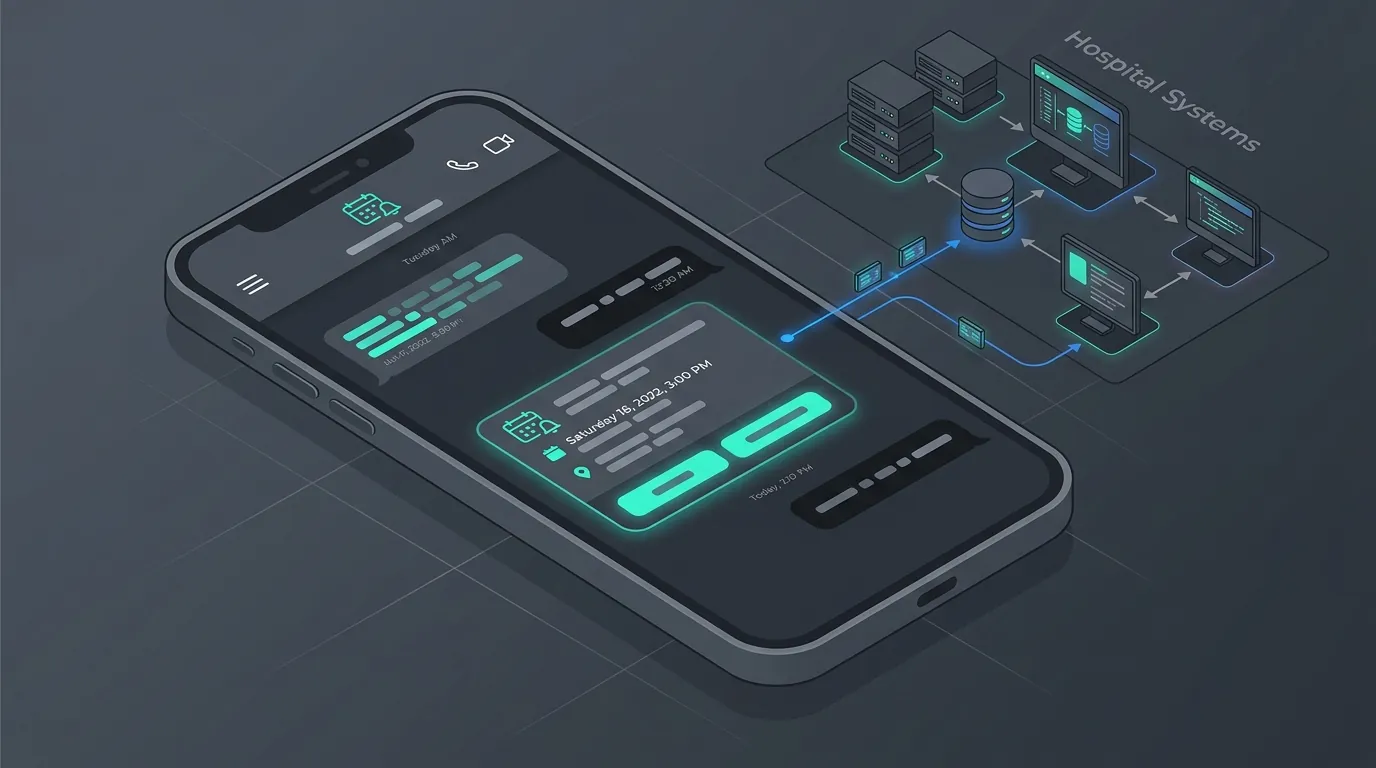
How do we build an integrated storefront? The solution is to establish a Single Source of Truth for your retail operations, decoupling the front-end sales channels (Shopify, Amazon, WooCommerce, WhatsApp) from the back-end database.
Here is the architectural blueprint AdaptNXT uses to implement this:
-
The Centerpiece: Your Main E-Commerce Backend (Shopify/WooCommerce)
We designate your primary e-commerce platform (e.g., Shopify) as the master catalog and inventory database. All product metadata, pricing, images, and inventory levels are managed here. You do not edit product details inside WhatsApp Commerce Manager.
-
Real-Time Inventory Webhooks
When an order occurs on Shopify, Amazon, or WooCommerce, the platform broadcasts a `webhooks/inventory_update` event. Our integration layer catches this webhook in real-time, calculates the new global stock level, and immediately updates the Meta Catalog API. The WhatsApp shopping catalog is updated in seconds, preventing double-selling.
-
Order Injection Pipeline
When a customer completes a purchase inside your WhatsApp bot, the checkout system does not simply log the order in a chat database. Instead, our custom connector uses the Shopify Admin API or WooCommerce REST API to inject the order directly into your main store as a "Draft Order" or "Paid Order." The order instantly appears on your main warehouse fulfillment list, alongside orders placed directly on your website. Your logistics team follows their standard workflow, completely unaware that the order originated on WhatsApp.
-
Bidirectional Tracking Updates
When your warehouse prints a shipping label and updates the order with a tracking number, the e-commerce platform fires a webhook. Our connector catches this event and automatically sends a WhatsApp message templates update to the customer: "Your order has been shipped! Here is your tracking link..." It operates fully autonomously.
How to Assess Your Store's Readiness for WhatsApp Sync
If you are planning to connect your sales channels with a conversational bot, run through this architectural check to see if you have the necessary foundations:
- Centralized Inventory: Do you use a centralized inventory manager (like Shopify, WooCommerce, or a multi-channel ERP like PointNXT) that aggregates stock counts across all sales channels?
- REST/GraphQL API Access: Does your e-commerce platform support webhook triggers for inventory updates and order creations?
- SKU Consistency: Are your SKUs identical across Shopify, WooCommerce, and Amazon? (Having mismatched SKUs is the most common reason sync integrations fail).
- Meta Commerce Manager Sync: Have you connected your Meta Catalog to your Shopify or WooCommerce product feed, or do you require a custom API feed?
The Bottom Line
WhatsApp Commerce is a powerful revenue driver, but only when it is integrated into your existing operations. Treating it as an isolated silo creates operational chaos, increases manual labor costs, and damages customer relationships through double-selling and data errors.
To scale your conversational store, stop thinking about the chat bubble. Think about the APIs, the webhooks, and the database synchronization. The future of retail belongs to unified, multi-channel ecosystems. (To understand the exact developer setup required to build this connection, see our technical guide on Real-Time Sync for WhatsApp Bots).
At AdaptNXT, we build robust, custom API connectors that link WhatsApp Business API directly with your Shopify, WooCommerce, and Amazon seller databases. We handle the data pipelines, structure the webhooks, and ensure your operations team sees a single, unified workflow. If you want to integrate a WhatsApp shopping bot into your existing store, contact our team to start your sync design →