
The Challenge
Driver fatigue remains one of the most significant risks in the long-haul transportation industry, contributing to nearly 20% of commercial vehicle accidents globally. Traditional fleet management systems rely on retrospective GPS data and driving hours, which fail to capture the immediate physical and behavioral cues of drowsiness.
The client, a major logistics provider, faced rising insurance costs and safety liabilities due to late-night transit fatigue. Their existing telematics could track "where" the truck was, but not "how" the driver was performing. They needed a non-intrusive, real-time solution that could intervene before an accident happened, providing split-second alerts to the driver and actionable data to their safety supervisors.
The primary challenge was technical: the solution had to work in complete darkness (night driving), handle diverse driver facial features, and process all data locally at the edge to ensure zero-latency alerts without relying on inconsistent highway cellular connectivity.
Our Solution
AdaptNXT implemented a comprehensive Edge AI safety ecosystem that transforms the truck cabin into a smart, self-monitoring environment:
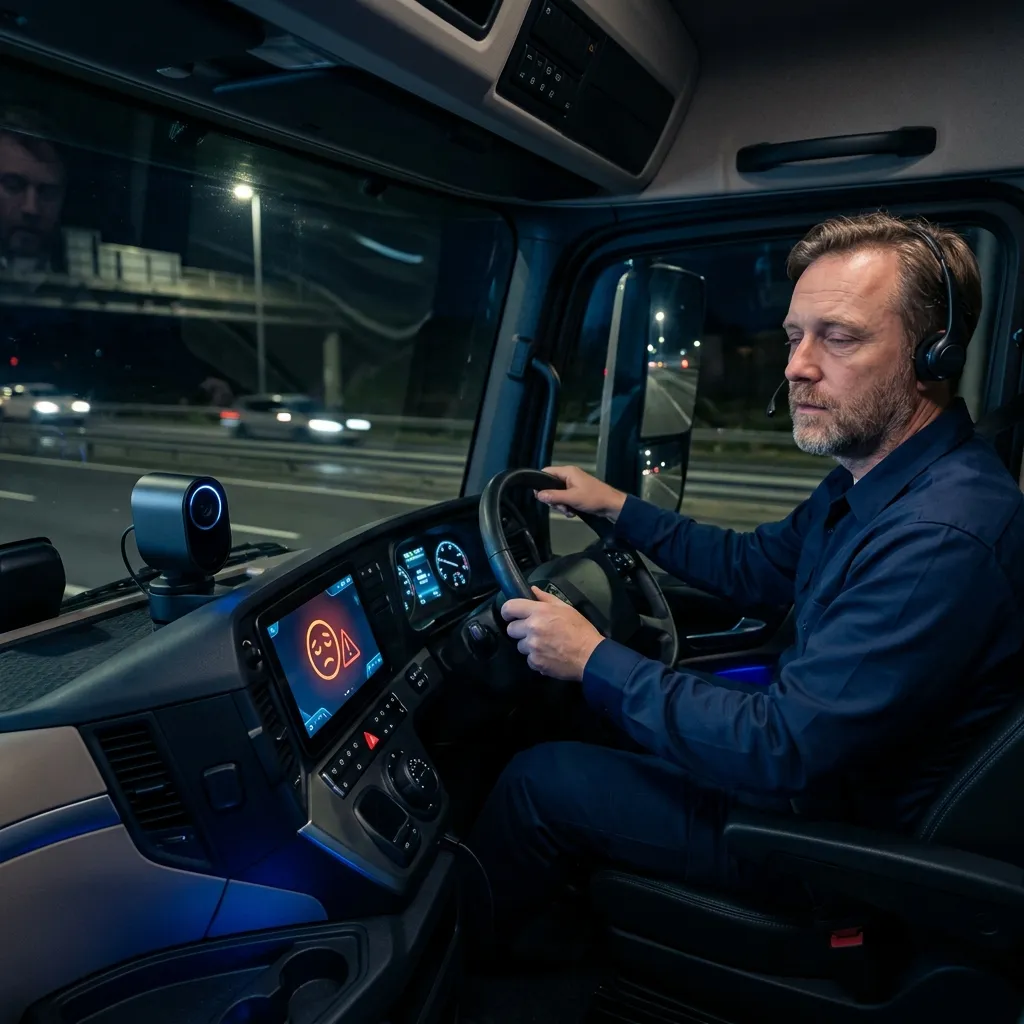
- High-Precision IR Vision: Installed cabin-mounted Infrared (IR) camera modules that provide crystal-clear monitoring in zero-light conditions without distracting the driver with visible flashes.
- Real-Time Behavioral Analytics: Developed and optimized lightweight Computer Vision models (utilizing facial landmark detection) to monitor three critical fatigue indicators:
- Yawning Frequency: Detection of frequent or prolonged yawning patterns indicating early-stage drowsiness.
- Eyelid Closure (PERCLOS): Monitoring the percentage of time eyes are closed to identify "microsleep" events.
- Gaze & Head Position: Detecting distractions or "nodding off" behaviors when the driver's head tilts abnormally.
- In-Cabin Audio Intervention: Integrated the edge processor with the vehicle's audio system to provide immediate voice-guided alerts and high-decibel alarms when high-risk behavior is confirmed.
- Centralized Fleet Dashboard: Integrated with IoT Telematics to transmit "Fatigue Events" (including a 5-second video clip) to the Central Control Room via MQTT, allowing dispatchers to order immediate rest stops for high-risk drivers.
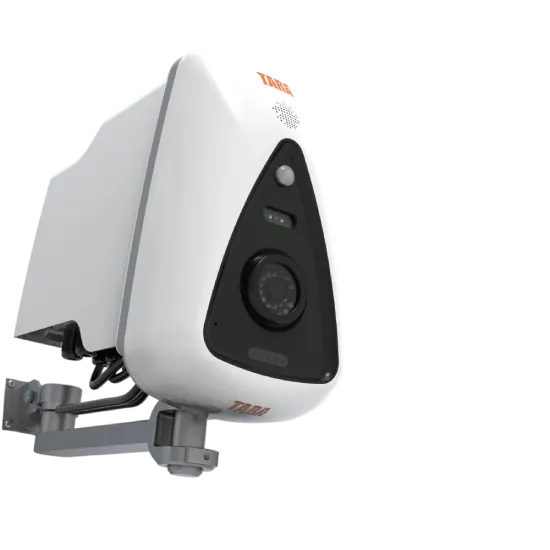
- Edge-First Architecture: Entire AI inference is performed on a ruggedized NVIDIA Jetson-based edge unit, ensuring that alerts work even in "dead zones" where internet connectivity is unavailable.
Technical Architecture
| Component | Technology / Role |
|---|---|
| Hardware & Vision | Infrared (IR) Cabin-mounted Cameras, NVIDIA Jetson Edge AI modules |
| AI / Computer Vision | Facial Landmark Detection, PERCLOS monitoring, Optical Flow |
| In-Cabin Alerts | Direct integration with vehicle audio systems for voice-guided alarms |
| IoT Telematics & Cloud | MQTT Protocol, Central Control Room Dashboard via IoT Telematics |
The Impact
The deployment of the Edge AI fatigue detection system has fundamentally shifted the client's safety paradigm from reactive investigation to proactive prevention:
- 65% reduction in fatigue-linked safety incidents: Drastic decrease in lane departures and minor collisions during the first year of deployment.
- Near-Zero Latency Alerts: In-cabin intervention occurs in less than 150ms from the moment eyes close, providing the critical seconds needed for a driver to regain control.
- 35% reduction in insurance premiums: Demonstrable risk mitigation and improved safety records led to significant renegotiated rates with underwriters.
- Improved Driver Wellness: The data enabled the client to optimize shift scheduling and mandatory rest periods based on actual fatigue trends rather than generic timers.
Learn how algorithms like optical flow power real-time detection systems in our technical guide to Optical Flow & Motion Tracking in Computer Vision.
Experience the Solution
Interact with our real-time fatigue detection dashboard and see the edge analytics in action.