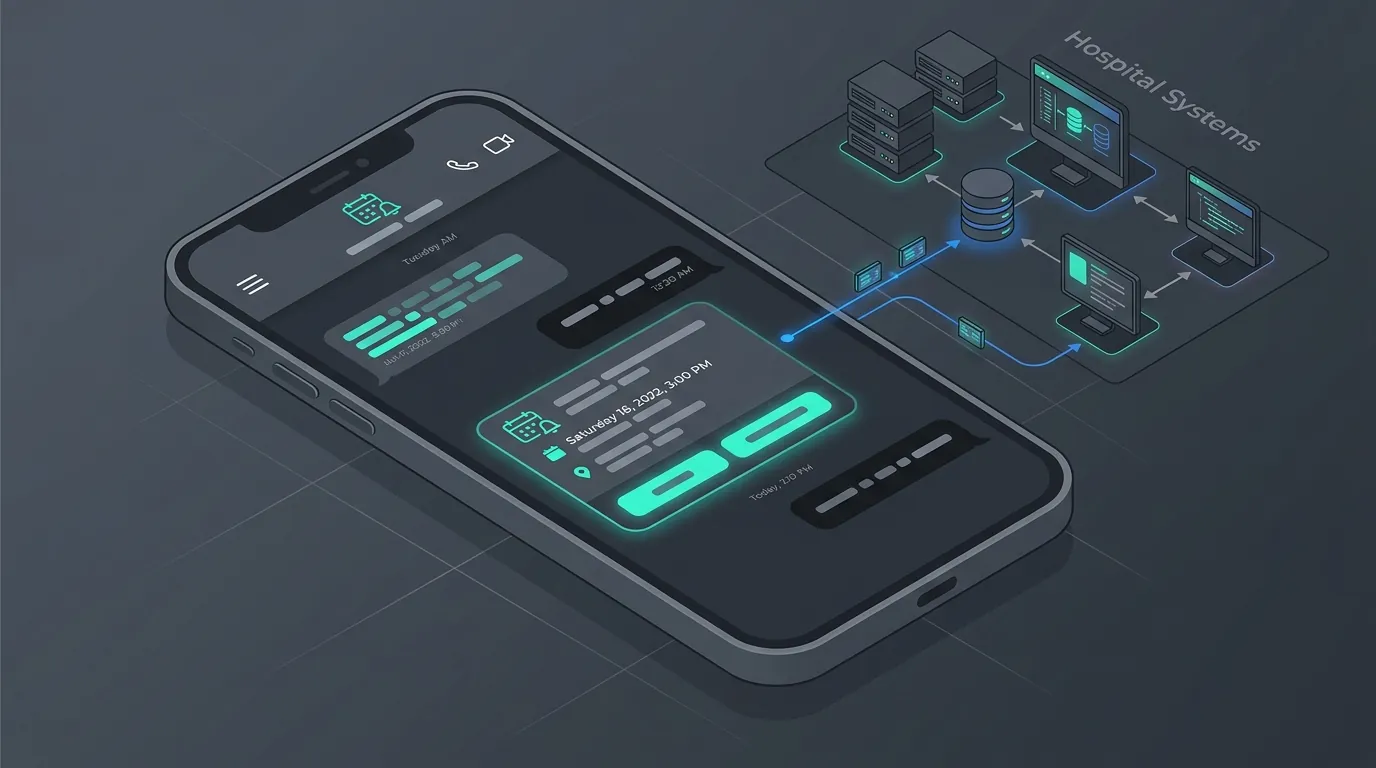

There is a dangerous, pervasive myth echoing through the boardrooms of modern tech companies: that the deployment of Artificial Intelligence will act as a silver bullet, allowing organizations to lay off their entire customer service department and replace them with algorithms. This is not only factually incorrect; it is operationally suicidal and guarantees the destruction of your brand's reputation. The true goal of a chatbot or conversational AI is not total human replacement; it is intelligent triage. A successful, well-engineered bot automates the 60-70% of repetitive, low-value, high-volume queries so that your human agents can focus 100% of their energy on the complex, high-emotion, edge-case queries that machines simply cannot handle.
However, building the bridge between Artificial Intelligence and Human Intelligence is arguably one of the most complex distributed systems challenges in modern software engineering. It requires navigating the treacherous waters of real-time state synchronization, bidirectional WebSocket communication protocols, data persistence under massive concurrent throughput, and the subtle nuances of human-computer interaction. When you peel back the layers of a truly seamless handoff, you aren't just looking at a simple REST API call. You are observing a heavily orchestrated ballet of microservices, event-driven architectures, persistent message queues, resilient webhooks, and complex retry mechanisms.
The transition must be utterly invisible to the end-user. The moment a customer realizes they have been passed off to a human agent, that agent should already possess the full context of the entire preceding interaction. Forcing a user to repeat information they have already spent five minutes explaining to a bot is the cardinal sin of conversational AI, and it is the single fastest way to plummet your Net Promoter Score (NPS) into negative territory.
Need an Expert Opinion?
Stop guessing. Speak directly with a senior AdaptNXT engineer about your architecture, timeline, and feasibility.
Key Takeaways: A seamless "Human-in-the-Loop" (HITL) architecture mandates robust event streaming, zero-latency state hydration, and deep CRM integration. This ensures the human agent receives the entire chat transcript, CRM profile, and sentiment score instantly. The transition must completely eliminate the need for the user to ever repeat themselves. Intelligent routing leverages Natural Language Understanding (NLU) and sentiment analysis to prioritize angry or high-value customers, routing them immediately to specialized Tier 2 agents.
The Anatomy of a Seamless Human-in-the-Loop Architecture
To fundamentally grasp the engineering behind a successful handoff, we must first break down the underlying architecture of an enterprise-grade conversational AI platform. A modern, scalable setup typically involves an omni-channel edge gateway (often built with NGINX, Envoy, or custom Go services), a Natural Language Understanding (NLU) inference engine, a stateful dialog manager, and a robust integration layer. When a user interacts with the system via a web widget or mobile app, their messages are ingested by the edge gateway, which sanitizes the input, handles rate limiting, and normalizes the payload into a standard JSON format.
The dialog manager acts as the brain and state machine of the interaction. It meticulously tracks the context of the ongoing conversation, maintaining highly volatile variables such as the user's determined intent, the specific entities extracted from their natural language messages, and the historical turns of the chat session. Because this state must be accessed and mutated on every single user message, it is typically stored in an in-memory, key-value datastore like Redis cluster, ensuring sub-millisecond retrieval times. When the dialog manager algorithmically determines that the bot can no longer confidently handle the user's query—either because the NLU intent classification confidence score has dropped below a predefined threshold (e.g., < 0.65), or because the user has explicitly typed a phrase like "I need to speak to a human right now"—the internal state machine transitions the session from BOT_ACTIVE to HANDOFF_PENDING.
This critical state transition is exactly where the architectural complexity begins to mount exponentially. The system must now decouple the user's synchronous, live WebSocket connection from the bot inference engine and seamlessly route it to a pool of human agents. But it cannot simply blind-transfer the socket connection. It must carefully package the entire state of the conversation, retrieve the user's CRM profile from a master database, compile the chat transcript, and transmit this massive payload to the contact center platform (such as Zendesk, Salesforce Service Cloud, Twilio Flex, or Intercom).
Step 1: Defining the Data Model
The very first step in engineering this architecture is defining a strictly typed, robust data model for the handoff payload. This payload must be comprehensive enough to hydrate the CRM User Interface completely and instantaneously. It typically includes extensive user metadata, the specific conversational intent that triggered the escalation, the real-time sentiment analysis score, and the complete chronological array of message objects.
{
  "event_id": "evt_55aa66bb77cc88dd",
  "event_type": "escalation_requested",
  "timestamp": "2026-08-26T18:53:56Z",
  "session_id": "sess_9876543210_xyz",
  "channel": "web_widget",
  "user": {
    "id": "usr_12345_auth",
    "name": "Sarah Connor",
    "email": "[email protected]",
    "crm_id": "sf_998877_lead",
    "is_premium_tier": true,
    "lifetime_value": 4500.00
  },
  "escalation_context": {
    "reason": "low_confidence_fallback",
    "last_recognized_intent": "billing_dispute_double_charge",
    "nlu_confidence_score": 0.42,
    "vader_sentiment_score": -0.85,
    "suggested_routing_skill": "tier2_billing_support"
  },
  "transcript": [
    { "role": "bot", "text": "Hello Sarah, how can I assist you with your account today?", "timestamp": 1693074000 },
    { "role": "user", "text": "I was double charged on my last invoice!", "timestamp": 1693074010 },
    { "role": "bot", "text": "I see a charge of $45.00. Let me check the payment gateway logs.", "timestamp": 1693074015 },
    { "role": "user", "text": "Fix this NOW or I am cancelling my enterprise subscription.", "timestamp": 1693074020 }
  ]
}
This JSON payload acts as the absolute source of truth for the human agent. When the CRM receives this data via an authenticated webhook, it parses the transcript array and renders it natively within the agent's chat window. To the human agent, it appears exactly as if they had been silently observing the conversation from the very beginning, allowing them to jump in with immediate context.
State Management, Event Streaming, and Security
In a high-throughput, enterprise-scale environment, relying on synchronous, point-to-point HTTP calls between your chatbot platform and the CRM vendor is a recipe for catastrophic failure. CRMs are notorious for strict, unforgiving rate limits, and a sudden spike in escalations (for example, during a major service outage or product launch) could quickly lead to dropped webhook requests, HTTP 429 Too Many Requests errors, and ultimately, lost customer chats.
To effectively mitigate this risk, modern enterprise architectures rely heavily on distributed event streaming platforms like Apache Kafka, Redpanda, or AWS Kinesis. When the dialog manager initiates a handoff, it absolutely does not call the CRM directly. Instead, it asynchronously publishes a HandoffRequested event to a partitioned Kafka topic. This fundamentally decouples the chatbot inference engine from the CRM integration layer, ensuring that the bot remains highly responsive to other users even if the CRM API is completely down.
A dedicated pool of consumer microservices, often called Handoff Workers, listen to this Kafka topic. Their sole responsibility is to consume these events, transform the generic JSON payload into the specific proprietary format required by the target CRM (e.g., Zendesk Ticket format, Salesforce Case object), and execute the outbound API calls. If the CRM API returns an error or rate limits the request, the Handoff Worker leverages Kafka's offset management to simply pause consumption, apply an exponential backoff algorithm with jitter, and retry the request safely without ever losing data.
Step 2: Webhooks and CRM Integrations
Let's examine how a Node.js microservice might consume this Kafka event and securely create a ticket in Zendesk. The service must be perfectly idempotent; if a network partition or Kafka rebalance causes the exact same event to be delivered twice (at-least-once delivery semantics), it must not create duplicate tickets in the CRM.
const { Kafka, logLevel } = require('kafkajs');
const axios = require('axios');
const crypto = require('crypto');
// Initialize Kafka client with robust retry mechanisms
const kafka = new Kafka({
clientId: 'handoff-integration-service',
brokers: ['kafka-cluster.internal:9092'],
logLevel: logLevel.INFO
});
const consumer = kafka.consumer({ groupId: 'crm-integrators-zendesk' });
async function startConsumer() {
await consumer.connect();
// Subscribe to the specific handoff topic
await consumer.subscribe({ topic: 'production.chat.handoff.events', fromBeginning: false });
await consumer.run({
partitionsConsumedConcurrently: 5,
eachMessage: async ({ topic, partition, message }) => {
const payload = JSON.parse(message.value.toString());
const idempotencyKey = crypto.createHash('sha256').update(payload.event_id).digest('hex');
try {
// Idempotent POST request to Zendesk API
const zendeskResponse = await axios.post('https://company.zendesk.com/api/v2/tickets.json', {
ticket: {
subject: `Urgent Escalation: ${payload.escalation_context.last_recognized_intent}`,
requester_id: payload.user.crm_id,
priority: payload.user.is_premium_tier ? 'urgent' : 'high',
comment: {
html_body: generateTranscriptHTML(payload.transcript)
},
tags: ['chatbot_escalation', payload.escalation_context.suggested_routing_skill],
custom_fields: [
{ id: 3600012345, value: payload.session_id },
{ id: 3600012346, value: payload.escalation_context.vader_sentiment_score }
]
}
}, {
headers: {
'Authorization': `Bearer ${process.env.ZD_OAUTH_TOKEN}`,
'Idempotency-Key': idempotencyKey // Prevent duplicate ticket creation
},
timeout: 5000 // strict 5 second timeout
});
console.log(`Successfully created Zendesk Ticket: #${zendeskResponse.data.ticket.id} for Session: ${payload.session_id}`);
} catch (error) {
if (error.response && error.response.status === 429) {
const retryAfter = error.response.headers['retry-after'] || 10;
console.warn(`Rate limited by Zendesk. Must backoff for ${retryAfter} seconds. Payload Session: ${payload.session_id}`);
// Throwing an error allows KafkaJS to handle retries based on its configuration
throw new Error('CRM_RATE_LIMITED');
} else {
console.error(`Failed to ingest payload to CRM: ${error.message}`);
throw error;
}
}
},
});
}
function generateTranscriptHTML(transcript) {
// Generates clean, readable HTML for the agent's Zendesk interface
return transcript.map(t => {
const color = t.role === 'bot' ? '#2c3e50' : '#e74c3c';
return `
${t.role.toUpperCase()}:
${t.text}
`;
}).join('
');
}
startConsumer().catch(console.error);
When migrating a highly sensitive conversation from a chatbot engine to a human agent CRM, security and data privacy simply cannot be an afterthought. Chat transcripts frequently contain Personally Identifiable Information (PII), Protected Health Information (PHI), or Payment Card Industry (PCI) data. Transmitting raw transcripts across internal network boundaries is a massive compliance risk and violates zero-trust architectures.
To adhere to strict SOC 2, HIPAA, or GDPR requirements, the handoff payload must seamlessly pass through a Data Loss Prevention (DLP) scrubber before it ever reaches the CRM. The DLP engine typically uses a combination of highly optimized regular expressions and Named Entity Recognition (NER) machine learning models to identify sensitive data strings on the fly. For example, if a frustrated user types, "My credit card number is 4532 1234 5678 9010," the DLP middleware mutates the transcript array in the JSON payload to read, "My credit card number is [REDACTED_PCI]". This ensures that even if the CRM database is compromised by a malicious actor, the most sensitive user data remains protected.
Real-time Communication and Fallback Mechanisms
The transport layer for a modern, fluid chat experience is almost universally WebSockets. Unlike legacy HTTP long-polling, WebSockets provide a persistent, full-duplex communication channel between the client and the server. However, managing WebSocket connections during a live handoff presents a unique set of deep engineering challenges. When the user is talking to the bot, their WebSocket is connected directly to the bot's edge server. When the handoff occurs, the user's incoming messages must now be routed directly to the human agent's CRM, and the human agent's replies must be pushed back down the socket.
There are two primary architectural design patterns to handle this complex routing:
- The Gateway Proxy Pattern: The edge gateway maintains the permanent WebSocket connection with the user's browser or device. It acts as an intelligent reverse proxy. When the Redis session state is
BOT_ACTIVE, it routes incoming frames to the internal NLU bot engine. When the state changes toAGENT_ACTIVE, it dynamically mutates its routing tables on the fly to forward incoming frames directly to the CRM's messaging API. This is the absolute most seamless approach because the client-side TCP connection never drops or restarts. - The Client-Side Reconnect Pattern: The server sends a specific control message frame (e.g., a cryptographic handoff JWT token) to the client UI. The client application explicitly closes the WebSocket connection to the bot and aggressively opens a brand new WebSocket connection directly to the CRM's proprietary messaging infrastructure. This is vastly easier to implement but introduces a momentary, jarring drop in connectivity and potential race conditions if the user aggressively types a message precisely during the 500ms reconnection window.
For true, uncompromising enterprise-grade systems, the Gateway Proxy Pattern is mandatory. It requires the edge gateway to be deeply integrated with the distributed session state stored in Redis, checking state at wire-speed.
Step 3: Handling Network Partitions
In distributed systems, the network is fundamentally unreliable. What happens if the user's 4G mobile connection drops precisely at the millisecond the handoff is occurring? The system must gracefully recover without dropping messages.
This is where persistent message queues and client-side idempotency keys become absolutely critical. Every single message frame sent from the client UI must include a cryptographically unique message_id (typically a UUIDv4). If the socket connection drops, the client will automatically attempt to reconnect with exponential backoff and blindly resend any unacknowledged messages. The edge gateway must quickly check these IDs against a fast datastore (like Redis) to discard duplicates. Furthermore, the system must aggressively buffer messages sent by the human agent while the user's connection is temporarily severed, delivering them as a bulk array as soon as the user successfully reconnects.
Intelligent Routing and Payload Structures
A handoff should never be a simple, blind transfer to a generic pool of agents; it must be a highly intelligent routing decision. Not all human agents possess the same technical skills or security clearances. A standard Tier 1 customer service representative cannot solve a highly technical GraphQL API integration issue, nor should they handle a high-value enterprise account threatening to churn. Therefore, the chatbot must leverage its NLU engine to extract dense metadata about the conversation and use it to route the chat to the precisely correct skill queue.
This intelligent routing involves analyzing two highly critical dimensions in real-time: Intent and Sentiment.
Intent Analysis: In the milliseconds before the handoff, the bot has been continuously classifying the user's utterances. Even if it fails to automatically resolve the issue, it knows the domain of the problem. For example, if the user triggered the forgot_password intent but subsequently encountered an undocumented 500 Internal Server Error, the bot knows this is a deeply technical issue. It can confidently append a routing tag like skill:tier3_identity_auth to the handoff payload. The CRM reads this tag and bypasses the Tier 1 queue entirely, placing the chat directly on the screen of an Identity & Access Management engineer.
Sentiment Analysis: This is arguably the most potent and underutilized tool in the escalation arsenal. By streaming the rolling transcript through a lightweight sentiment analysis model (which can range from simple VADER lexicon analysis to advanced, fine-tuned transformer models like RoBERTa or specialized LLM prompts), the backend system can assign a polarity score from -1.0 (extremely negative/angry) to +1.0 (extremely positive).
If the user is excessively using profanity, typing strictly in all caps, or expressing extreme, vitriolic frustration, the sentiment score drops precipitously to -0.9. The routing engine intercepts this anomaly and applies an overriding emergency logic: regardless of the current queue length, this furious user is bumped to the very front of the line, or securely routed directly to a specialized customer retention team rigorously trained in psychological de-escalation tactics.
Concurrency, Edge Cases, and Scalability
Building a truly robust handoff system requires aggressively anticipating the multitude of bizarre edge cases that inevitably arise at cloud scale. Human customer behavior is chaotic and wildly unpredictable, and complex distributed systems inherently exhibit strange emergent properties under heavy, sustained load.
Here is a detailed breakdown of common architectural challenges and their engineering solutions:
- Challenge: Race Conditions during the Handoff Window. The user types a message exactly as the system is transitioning from bot to human. Solution: Implement strict optimistic concurrency control using Redis Lua scripts. When the handoff is triggered, acquire a distributed lock on the user's session ID. If the user sends another message while the lock is held, the edge gateway queues the message locally in memory and replays it to the CRM only after the state transition to
AGENT_ACTIVEis fully committed. - Challenge: The "Zombie" Chat Session. The user angrily triggers a handoff, but then completely closes their browser window or throws their phone before the human agent even joins. Solution: Implement bidirectional heartbeats (ping/pong control frames) on the WebSocket. If the edge server misses three consecutive heartbeats, it explicitly considers the user disconnected. If a handoff is pending in the CRM, a background cron job converts the synchronous live chat ticket into an asynchronous email ticket, notifying the agent, "User disconnected while waiting. Please follow up via email."
- Challenge: The Thundering Herd during System Outages. Your company's primary database goes down, and suddenly 50,000 users simultaneously ask the bot for help. The bot fails and attempts to trigger 50,000 handoffs per second, instantly DDOSing and crashing your CRM API. Solution: Implement rigorous backpressure mechanisms and circuit breakers at the edge. The system must dynamically monitor the real-time queue depth in the CRM. If the queue exceeds a critical threshold (e.g., wait time > 30 minutes), the bot intelligently trips the circuit breaker and refuses to hand off, stating, "We are experiencing an unprecedented volume of requests. Wait times exceed 2 hours. Please submit a support ticket instead."
- Challenge: Database Locking and Contention on the CRM. Rapid ingestion of massive, 100-turn chat transcripts causes severe deadlocks on the CRM's primary relational SQL database. Solution: Use an append-only NoSQL datastore (like Amazon DynamoDB or Apache Cassandra) for storing the raw chat logs in your own infrastructure, and only pass a lightweight reference ID or a tiny, summarized version of the chat to the CRM's transactional database.
Step 4: Real-time Dashboards
A sophisticated Human-in-the-Loop architecture is effectively blind and useless if you cannot precisely measure its performance telemetry. Because this system spans multiple microservices, networks, and third-party vendor APIs, traditional monolithic text logging is grossly insufficient. You need distributed tracing and comprehensive observability to pinpoint exact bottlenecks. Implement distributed tracing using the OpenTelemetry standard. Every incoming WebSocket message must be tagged with a unique trace ID. This allows Site Reliability Engineers (SREs) to visualize the entire lifecycle of a chat session in tools like Jaeger or Datadog, instantly identifying if a 3-second delay was caused by the bot engine, Kafka queue lag, or the CRM's API latency.
Handoff Strategies Comparison
Choosing the correct handoff strategy largely depends on the maturity of your software engineering organization, your budget, and the API capabilities of your chosen CRM platform. Let's critically examine the pros and cons of the different approaches.
- Hard Fallback (The "Bot Gives Up" Approach)
- Pros: Extremely easy to implement. Requires absolutely zero API integration, backend services, or state management.
- Cons: Creates a disastrous, jarring customer experience. The user hits a brick wall and is forced to figure out another way to contact support on their own. Guarantees high customer churn rates.
- Blind Transfer (The "Cold" Handoff)
- Pros: Successfully connects the user to a human. Relatively simple to implement via basic HTTP webhooks or simple client-side URL redirects. Requires minimal backend state management.
- Cons: The human agent receives absolutely no context. The frustrated user is forced to repeat their entire issue from scratch, leading to massive frustration and dramatically increased Average Handle Time (AHT). Agents waste valuable minutes asking diagnostic questions that the bot already asked and answered.
- Contextual Warm Transfer (The "Human-in-the-Loop" Standard)
- Pros: The absolute gold standard of CX. The agent receives the full historical transcript, deep CRM data, and sentiment analysis before ever saying "hello." Resolves complex issues dramatically faster and significantly improves Customer Satisfaction (CSAT) and First Contact Resolution (FCR) rates.
- Cons: Highly engineering-intensive. Requires distributed state management, robust event streaming (Kafka), complex idempotent API integrations, strict security (DLP), and advanced error handling for network partitions.
For modern technology companies, the best practice is unequivocally the Contextual Warm Transfer. While the upfront engineering cost is exceptionally high, the long-term return on investment in agent productivity, operational efficiency, and customer retention is immense. Enterprise businesses that deploy this architecture routinely see an average 40% reduction in handle times for escalated tickets.
Frequently Asked Questions
What is Human-in-the-Loop (HITL) in customer service?
Human-in-the-Loop is an architectural design where AI handles the initial interaction but a human agent is always available to take over if the AI fails or if the customer's issue requires empathy and complex problem solving.
How does a chatbot know when to hand off to a human?
A bot determines handoff based on confidence scores. If its NLU engine cannot confidently match the user's intent to a programmed response, it triggers the fallback protocol. It can also be triggered manually by the user typing "talk to a human" or by sentiment analysis detecting extreme frustration.
How do we pass the chat transcript to Zendesk or Salesforce?
This is achieved via API integrations. When the handoff triggers, the chatbot platform makes a POST request to the CRM's API, creating a new ticket and appending the JSON array of the chat history into the ticket's private notes or activity feed.
Ready to streamline your operations and drive growth? Contact our team today to explore how our advanced solutions can be tailored to your business needs, or discover your potential savings with our ROI Calculator.