
When off-the-shelf solutions no longer meet the intricate demands of your growing organization, exploring custom CRM development becomes a strategic imperative. Enterprises often face unique challenges that generic platforms simply cannot address without extensive and clunky workarounds. A bespoke CRM system is tailored to fit your exact workflows, rather than forcing your teams to adapt to rigid software limitations. As markets become increasingly competitive and customer expectations rise, the agility to pivot and adapt internal tools is crucial for sustained success. A custom-built Customer Relationship Management (CRM) platform does exactly that—it aligns perfectly with your enterprise's specific DNA, allowing your teams to deliver exceptional customer experiences without being hindered by software constraints.
The Strategic Advantage of Custom CRM Development
A custom CRM empowers your business with unparalleled flexibility. Unlike subscription-based software where you pay for features you never use and are restricted from customizing the ones you do, a bespoke solution includes only the tools that drive value for your specific use cases. This tailored approach not only improves user adoption across departments but also streamlines data management by eliminating unnecessary complexity.
Furthermore, custom CRMs can be designed with a user interface (UI) and user experience (UX) that mirror your organization's specific terminology and daily processes. This dramatically reduces the learning curve for new employees and minimizes resistance from existing staff. By building a system that inherently understands your business model, you foster an environment where technology serves the user, rather than the other way around. It allows you to build custom dashboards, specialized reporting modules, and industry-specific compliance checks directly into the core platform.
Seamless Integration with Legacy Systems
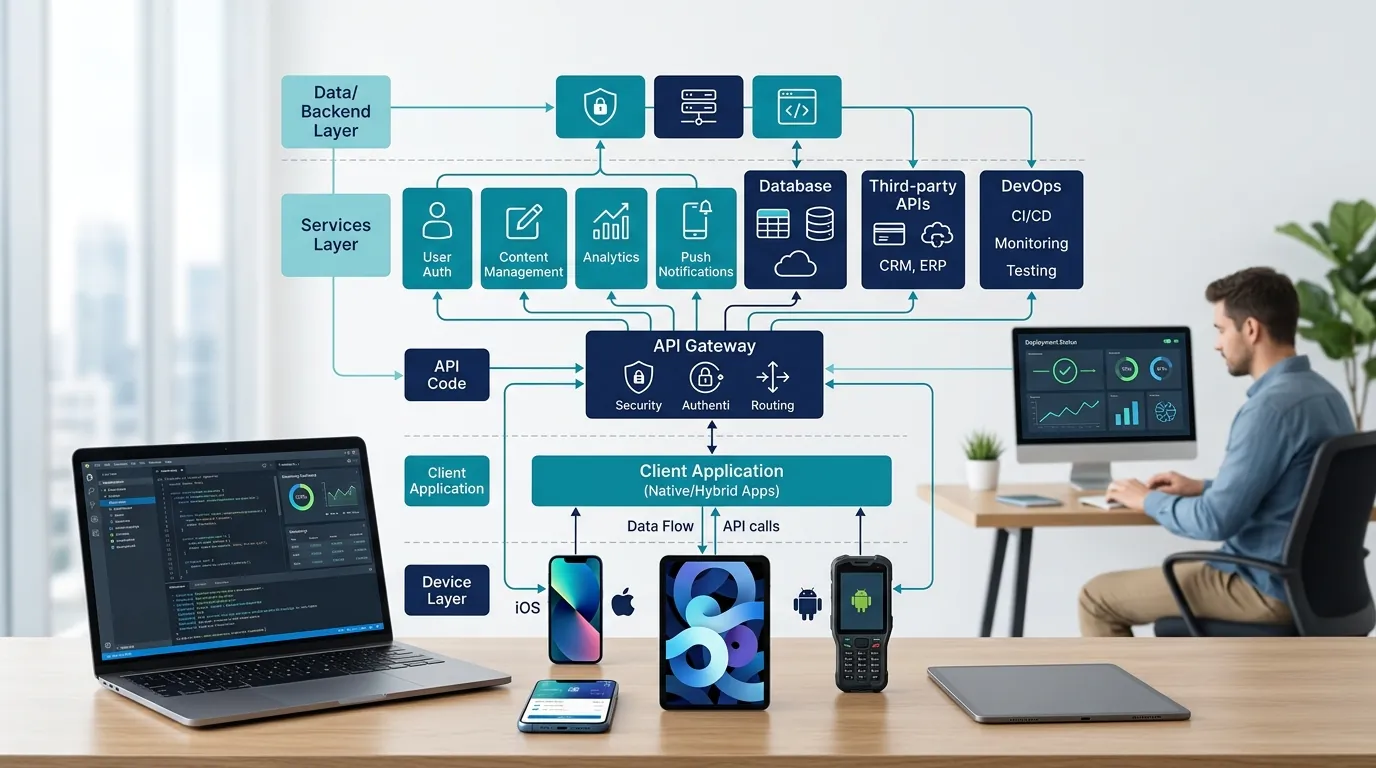
One of the primary drivers for custom CRM development in large organizations is the need for deep integration. Your business likely relies on an ecosystem of ERPs, specialized accounting software, supply chain management tools, and internal databases. Off-the-shelf CRMs often provide generic APIs that require middleware or complex workarounds to function adequately with legacy systems. A custom CRM can be architected from the ground up to communicate flawlessly with these systems, creating a unified source of truth. If you need a team to handle such complex integrations, you should consider partnering with experts in product engineering to ensure a robust architecture.
Deep Dive: Core Components of a Custom Enterprise CRM
Building a custom CRM involves selecting and integrating several core modules tailored to your operational needs. While off-the-shelf systems offer generalized tools, a custom solution allows you to perfect every module. Here are some critical components typically included in enterprise-grade systems:
- Advanced Analytics and Reporting Engine: Go beyond basic charts. Implement predictive analytics, AI-driven sales forecasting, and highly customizable dashboards that give C-suite executives real-time visibility into the company's health. You can integrate machine learning models that predict customer churn based on historical data unique to your business.
- Workflow Automation: Automate repetitive tasks such as lead routing, follow-up emails, and data entry. By configuring custom triggers and actions specific to your sales cycle, your sales and support teams can focus on high-value interactions rather than manual data entry.
- Omnichannel Communication Hub: Centralize all customer interactions—whether via email, phone, live chat, or social media—into a single, cohesive timeline, ensuring no context is ever lost. This means a customer support agent can instantly see a client's last interaction with the sales team, facilitating a smoother customer journey.
- Custom Role-Based Access Control (RBAC): Enterprise security demands more than standard "admin" and "user" roles. Custom development allows for granular permission structures based on departments, regional divisions, and specific job functions, ensuring employees only access the data they need.
Key Benefits for Enterprise Scalability
Scalability is not just about handling more users; it's about handling more complexity, more data, and more sophisticated processes without degrading performance.
- Complete Ownership: You own the source code, eliminating recurring vendor licensing fees that inflate as your headcount grows. You are never at the mercy of a vendor's pricing changes, arbitrary license tiers, or feature deprecations. The system scales functionally and financially on your terms.
- Uncompromised Security: Implement proprietary security protocols tailored to your industry's compliance standards (like HIPAA, GDPR, or SOC2), keeping sensitive customer data safe from external vulnerabilities and ensuring data sovereignty. With a custom solution, you dictate the encryption standards and hosting environment.
- High Performance: Optimize the database and backend infrastructure for your specific data loads, ensuring lightning-fast response times even during peak usage. You control the hosting environment, whether on-premises or on a private cloud, and can implement custom caching strategies and load balancing techniques tailored to your traffic patterns.
"Custom CRM development is an investment in your company's operational DNA. It transforms a generic database into a strategic asset perfectly aligned with your business objectives."
Frameworks and Best Practices for Implementation
To ensure a successful custom CRM project, enterprises must adopt proven frameworks and methodologies to mitigate risk and ensure alignment with business goals.
1. The Agile Development Methodology
Avoid the waterfall approach for CRM development. Instead, use Agile methodologies to build the system iteratively. Start with a Minimum Viable Product (MVP) that addresses the most critical pain points—such as unifying customer data or automating the primary sales funnel. Roll this out to a pilot group, gather feedback, and continuously refine and add features in subsequent sprints. This reduces risk and ensures the final product closely aligns with user needs.
2. Domain-Driven Design (DDD)
When architecting the CRM, employ Domain-Driven Design principles. Map the software's architecture directly to your business domains (e.g., Sales, Marketing, Customer Support). This ensures the software structure inherently understands the business rules and logic, making future modifications and integrations much more intuitive for the engineering team.
3. User-Centric Design (UCD)
Involve end-users early and often. Conduct shadowing sessions to understand how sales reps, marketers, and customer service agents actually work. Design the system to eliminate friction in their daily routines. A CRM is only as good as the data entered into it, and high user adoption is the only way to ensure data accuracy. If the UI is clunky, employees will revert to using spreadsheets, completely undermining the investment.
4. Future-Proof Modular Architecture
Utilize modern architectural patterns such as microservices or modular monoliths. This allows you to scale or upgrade specific components of the CRM independently. For instance, if your data analytics needs outgrow your current database, a modular architecture allows you to swap out the analytics engine without rewriting the entire CRM application.
Case Study: A Custom CRM Transformation
Consider a global logistics enterprise that struggled with a fragmented customer view due to regional offices using different, disjointed SaaS CRMs. The resulting data silos made global reporting impossible and led to duplicated efforts and poor customer service. Furthermore, their existing solutions couldn't integrate with their bespoke fleet management software.
By investing in a custom CRM, they unified their global operations onto a single platform. The custom solution integrated directly with their proprietary freight-tracking system, providing sales reps with real-time shipment statuses during client calls. It featured a custom quoting engine that accounted for regional tariffs and dynamic fuel surcharges—something off-the-shelf CRMs couldn't handle natively. The result was a 30% increase in customer satisfaction scores, a 20% reduction in administrative overhead, and full ROI within the first 18 months of deployment.
Planning Your Custom CRM Journey
Embarking on custom CRM development requires meticulous planning. Start by conducting a comprehensive audit of your existing processes. Identify the bottlenecks that your current system creates and involve key stakeholders from sales, marketing, and customer support to gather detailed requirements. Document your data workflows, highlight integration touchpoints, and define clear Key Performance Indicators (KPIs) for the new system's success.
Following the discovery phase, choose a technology stack that guarantees longevity. Technologies like Node.js, Python (Django), or Java (Spring Boot) for the backend, paired with React or Angular for the frontend, are popular choices for enterprise custom CRMs due to their robust ecosystems and strong developer communities.
In conclusion, while the initial investment in a custom CRM is higher than purchasing a SaaS subscription, the long-term ROI is undeniable for enterprises with complex operational needs. By building a system that scales precisely with your ambitions, you equip your workforce with the ultimate tool for driving sustained business growth. The journey from conceptualization to deployment may be complex, but the strategic advantage gained in efficiency, data security, and tailored workflows is a powerful catalyst for enterprise success.