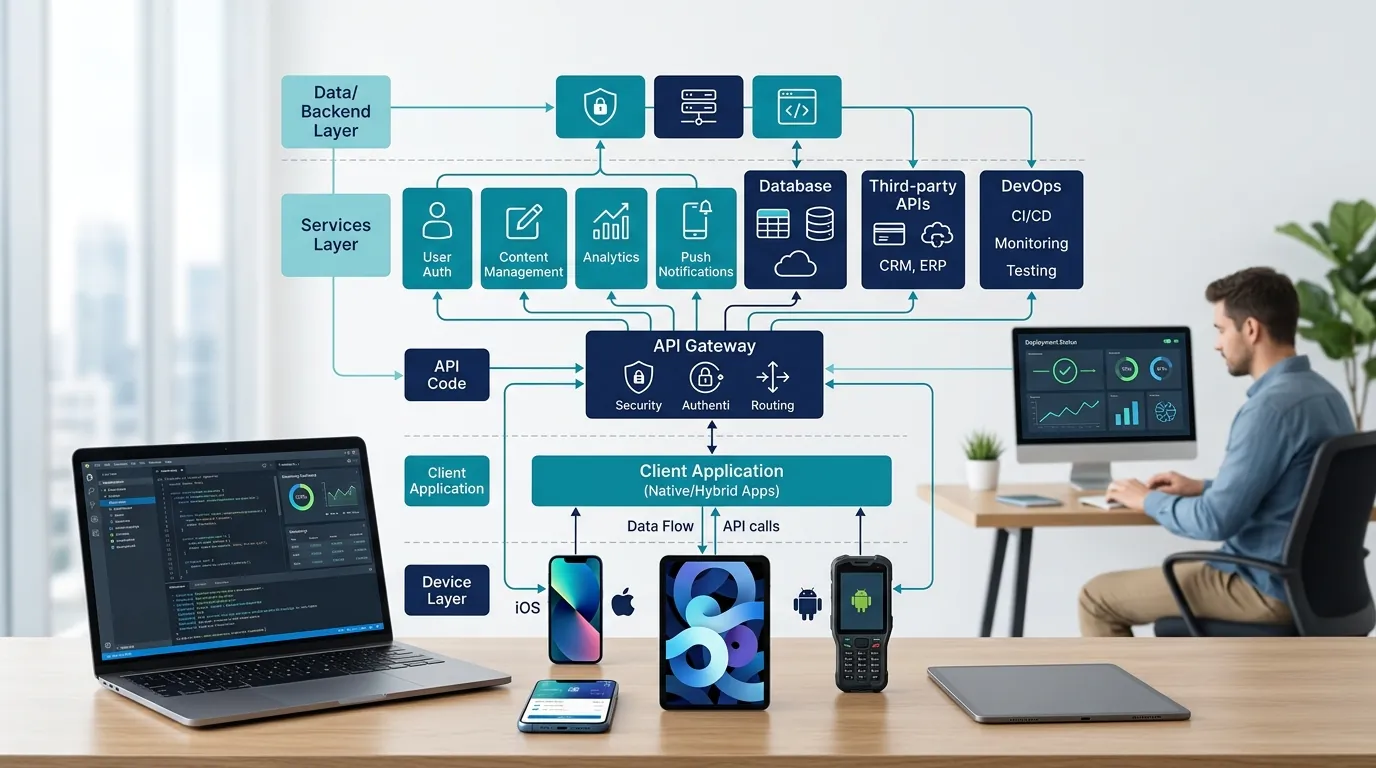

The foundation of any successful enterprise application lies in its architecture, and choosing the right technology stack is the first and most consequential step. When organizations anticipate massive growth, selecting the optimal backend frameworks becomes a non-negotiable requirement. A robust backend ensures high performance, data security, and the ability to scale seamlessly under extreme user concurrency. If the frontend is the sleek exterior of an enterprise application, the backend is the high-performance engine powering it. A poorly chosen backend framework can lead to catastrophic system failures during traffic spikes, severe security vulnerabilities, and exorbitant technical debt as developers struggle to maintain convoluted codebases.
Criteria for Evaluating Enterprise Frameworks
Enterprise applications demand far more than just fast development cycles and trendy syntax. The chosen backend frameworks must be evaluated against rigorous criteria tailored to large-scale operational needs. They must offer advanced security features, robust Object-Relational Mapping (ORM) for complex database interactions, long-term community support, and the ability to integrate seamlessly with modern cloud-native architectures like microservices and serverless deployments.
Key evaluation metrics include:
- Concurrency Handling: The ability to process thousands of simultaneous requests without memory leaks or crashing.
- Ecosystem and Tooling: The availability of enterprise-grade libraries for logging, testing, monitoring, and database migrations.
- Security Built-in: Protection against SQL injection, Cross-Site Scripting (XSS), Cross-Site Request Forgery (CSRF), and robust authentication middleware.
- Maintainability: Strongly typed languages and opinionated architectures often yield highly maintainable codebases for large, distributed teams.
Spring Boot (Java): The Enterprise Standard
For decades, Java has been the bedrock of corporate IT, and Spring Boot continues to dominate the enterprise space as the undisputed heavyweight champion. It provides a highly opinionated, production-ready environment that simplifies complex configurations, eliminating the tedious boilerplate XML setup that plagued earlier Java iterations.
Spring Boot's unparalleled security modules (Spring Security) and robust multithreading capabilities make it the top choice for banking, telecommunications, and heavy-duty enterprise supply chain systems. Its strong typing and JVM (Java Virtual Machine) optimizations ensure exceptional runtime performance. Furthermore, its seamless integration with enterprise service buses and legacy databases makes it indispensable for large corporations transitioning to microservices. Building such robust, distributed systems often requires the expertise of specialized product engineering teams to maximize the framework's potential, ensuring high availability and fault tolerance.
High-Concurrency Champions: Handling Modern Web Traffic
As web applications become increasingly interactive, real-time data processing and high concurrency have become baseline requirements. Several modern frameworks excel in this domain.
Node.js and NestJS: The Asynchronous Powerhouse
Node.js revolutionized backend development by allowing developers to use JavaScript on the server. However, raw Node.js can become chaotic in large enterprise settings. Enter NestJS—a progressive framework built on top of Node.js that brings Angular-like architecture to the backend. Built with fully supported TypeScript, NestJS enforces strict typing, dependency injection, and modular architecture.
Because of its non-blocking, event-driven architecture, Node.js excels at handling highly concurrent, asynchronous I/O operations. It is perfect for real-time collaborative applications, chat systems, live financial trading platforms, and streaming services that require maintaining thousands of open WebSocket connections concurrently without depleting server thread pools.
Django (Python): Data-Driven and Secure
Python's dominance in AI, machine learning, and data science makes it highly relevant for modern enterprise applications. Django is renowned for its "batteries-included" philosophy. It provides an out-of-the-box admin panel, a powerful ORM, and robust security features that prevent common web vulnerabilities by default.
Django is the ideal framework for enterprise applications heavy on data analytics, scientific computing, and complex relational databases. While Python's raw execution speed is slower than compiled languages, Django's architecture allows for rapid development of highly secure, scalable applications—often accelerating time-to-market for complex enterprise platforms.
ASP.NET Core (C#): The Microsoft Ecosystem Titan
Microsoft's open-source, cross-platform successor to the original ASP.NET framework delivers blistering performance. Benchmarks consistently place ASP.NET Core among the fastest web frameworks globally. It utilizes C#, a powerful, strongly typed language that enforces excellent coding standards.
ASP.NET Core integrates perfectly into existing Windows enterprise environments, seamlessly connecting with Active Directory, SQL Server, and the broader Microsoft ecosystem. However, its true enterprise power is unlocked when deployed on cloud platforms like Azure, where it scales elastically. Its built-in dependency injection and highly modular HTTP request pipeline make it incredibly flexible and maintainable for massive enterprise solutions.
"Scalability is not something you bolt on after the fact. It must be woven into the very fabric of your backend framework choices, database design, and deployment architecture from day one."
Go (Golang): The Cloud-Native Microservices Powerhouse
While not a traditional full-featured web framework like Django or Spring, Go (Golang) has revolutionized backend development for cloud-native applications. Developed by Google, Go compiles directly to machine code, offering C-like performance combined with modern garbage collection and syntax simplicity.
Its standout feature is its approach to concurrency using "goroutines"—incredibly lightweight threads managed by the Go runtime. You can spin up hundreds of thousands of goroutines with minimal memory overhead, a feat impossible in Java or C#. This makes Go arguably the best language currently available for building highly scalable, independent microservices and APIs that require low latency, high throughput, and a tiny container footprint for Kubernetes deployments. Giants like Uber, Twitch, and Dropbox have heavily adopted Go to solve massive scaling challenges.
Best Practices for Enterprise Backend Architecture
Selecting the framework is only half the battle. Implementing it correctly requires adhering to enterprise best practices:
- Decouple the Architecture: Utilize event-driven architectures and message brokers (like Apache Kafka or RabbitMQ) to decouple backend services. This ensures that a failure in the email notification service doesn't crash the core transaction engine.
- Implement Robust Caching: Use in-memory data stores like Redis or Memcached to cache frequent database queries. Relieving pressure on the primary database is the most effective way to scale backend performance.
- Adopt CI/CD Pipelines: Enterprise backends require rigorous automated testing. Implement Continuous Integration and Continuous Deployment (CI/CD) pipelines to ensure that every code commit is automatically tested for security vulnerabilities and performance regressions before hitting production.
Conclusion: Strategic Alignment
Ultimately, there is no single "best" choice among backend frameworks. The right decision depends heavily on your team's existing expertise, your legacy infrastructure, and the specific performance bottlenecks your application must overcome. A data-science heavy application thrives on Django; a real-time collaborative tool demands NestJS; massive cloud-native microservices scale best with Go; and core banking systems rely on the steadfast reliability of Spring Boot. By carefully aligning your strategic business requirements with the technical strengths of these powerful frameworks, you guarantee a scalable, secure, and resilient foundation for long-term enterprise success.