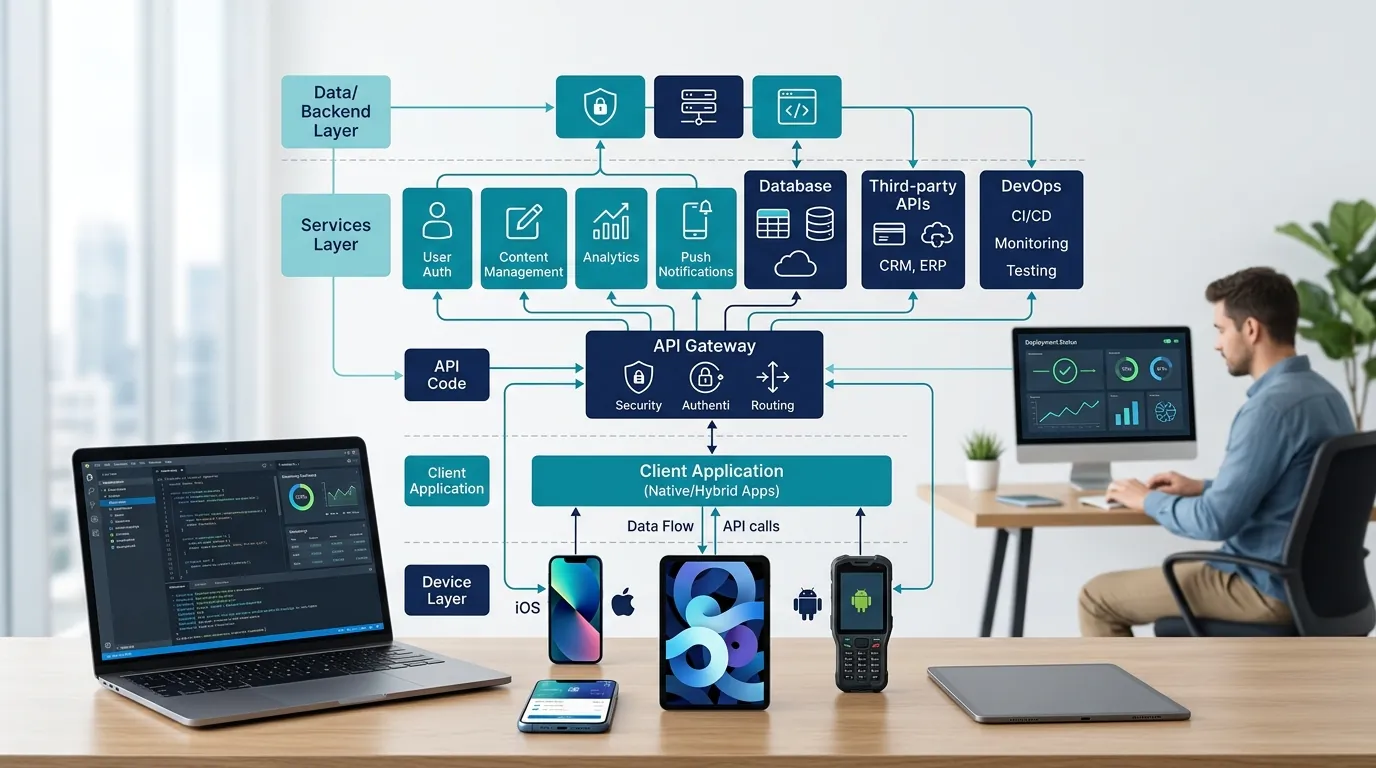

When planning a new mobile application, one of the most critical decisions leadership teams face is choosing the right technology stack. The debate often centers around the total cost of ownership, leading many to carefully weigh hybrid app development against traditional native app development. Understanding the financial and technical trade-offs is essential for maximizing ROI. This decision dictates not only the initial budget and timeline but also the ongoing maintenance costs, performance metrics, and the scalability of the engineering team. In today's highly competitive digital landscape, making an informed choice between hybrid and native frameworks can make or break a product's commercial viability.
Understanding the Cost Structures
Native app development requires building separate applications for iOS and Android using Swift/Objective-C and Kotlin/Java, respectively. This essentially doubles the required development effort, team size, and ongoing maintenance. Every new feature, UI adjustment, and bug fix must be executed twice, across two distinct codebases by specialized developers. On the other hand, hybrid app development utilizes frameworks like React Native, Flutter, or Ionic to write a single codebase that deploys across multiple platforms. This approach significantly reduces initial build costs, often bringing the project to life at 60-70% of the cost of developing two native applications.
However, cost is not solely determined by the number of codebases. The availability and salary expectations of developers play a massive role. React Native, for example, utilizes JavaScript—one of the most ubiquitous programming languages globally. This allows companies to leverage their existing web development teams to build mobile products, further reducing hiring costs and onboarding time compared to sourcing highly specialized iOS or Android native developers.
Time-to-Market Advantages
In highly competitive markets, speed is a massive financial advantage. By employing a single codebase, hybrid approaches allow companies to launch on both major app stores simultaneously. This accelerated time-to-market means faster user acquisition, earlier revenue generation, and quicker validation of your business model. For specialized teams capable of rapidly executing these cross-platform strategies, exploring professional product engineering solutions can provide a distinct edge, ensuring that the accelerated timeline does not come at the expense of code quality or app stability.
Deep Dive: When Hybrid Development Makes Financial Sense
While native development holds the crown for absolute raw performance, the gap has closed dramatically. Hybrid development makes immense financial and strategic sense in several key scenarios:
- B2B and Internal Enterprise Tools: For enterprise dashboards, CRM interfaces, HR portals, and logistics trackers, hybrid apps offer more than enough performance at a fraction of the cost. These apps prioritize utility and data presentation over complex 3D animations.
- Content-Heavy Applications: News apps, e-commerce stores, social platforms, and streaming directories often rely on standardized UI components perfectly suited for hybrid frameworks. Flutter, for instance, provides an extensive library of pre-built widgets that look identical on both iOS and Android.
- Startups Testing MVPs: Bootstrapped startups can validate their product-market fit faster and cheaper by using hybrid technologies before committing to native builds. A hybrid MVP allows you to gather user feedback across both OS demographics simultaneously without depleting seed funding.
The Native Advantage: Where Premium Costs are Justified
It is crucial to acknowledge when the higher cost of native development is justified. Hybrid is not a silver bullet for every project.
- Graphic-Intensive Games: High-frame-rate games require direct access to the device's GPU through Metal (iOS) or Vulkan (Android). Hybrid frameworks cannot match this level of raw computational performance.
- Hardware-Specific Functionality: Apps that rely heavily on complex hardware integrations—like advanced Bluetooth Low Energy (BLE) peripherals, augmented reality (AR), or sophisticated background audio processing—often encounter limitations or require custom native bridges when using hybrid frameworks. Building these bridges can negate the cost savings of the hybrid approach.
- Uncompromising User Experience: If the brand identity demands pixel-perfect adherence to platform-specific human interface guidelines (like intricate Apple-specific animations), native development provides the exact tooling required.
"The true cost of an app isn't just in its initial development, but in its lifecycle maintenance. A single codebase drastically reduces the compounding costs of QA, updates, and feature parity across platforms."
Long-Term Maintenance and Total Cost of Ownership (TCO)
The financial benefits of hybrid app development extend far beyond the launch date. Maintaining two separate native codebases requires two distinct teams. When a new feature is conceptualized, it must be coded, tested, and deployed twice. This inherently leads to a lack of feature parity—where the iOS app might get a feature weeks before the Android app, frustrating users.
Hybrid development streamlines this process. A unified team pushes updates and bug fixes universally, cutting ongoing QA and maintenance costs by up to 50%. Over a 3 to 5-year product lifecycle, this reduction in TCO can save enterprises hundreds of thousands of dollars, freeing up capital to invest in marketing, user acquisition, or further product innovation.
Framework Analysis: Flutter vs. React Native
When assessing hybrid costs, the choice of framework also plays a role:
- React Native: Backed by Meta, it boasts a massive community and allows for significant code sharing with web apps (via React). It relies on a JavaScript bridge to communicate with native modules, which can occasionally bottleneck performance in highly complex views. However, finding developers is highly cost-effective.
- Flutter: Backed by Google, Flutter uses the Dart language and compiles directly to native ARM code, bypassing the JavaScript bridge entirely. This often results in superior performance and incredibly smooth animations. While Dart developers are slightly more specialized, the development speed offered by Flutter's "hot reload" feature drastically reduces billable hours.
Case Study: Enterprise Cost Optimization
A leading retail chain recently audited their mobile strategy. They were maintaining two native applications for their loyalty program, spending over $300,000 annually purely on maintenance and minor feature updates across the two platforms. By migrating to a Flutter-based hybrid application, they consolidated their engineering team. The initial rebuild cost $150,000, but their annual maintenance dropped to $120,000. Within the first two years, the hybrid transition paid for itself and generated significant cost savings, all while delivering a more unified brand experience to their customers.
While extremely graphic-intensive games or apps requiring deep hardware integration may still justify the premium cost of native development, modern hybrid app development has closed the performance gap significantly. For the vast majority of enterprise applications, SaaS platforms, and consumer utilities, hybrid offers an optimal balance of cost-efficiency, rapid deployment, and excellent user experience. By carefully analyzing your product requirements against your budgetary constraints, you can architect a mobile strategy that delivers maximum value and sustainable long-term growth.