
Modernizing healthcare infrastructure goes far beyond basic digitization; it demands rigorous adherence to regulatory frameworks that protect sensitive patient data. Developing custom electronic medical records (EMRs) and specialized platforms like a robust Clinic Management System requires engineering teams to adopt a security-first mindset from the ground up. This involves deeply integrating HIPAA safeguards into the core software architecture rather than treating them as an afterthought.
For B2B technology providers, the stakes are exceptionally high. A single architectural flaw can lead to catastrophic data breaches, severe financial penalties, and irrevocable reputational damage. This technical guide explores the sophisticated engineering paradigms necessary to construct resilient, HIPAA-compliant healthcare applications, focusing on zero-trust principles, immutable logging, and advanced cryptographic techniques. Navigating this complex intersection of clinical usability and rigid data protection mandates a comprehensive understanding of secure software development lifecycles (SSDLC), continuous integration and continuous deployment (CI/CD) pipelines fortified with static application security testing (SAST), and dynamic application security testing (DAST).
The Imperative of Immutable Audit Trails in EMRs
A fundamental requirement of the HIPAA Security Rule is the implementation of hardware, software, and procedural mechanisms that record and examine activity in information systems containing electronic protected health information (ePHI). Traditional relational database logging is often insufficient because it can be easily manipulated by users with administrative privileges. When developing enterprise-grade healthcare applications, engineers must move beyond simple timestamped rows in a SQL table. Instead, the architecture must ensure that every single interaction with a patient's record—whether it is a routine read operation by a nurse, a diagnostic update by a physician, or an administrative billing adjustment—is captured with forensic precision. This requires distributed tracing mechanisms and centralized logging aggregation platforms like the ELK stack (Elasticsearch, Logstash, Kibana) or Splunk, configured to immediately ingest, index, and securely archive log streams in real-time before any local tampering can occur.
Furthermore, the retention and lifecycle management of these audit logs must strictly align with both federal HIPAA mandates and state-level data retention laws, which frequently dictate that access logs must be preserved in a readable format for up to six or seven years. To manage this massive influx of telemetry without incurring exorbitant storage costs, engineering teams typically implement automated data tiering strategies within cloud environments. For example, utilizing Amazon Web Services (AWS), active logs might reside in Amazon CloudWatch or Amazon OpenSearch Service for immediate SIEM analysis, while historical logs are automatically transitioned via lifecycle policies to Amazon S3 Standard-Infrequent Access, and eventually to Amazon S3 Glacier Deep Archive for long-term, immutable WORM (Write Once Read Many) storage. This multi-tiered approach balances rapid forensic search capabilities with long-term economic feasibility.
Beyond merely storing logs securely, the system must actively monitor these audit trails using sophisticated anomaly detection algorithms capable of identifying suspicious access patterns indicative of insider threats or compromised credentials. If a physician’s account suddenly attempts to download the complete medical histories of hundreds of patients outside of their typical clinical purview—a classic indicator of data exfiltration—the logging system must not only record the event but also immediately trigger an automated response playbook. This playbook, orchestrated by security orchestration, automation, and response (SOAR) tools, could instantly revoke the compromised account's session tokens, isolate the affected endpoints from the clinical network using software-defined networking (SDN) rules, and page the on-call security operations center (SOC) analysts with a comprehensive incident dossier.
Event Sourcing Architecture
To guarantee the integrity of audit logs, modern healthcare software should leverage an Event Sourcing architecture. Instead of merely storing the current state of a patient record, every change (create, update, delete) is appended as an immutable event to an append-only ledger. This approach ensures a mathematically verifiable history of all interactions with ePHI, making unauthorized tampering immediately detectable.
Cryptographic Log Verification
Beyond append-only storage, each log entry should be cryptographically signed using a secure hashing algorithm (such as SHA-256) and chained to the previous entry, similar to a blockchain structure. This cryptographic chaining guarantees that if a single historical log entry is altered, all subsequent hashes will become invalid, instantly alerting security information and event management (SIEM) systems to a potential breach.
Real-world engineering scenario for audit trails:
- Event Generation: The application's core API gateway intercepts an HTTP request to modify a patient diagnosis. Before the database transaction is committed, the gateway emits a structured JSON event containing the user's JWT payload, IP address, device fingerprint, and the exact delta of the proposed clinical change.
- Log Ingestion and Hashing: A dedicated microservice, built with Go or Rust for high concurrency, consumes this event from an Apache Kafka topic. The service computes a SHA-256 hash incorporating both the current event payload and the hash of the immediately preceding event in the chain.
- Immutable Persistence: The cryptographically signed log entry is written to an append-only database like Amazon Quantum Ledger Database (QLDB) or an S3 bucket configured with Object Lock in compliance mode, physically preventing any deletion or modification by any user, including root administrators.
- Continuous Verification: A separate, isolated background worker continuously traverses the log chain, re-calculating hashes to ensure mathematical integrity. If a discrepancy is found, it immediately triggers high-priority alerts in PagerDuty and halts affected API subsystems to contain potential compromise.
Zero Trust Network Architecture (ZTNA) in Healthcare
The outdated perimeter-based security model, which assumes internal network traffic is inherently trustworthy, is critically flawed for healthcare applications. Zero Trust Network Architecture (ZTNA) mandates strict identity verification for every person and device attempting to access resources on a private network, regardless of whether they are situated within or outside the network perimeter. In modern cloud-native environments, this translates to entirely discarding the concept of a "trusted intranet." Instead, engineers must design systems where every microservice, database node, and third-party API integration must continuously mutually authenticate and authorize each other before exchanging a single byte of ePHI. This paradigm shift requires transitioning from static firewall rules based on IP addresses to dynamic, identity-based policies managed by service meshes like Istio or Linkerd, which enforce Mutual TLS (mTLS) encryption and fine-grained access control policies across all internal cluster communications.
Implementing ZTNA involves deploying micro-segmentation across the application's infrastructure. By dividing the data center or cloud environment into distinct security segments down to the individual workload level, engineers can severely restrict lateral movement. If a web server is compromised, micro-segmentation prevents the attacker from easily pivoting to the core database servers harboring ePHI. This segmentation is typically achieved through advanced software-defined networking (SDN) and cloud-native security groups, ensuring that only explicitly permitted communication paths are viable. For instance, a Kubernetes deployment managing an EHR platform would utilize NetworkPolicies to mathematically guarantee that the external-facing patient portal pods can only communicate with the specific GraphQL aggregation layer, and possess absolutely no network route to the underlying PostgreSQL databases or the sensitive billing and claims processing microservices.
Furthermore, Zero Trust necessitates dynamic, context-aware authorization policies that evaluate risk in real-time during every access attempt. It is no longer sufficient to merely verify a username and password, or even a static multi-factor authentication (MFA) token. The identity provider (IdP), such as Okta or Microsoft Entra ID, must analyze a multitude of contextual signals—including the user's current geographic location, the physical security posture of the endpoint device (e.g., whether it has disk encryption enabled and an updated EDR agent installed), and behavioral biometrics—to compute a risk score. If a physician attempts to access highly sensitive psychiatric records from an unrecognized device on a public Wi-Fi network at 3:00 AM, the authorization engine (like Open Policy Agent - OPA) must dynamically step up authentication requirements, enforce read-only access, or block the request entirely, regardless of the user's baseline role-based permissions.
Implementing ZTNA in a Kubernetes Healthcare Environment:
- Identity Provisioning: Integrate the Kubernetes cluster with an enterprise Identity Provider (IdP) via OIDC. Assign cryptographically verifiable identities (SPIFFE IDs) to every individual pod and microservice using a tool like SPIRE.
- Enforcing mTLS with a Service Mesh: Deploy Istio across all worker nodes. Configure sidecar proxies (Envoy) to automatically intercept all inter-pod traffic, transparently upgrading it to mutually authenticated TLS connections using the provisioned SPIFFE certificates, thereby eliminating unencrypted internal data flows.
- Granular Network Policies: Write explicit "default deny" Kubernetes NetworkPolicies. Explicitly define which pods can communicate with one another on specific ports. Ensure the frontend React application can only route traffic to the backend API Gateway, completely isolating the backend from the public internet.
- Context-Aware Access Control: Deploy Open Policy Agent (OPA) as an admission controller and sidecar. Write Rego policies that evaluate the JWT claims of the requesting user alongside the sensitivity of the requested ePHI endpoint, dynamically granting or denying access based on the real-time context of the HTTP request.
Overcoming Complex Integration Hurdles
Healthcare software rarely operates in a vacuum. It must interoperate with various external systems, billing providers, and diagnostic equipment, each presenting unique security challenges. These integrations often span multiple organizational boundaries, requiring secure data pipelines that can safely transit the public internet while maintaining strict compliance with HIPAA's transmission security requirements. Engineering teams must design robust integration layers capable of handling immense variability in data formats, API maturity, and network reliability. This frequently involves building resilient, decoupled architectures using event-driven messaging patterns, where incoming data streams from external laboratory information systems (LIS) or radiology picture archiving and communication systems (PACS) are securely ingested, sanitized, validated, and normalized before ever touching the core clinical databases.
One of the most persistent hurdles is bridging the gap between cutting-edge cloud-native applications and legacy on-premise healthcare infrastructure. Many hospitals still rely on mainframe-era applications or older HL7 version 2 interfaces over TCP/IP (MLLP) that completely lack modern encryption or authentication capabilities. To securely integrate these systems, teams must deploy dedicated VPN tunnels, AWS Direct Connect, or Azure ExpressRoute to establish private, encrypted network backbones between the cloud environment and the hospital's data center. At the edge of this private network, specialized integration engines (like Mirth Connect or Intersystems Ensemble) are deployed to act as secure translation proxies. These engines ingest the unencrypted HL7 v2 messages from the legacy system within the trusted boundary, convert the data into standard Fast Healthcare Interoperability Resources (FHIR) JSON bundles, and transmit them via HTTPS with mutual TLS to the modern cloud application.
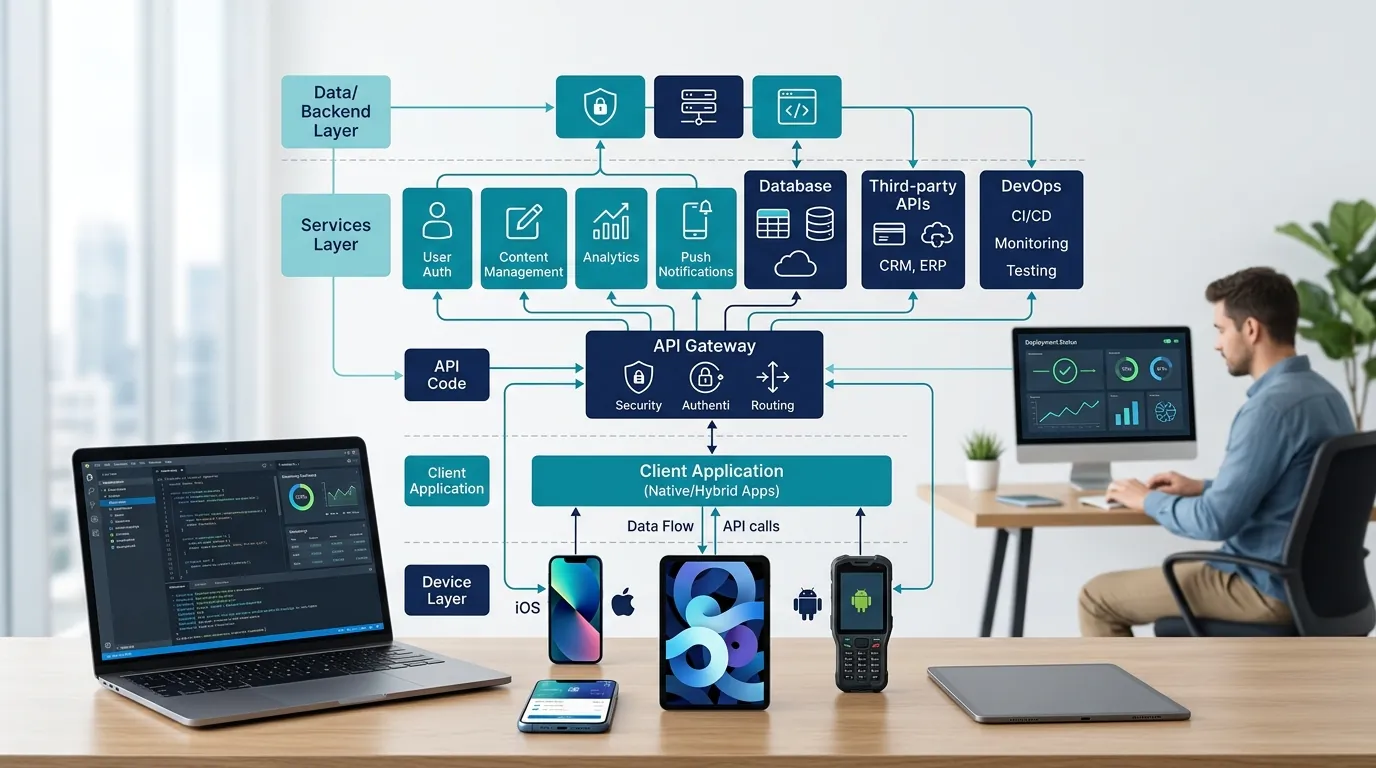
Another major complexity involves securing third-party API access for health information exchanges (HIE), specialized analytics vendors, and patient-facing mobile applications. Providing direct database access is a massive compliance violation. Instead, engineers must construct comprehensive API Gateways (using solutions like Kong, Apigee, or AWS API Gateway) that serve as the sole ingress point for external data exchange. These gateways must enforce stringent rate limiting to prevent denial-of-service attacks, validate incoming JSON or XML payloads against strict OpenAPI schemas to mitigate injection vulnerabilities, and handle complex OAuth 2.0 SMART on FHIR authorization flows. This ensures that a third-party application can only access the specific subset of a patient's record that the patient has explicitly consented to share, with tokens expiring rapidly to minimize the window of vulnerability.
Common integration scenarios and solutions:
- Challenge: Legacy System Interoperability. Integrating with older on-premise hospital systems that lack modern API security protocols.
Solution: Deploy secure API gateways and enterprise service buses (ESBs) that translate legacy protocols (like HL7 v2) into secure, encrypted RESTful JSON APIs (like FHIR), while enforcing strict rate limiting and IP whitelisting. - Challenge: Third-Party Authentication. Allowing external specialists to securely access patient records without compromising the central directory.
Solution: Implement federated identity management using OAuth 2.0 and OpenID Connect (OIDC), ensuring that external users authenticate via their own trusted identity providers (IdPs) while maintaining granular, role-based access control (RBAC) within the primary application. - Challenge: Secure Data Ingestion from IoT Medical Devices. Managing the vast influx of continuous biometric data from wearable devices.
Solution: Utilize message brokers (e.g., Apache Kafka) with Mutual TLS (mTLS) authentication to securely ingest high-throughput telemetry data, buffering it before processing and persisting it to scalable time-series databases. - Challenge: Synchronizing Clinical and Billing Data. Ensuring that diagnostic codes pushed to clearinghouses are secure and accurate.
Solution: Construct asynchronous, decoupled webhook architectures that utilize HMAC signatures to verify the authenticity and integrity of payloads exchanged between the EMR and the external revenue cycle management (RCM) platform.
Database Encryption Strategies: TDE vs. Application-Level
Safeguarding data at rest is non-negotiable. However, engineering teams must evaluate the performance and security trade-offs between different encryption methodologies when designing the persistence layer. The HIPAA Security Rule mandates the encryption of ePHI at rest unless an entity can mathematically prove that an alternative measure provides equivalent protection—a hurdle so high that pervasive encryption is the de facto industry standard. The architectural decision largely centers on where the cryptographic operations occur: within the database engine itself, or higher up the stack within the application code. This choice drastically impacts system performance, query capabilities, key management complexity, and the blast radius of a potential infrastructure compromise.
Transparent Data Encryption (TDE) is often the quickest path to checking the compliance box. Supported natively by enterprise databases like Microsoft SQL Server, Oracle, and PostgreSQL (via extensions), TDE encrypts the data files on the physical storage medium. The primary advantage of TDE is its transparency; it requires absolutely zero modifications to the application's source code or SQL queries. The database engine seamlessly decrypts data as it is read from disk into memory, and encrypts it as it is written back. This protects against physical theft of hard drives or the compromise of underlying SAN/NAS storage arrays. However, TDE provides virtually no protection against SQL injection attacks, compromised database administrator (DBA) credentials, or application-level vulnerabilities, because to anyone accessing the database through legitimate SQL connections, the data appears completely in plaintext.
Application-Level (or Field-Level) Encryption offers a significantly more robust defense-in-depth posture, aligning closely with Zero Trust principles. In this model, the backend application code explicitly encrypts highly sensitive fields—such as Social Security Numbers, detailed diagnostic notes, or billing information—using a cryptographic library before issuing the SQL INSERT or UPDATE statement. The database merely stores the resulting ciphertext. Consequently, even if an attacker manages to exfiltrate the entire database dump via a sophisticated SQL injection exploit or by stealing cloud backups, the ePHI remains utterly inaccessible without the application's specific encryption keys. Implementing this requires integration with a highly secure Key Management Service (KMS), such as AWS KMS, HashiCorp Vault, or Azure Key Vault, utilizing envelope encryption techniques to routinely rotate data encryption keys (DEKs) without needing to re-encrypt the entire multi-terabyte database.
Implementing Application-Level Envelope Encryption:
- Key Provisioning: Establish a highly available Hardware Security Module (HSM) or cloud KMS to generate and securely store a Customer Master Key (CMK). Ensure the CMK never leaves the KMS boundary and can only be used by authorized application IAM roles.
- Data Key Generation: When the application needs to persist a new patient record, it makes an API call to the KMS requesting a new Data Encryption Key (DEK). The KMS returns two versions of the DEK: a plaintext DEK and a ciphertext DEK (encrypted by the CMK).
- Local Cryptographic Operation: The application uses the plaintext DEK and a standardized algorithm (like AES-256-GCM) to encrypt the sensitive JSON payload or specific database fields entirely within its own volatile memory. The plaintext DEK is then immediately securely wiped from RAM.
- Persistence and Retrieval: The application stores the encrypted patient data alongside the ciphertext DEK in the database. During retrieval, the application reads the ciphertext DEK, sends it to the KMS for decryption, receives the plaintext DEK, and decrypts the patient data locally, ensuring the database engine never possesses the keys to read the data.
The Future of ePHI Safeguards
As cyber threats become increasingly sophisticated, the strategies for defending healthcare data must evolve concurrently. Artificial intelligence and machine learning are poised to play a pivotal role in predictive threat modeling, analyzing vast amounts of network telemetry to identify anomalous behavioral patterns indicative of a breach before data exfiltration occurs. Static, rule-based SIEM configurations are rapidly being replaced by User and Entity Behavior Analytics (UEBA) platforms that establish a baseline of normal activity for every physician, nurse, and API endpoint. When an entity deviates from this baseline—perhaps by accessing records at an unusual velocity or from anomalous geographical coordinates—the AI engines can autonomously throttle access, demand step-up biometric authentication, or sever the connection entirely in milliseconds, providing an active defense mechanism that far outpaces manual SOC intervention.
Furthermore, the advent of quantum computing presents a looming existential threat to current cryptographic standards. Algorithms like RSA and ECC, which currently secure the internet's TLS connections and underpin the digital signatures of audit logs, could theoretically be broken by large-scale quantum computers. To future-proof HIPAA-compliant applications, forward-thinking engineering teams are beginning to explore Post-Quantum Cryptography (PQC). This involves architecting systems with cryptographic agility, allowing applications to seamlessly swap out vulnerable algorithms for new, quantum-resistant lattice-based or hash-based cryptographic primitives currently being standardized by NIST. Ensuring that data encrypted today remains secure against the decrypt-later attacks of tomorrow is rapidly becoming a mandatory consideration for long-term healthcare data archiving.
Privacy-Enhancing Technologies (PETs) are also fundamentally reshaping how healthcare data can be utilized for research and analytics without violating HIPAA's stringent de-identification rules. Techniques such as Fully Homomorphic Encryption (FHE) allow complex computations and machine learning models to be trained directly on encrypted ePHI without ever decrypting the underlying data. Secure Multi-Party Computation (SMPC) enables distinct healthcare networks to collaboratively analyze overlapping patient populations to discover epidemiological trends without sharing the actual raw data with one another. Integrating these advanced cryptographic paradigms into custom healthcare software will allow organizations to unlock the massive analytical value of clinical data while maintaining absolute mathematical guarantees of patient privacy.
"Compliance is a continuous operational state, not a static engineering milestone. The true measure of a healthcare application's security architecture is its adaptability to emerging cryptographic standards and an ever-shifting threat landscape."
Ultimately, engineering HIPAA-compliant custom software demands a culture of uncompromising security. By adopting event-driven architectures, zero-trust principles, and defense-in-depth encryption strategies, development teams can build scalable platforms that not only meet stringent regulatory demands but also foster enduring trust within the healthcare ecosystem. The integration of advanced behavioral analytics, quantum-resistant cryptography, and homomorphic data processing will define the next generation of secure clinical systems.
Steps to future-proof healthcare applications:
- Implement AI-Driven SOC Automation: Transition from static log alerts to AI-powered UEBA systems capable of detecting subtle, slow-and-low data exfiltration attempts based on behavioral deviations rather than known malware signatures.
- Adopt Cryptographic Agility: Abstract all encryption, hashing, and digital signature routines behind internal application interfaces or microservices. This ensures that migrating from RSA to NIST-approved post-quantum algorithms requires changing a single service rather than refactoring the entire codebase.
- Deploy Confidential Computing Enclaves: Utilize specialized hardware capabilities like Intel SGX or AWS Nitro Enclaves to create isolated execution environments. Process highly sensitive ePHI and proprietary diagnostic algorithms within these enclaves, protecting the data in use even from users with root access to the underlying virtual machine.
- Explore Federated Learning: Design data pipelines that allow remote machine learning models to train on edge devices or isolated clinical silos. Aggregate only the updated model weights centrally, completely avoiding the centralized aggregation of raw, sensitive patient datasets.
Frequently Asked Questions
How does micro-segmentation enhance the security of clinical applications?
Micro-segmentation divides a network into smaller, isolated zones down to the individual workload or virtual machine level. In a clinical application, this prevents lateral movement by attackers. If a public-facing patient scheduling portal is compromised, micro-segmentation rules (enforced by software-defined networking) physically block that server from initiating connections to the backend database storing the actual Electronic Health Records, drastically reducing the blast radius of any potential breach.
Can we achieve HIPAA compliance by simply using a certified cloud database?
No. While cloud providers like AWS, GCP, and Azure offer HIPAA-eligible database services (meaning the infrastructure meets specific physical and administrative safeguards), compliance operates on a Shared Responsibility Model. The cloud provider secures the infrastructure, but your engineering team is entirely responsible for securing the data within it. You must configure encryption at rest, manage encryption keys properly, enforce stringent identity and access management (IAM) policies, and ensure application-level vulnerabilities do not expose the ePHI.
What is the difference between role-based access control (RBAC) and attribute-based access control (ABAC) in healthcare software?
RBAC grants access based on static job titles (e.g., "Doctor" or "Nurse"). While foundational, it often lacks necessary granularity. ABAC is more sophisticated, granting access based on dynamic attributes and context. For example, ABAC can enforce a policy that a "Doctor" (Role) can only view a patient's psychiatric notes (Resource Attribute) if they are the designated attending physician for that specific patient (Relationship Attribute) and are accessing the system from a trusted terminal within the hospital (Environment Attribute).