Key Takeaways
- Internal HR and IT bots drastically reduce the administrative burden on support teams by instantly answering repetitive employee questions.
- Retrieval-Augmented Generation (RAG) empowers bots to safely query existing, unstructured company documents (like PDFs and Intranet pages) to provide highly accurate, cited answers.
- Automated onboarding bots act as digital companions, guiding new hires through paperwork, IT provisioning, and training modules to accelerate time-to-productivity.
- Strict security architectures (like integrating with Azure Active Directory) ensure that employees can only query information they have permission to access.
- Deploying bots in familiar channels like Slack or Microsoft Teams eliminates the friction of navigating clunky, legacy corporate intranets.
When businesses discuss automation, the conversation inevitably centers on the external customer. How do we reduce support ticket costs? How do we increase e-commerce conversion rates? However, the exact same friction that frustrates your external customers is quietly bleeding productivity inside your own walls. The target audience for your next massive automation project shouldn't be your buyers; it should be your employees.
Internal support teams—Human Resources, IT Services, and Facility Management—are drowning. They spend up to 60% of their working hours answering the exact same recurring questions. "How do I reset my VPN password?" "How many PTO days do I have left?" "What is the deductible on our dental plan?" This operational drag is where internal AI chatbots are generating silent, massive ROI by automating enterprise support.
The Problem with Intranets and Knowledge Bases
The traditional solution to internal support is the corporate intranet or Wiki (like Confluence, SharePoint, or Notion). The workflow typically looks like this: HR uploads a 140-page Employee Handbook PDF to an obscure folder and expects employees to read it. The reality? They don't.
Need an Expert Opinion?
Stop guessing. Speak directly with a senior AdaptNXT engineer about your architecture, timeline, and feasibility.
When an employee needs to know the maternity leave policy, they will not Ctrl+F their way through a massive PDF. Instead, they will ping an HR representative on Slack or Microsoft Teams, interrupting the HR rep's deep work and forcing them to answer the question manually. This causes a dual productivity loss: the employee waits hours for an answer, and the HR rep loses their focus context, which studies show takes 23 minutes to regain.
The RAG-Powered HR Assistant
Enter the Internal AI Bot, powered by Retrieval-Augmented Generation (RAG). By uploading all of your company's scattered documentation—benefits guides, expense policies, IT manuals, travel guidelines—into a secure Vector Database, you turn that static text into a conversational brain.
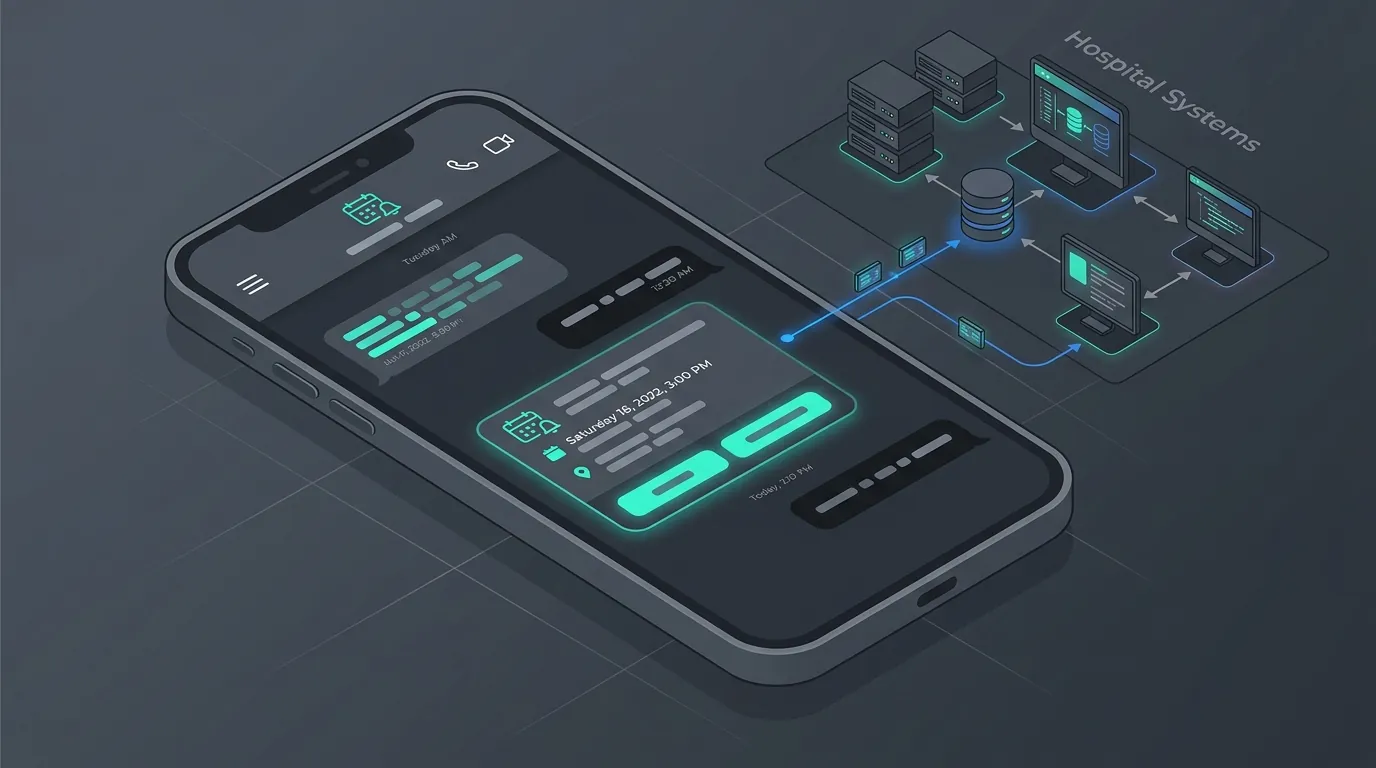
You deploy the bot directly where the employees already live: inside Microsoft Teams or Slack.
Employee: "Hey, what's my budget for a hotel in London for the upcoming conference?"
HR Bot: "According to Section 4 of the 2026 Global Travel Policy, the maximum allowable nightly rate for a hotel in London is £250. You must book this through the corporate portal. Here is the link to the portal: [Link]. Is there anything else you need help with regarding your trip?"
The answer is instant. It is perfectly accurate. It cites the specific document so the employee can verify it. And zero human HR time was wasted. If a policy changes, HR simply replaces the document in the Vector DB, and the bot instantly learns the new rule without needing retraining.
Automating the Onboarding Nightmare
Onboarding a new hire is one of the most operationally heavy tasks in a corporation. It involves IT provisioning an email and a laptop, HR creating payroll entries, and managers scheduling training sessions. The new hire is inevitably lost for their first two weeks, unsure of who to ask for help.
A dedicated "Onboarding Bot" acts as the new employee's digital buddy for their first 90 days. It pushes proactive notifications to the employee via Slack or Teams:
-
Day 1: Compliance and Setup
"Welcome! Please click here to complete your I-9 tax forms and set up your direct deposit. Let me know when you are done, or ask me any questions about the forms."
-
Day 3: Benefits Enrollment
"Don't forget to select your health insurance plan by Friday. Do you have any questions about the differences between the Bronze, Silver, and Gold tiers we offer?" The bot can instantly calculate premiums based on the user's dependents.
-
Day 14: Culture and Training
"Now that you are settled, please complete the mandatory cybersecurity training module here. Also, don't forget to sign up for the virtual coffee chat with our CEO next week!"
Summary: Impact of Internal Bots
| Department | Common Bot Use Cases | Primary Business Impact |
|---|---|---|
| Human Resources | Leave balance inquiries, benefits questions, policy retrieval | Reduces HR ticketing volume by up to 40% |
| IT Service Desk | Password resets, software provisioning requests, hardware troubleshooting | Accelerates Mean Time to Resolution (MTTR) for Tier 1 issues |
| Onboarding | Automated check-ins, document collection, training reminders | Decreases time-to-productivity for new hires |
| Finance/Admin | Expense policy limits, vendor payment status, travel booking | Ensures stricter compliance with corporate spending policies |
The Security Architecture of Internal Bots
When you deploy an AI internally to summarize company policies, data security is the supreme directive. You absolutely cannot pipe your sensitive financial or HR documents into a public LLM like standard ChatGPT.
Internal bots must be built using enterprise-grade APIs (like Azure OpenAI or AWS Bedrock) which guarantee data privacy—meaning the cloud provider legally guarantees your data is not used to train global models. Furthermore, the bot must respect Active Directory or Okta permissions. If an entry-level engineer asks the bot about the executive bonus structure, the bot's RAG system must reference the Active Directory, recognize the user lacks clearance, and refuse to retrieve the document.
By automating the internal friction of a corporation, HR and IT teams are elevated from answering basic questions to tackling strategic initiatives like talent retention and infrastructure scaling. Speak with the automation team at AdaptNXT to integrate a secure AI assistant into your company's Slack or Teams channels.
Frequently Asked Questions (FAQ)
How do we prevent the internal HR bot from giving wrong information?
By utilizing a Retrieval-Augmented Generation (RAG) architecture, the bot is restricted to only answering questions using the official documents you provide. If the answer isn't in your documentation, the bot is programmed to say "I don't know" and seamlessly escalate the query to a human HR representative.
Can the bot integrate directly with our HRIS like Workday or BambooHR?
Yes. Through secure API integrations, the bot can pull personalized, real-time data from your HRIS. This allows the bot to answer highly specific questions like "How many PTO days do I have left?" instead of just citing the general PTO policy.
What platforms can these internal bots run on?
Internal bots are most effective when deployed where employees already work. They are typically integrated directly into Slack, Microsoft Teams, Google Chat, or embedded as a widget inside your corporate intranet portal.