
The Operational Challenge
Railway turnouts (switches and crossings / S&C) represent the highest-risk, highest-maintenance assets along any railway permanent way (P-Way). Bearing severe dynamic lateral impacts and decelerating freight wheel loads, turnouts must maintain strict geometric alignment—including switch toe gauge, cross-level, switch throw opening, check rail clearances, and tongue rail wear—to prevent catastrophic derailments.
Historically, sectional track engineers and Permanent Way Inspectors (PWI / SSE Track) conducted periodic turnout inspections using manual physical gauges, vernier calipers, stepped feeler blocks, and cumbersome paper inspection proformas. Inspectors had to record dozens of discrete geometric values by hand under harsh outdoor track conditions, manually cross-reference complex regulatory tolerance tables, and later re-type the field observations into depot desktop databases or Track Management Systems (TMS).
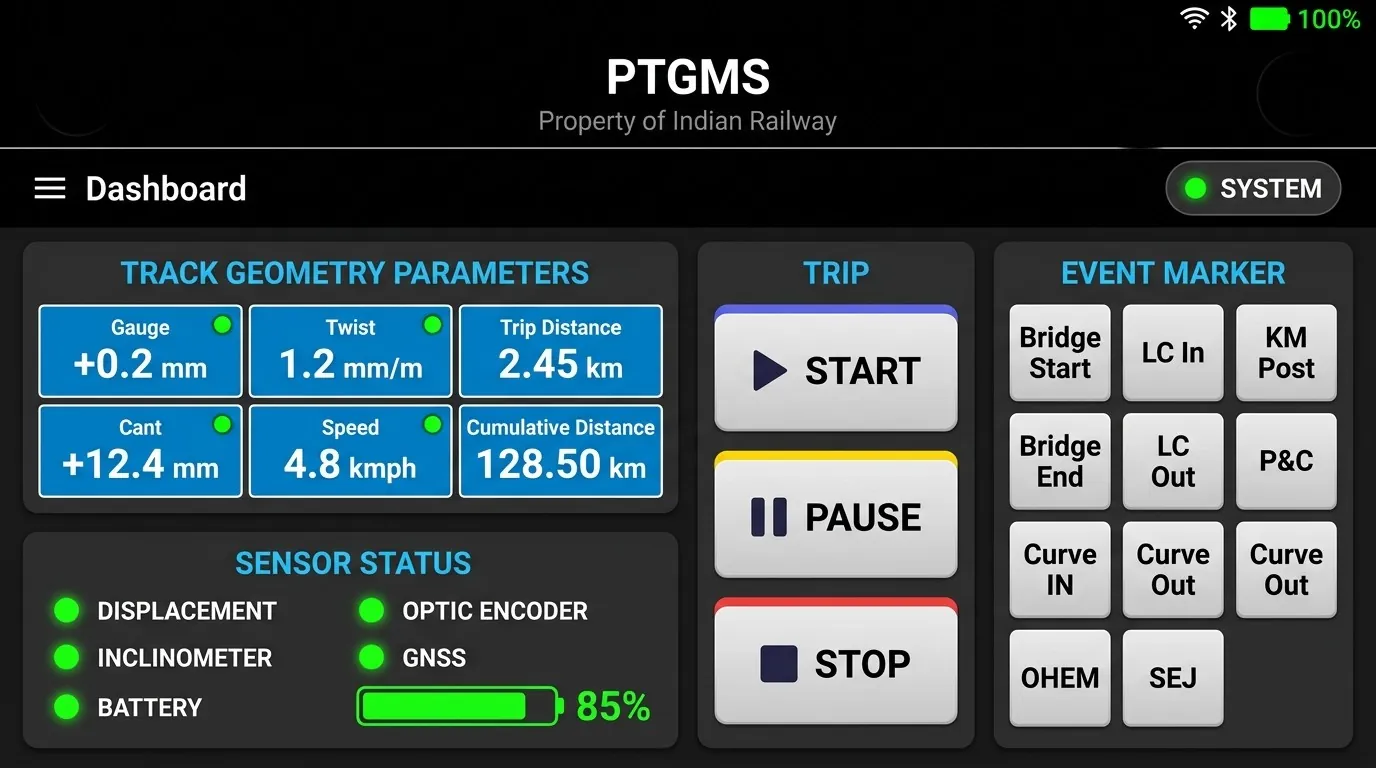
This manual workflow suffered from severe operational friction: high inspection cycle times (over 45 minutes per turnout), frequent data transcription errors, delayed safety escalation when track tolerances were breached, and backlogs in regulatory compliance sign-offs. The railway operator required an end-to-end digital field inspection solution capable of reading electronic gauge telemetry over Bluetooth Low Energy (BLE), capturing manual visual observations, performing instant on-device tolerance validation, and generating certified PDF inspection reports right on the trackbed without relying on cellular connectivity.
Our Engineering Solution
AdaptNXT architected and delivered a field-hardened, offline-first digital inspection solution that bridges physical track measurement hardware with enterprise railway asset workflows:
- Wireless BLE Telemetry Ingestion: Built a modular Bluetooth Low Energy (BLE 5.0) data acquisition layer that auto-discovers and securely pairs with certified electronic turnout gauges and digital cross-level tools. The system reads continuous gauge, cant, and flangeway depth measurements with sub-millimeter precision, eliminating manual dial reading.
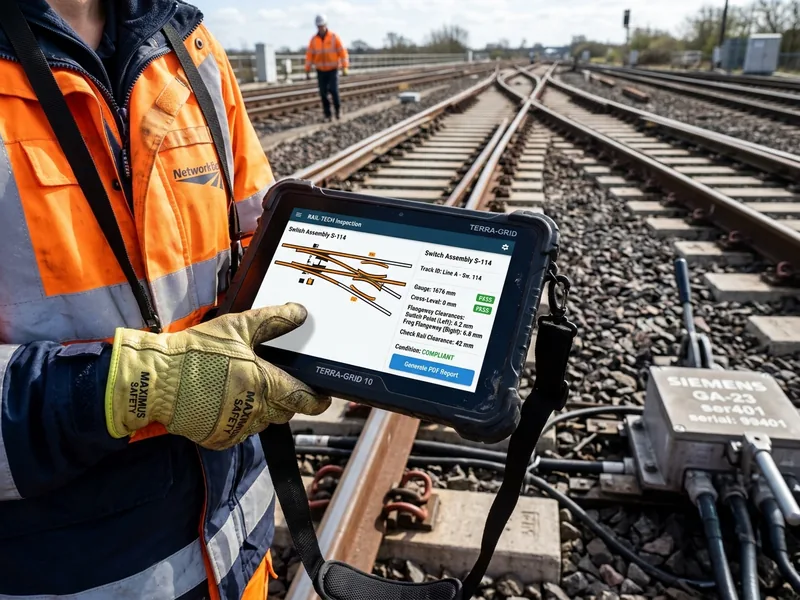
- Guided Manual Parameter & Visual Logging: Developed an intuitive, glove-accessible user interface that guides inspectors step-by-step through the turnout layout (Switch Assembly, Lead Section, and Crossing Assembly). Inspectors quickly record visual observations—such as sleeper condition, ballast packing, tongue rail wear, bolt tightness, and point machine condition—using rapid numeric steppers, segmented pickers, and geotagged photographic defect capture.
- Real-Time Geometric Tolerance Engine: Embedded an on-device rule engine pre-configured with railway maintenance standards (supporting 1 in 8.5, 1 in 12, and 1 in 16 turnouts for 52 kg/m and 60 kg/m rail profiles). The engine cross-references live sensor readings and manual inputs against permissible variance thresholds (e.g., gauge -3 mm to +6 mm, cross-level within ±2 mm, check rail clearance 41–45 mm), immediately triggering visual amber/red safety alerts.
- Instant Client-Side PDF Report Generation: Engineered an autonomous on-device PDF compilation engine using vector rendering. The system dynamically populates the official standard railway Turnout Inspection Proforma—incorporating station/line metadata, point numbers, measured telemetry curves, manual visual checklists, defect annotations, and inspector digital signatures—exporting a clean, tamper-evident PDF in under 3 seconds without an internet connection.
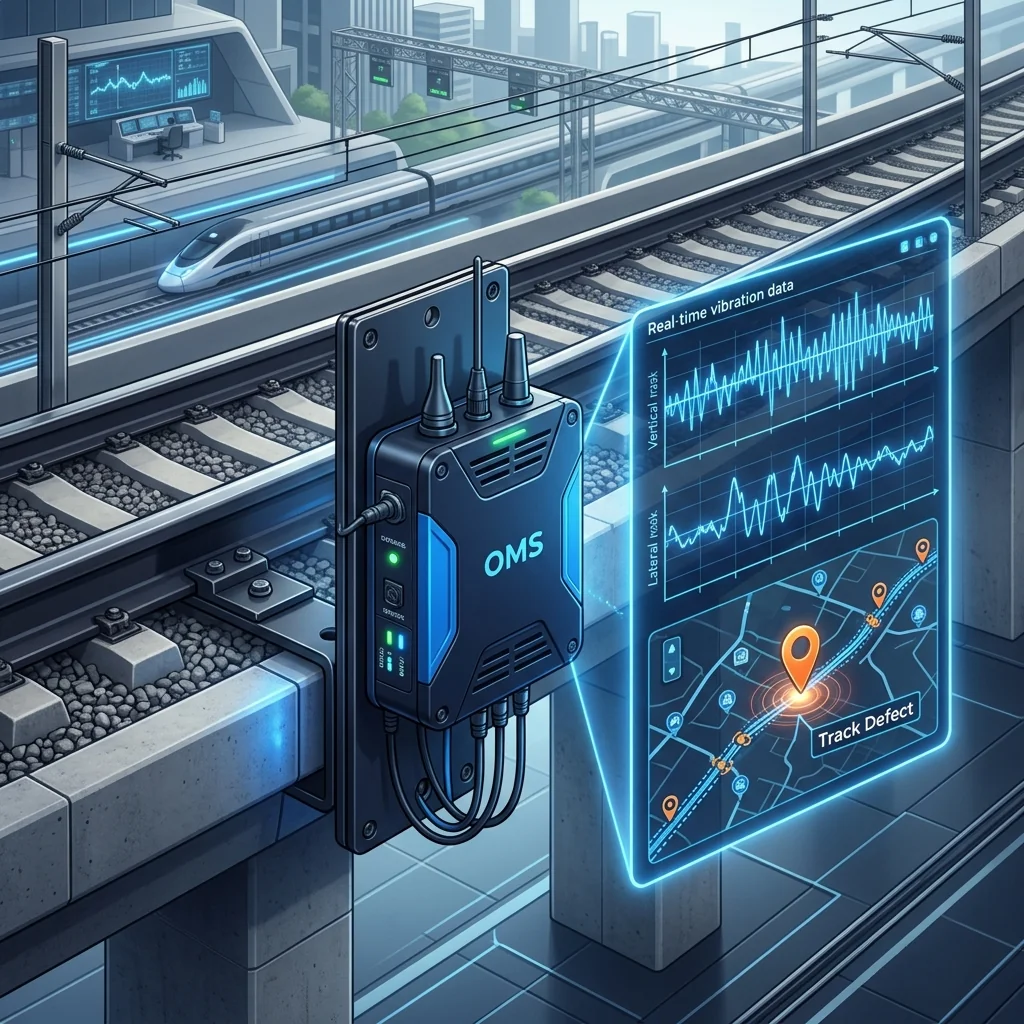
- Offline-First Local Storage & Cryptographic Audit Trail: Structured an encrypted local database engine that stores all raw sensor samples, manual parameters, and report binaries. Every record is cryptographically timestamped and geotagged using multi-constellation GNSS to prevent falsification or delayed back-filling.
- Background Delta Synchronization: Engineered a resilient background sync worker that queues finalized inspection bundles and automatically transmits telemetry, structured JSON records, and PDF attachments to the centralized Railway Track Management System (TMS) as soon as cellular or depot Wi-Fi connectivity is detected.
Technical Architecture & Stack
| Layer / Component | Technology / Specification / Role |
|---|---|
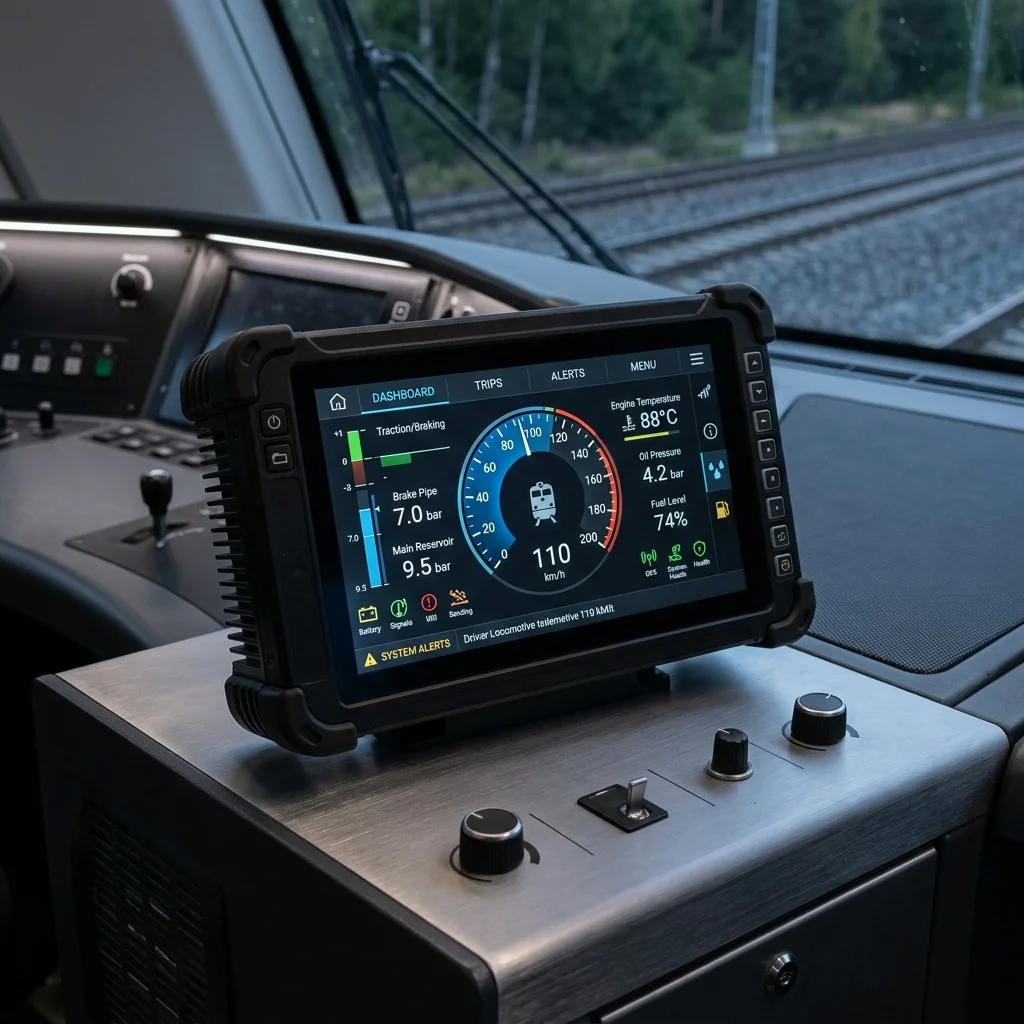
| Field Inspection Client | Rugged field inspection runtime; High-contrast outdoor UI, glove-friendly ergonomic inputs, on-device touch validation |
| Sensor Telemetry & I/O | Bluetooth Low Energy (BLE 5.0) GATT Client, Serial/USB-OTG fallback, Digital Turnout Gauge protocol parser |
| Edge Tolerance Engine | On-device validation logic; Dynamic RDSO / IRPWM / AREMA turnout tolerance matrices (1:8.5, 1:12, 1:16) |
| Report Compilation | Embedded client-side vector PDF generation engine, dynamic proforma layout, digital signature capture, photo compression |
| Local Data & Security | Encrypted local database (SQLCipher), GNSS geotagging, tamper-evident SHA-256 record verification |
| Enterprise Cloud Integration | Background delta sync worker, REST & GraphQL connectors to Railway Track Management Systems (TMS) |
Verified Business Impact
The deployment of the Turnout Inspection System across key railway divisions yielded immediate improvements in track reliability, labor efficiency, and regulatory compliance:
- 75% Reduction in Inspection Time: Average time required to inspect and document a turnout plummeted from 45 minutes down to less than 12 minutes per turnout, dramatically boosting engineering team throughput.
- Zero Transcription Errors: Direct digital gauge telemetry and bounded manual entry fields completely eliminated manual transcription errors, transposition flaws, and unreadable handwriting.
- Instant Field Decision-Making: Real-time out-of-tolerance warnings allowed maintenance crews to perform immediate on-site packing, tamping, or switch adjustments within the existing maintenance block, avoiding unnecessary speed restrictions.
- 100% On-Track PDF Generation: Certified, audit-ready inspection proformas are signed and delivered immediately upon inspection completion, satisfying safety commissioner guidelines without depot office paperwork.
- Comprehensive Longitudinal Analytics: Centralized TMS ingestion of digitized turnout datasets enables predictive wear analysis on tongue rails and crossing noses, enabling targeted component renewals before structural failures occur.