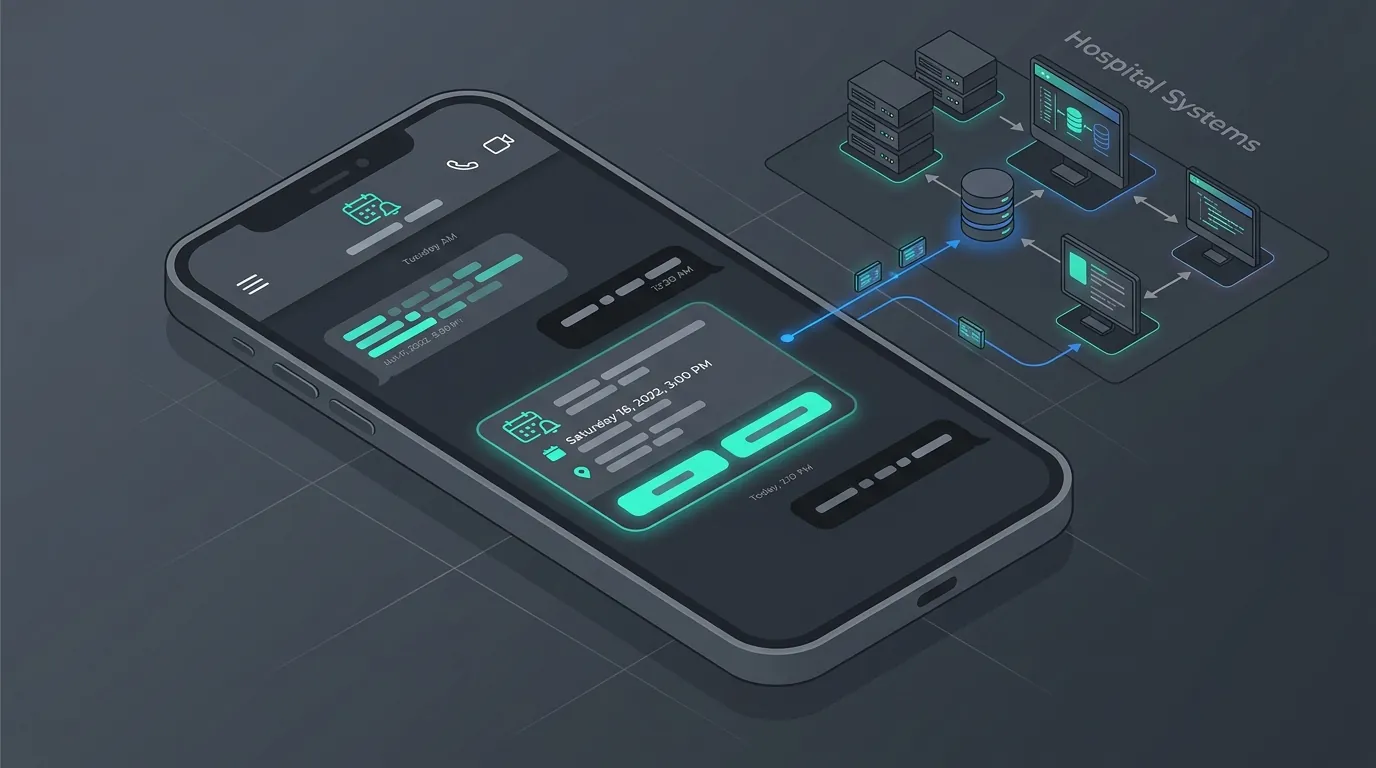

The traditional B2B lead generation funnel relies on a paradigm that is inherently broken for modern engineering and sales velocity. For decades, marketing teams have directed paid traffic to static, monolithic landing pages, expecting potential clients to fill out cumbersome, multi-field forms. From an engineering standpoint, this synchronous, high-friction model is archaic. It relies on the client maintaining an active session, navigating complex UI validation rules, and waiting for an HTTP POST request to successfully commit to a database before any engagement can occur. The bounce rates are tragic—often exceeding 80%—and even when a payload is successfully submitted, standard sales cadences involve agonizing days of asynchronous communication via unreturned voicemails and ignored follow-up emails.
Engineering Key Takeaways:
- The WhatsApp Business API (WABA) transforms lead capture by replacing stateless web forms with stateful, asynchronous conversational interfaces.
- Implementing a webhook-driven architecture enables 24/7 automated qualification bots that parse JSON payloads and triage leads in real-time.
- Building a robust state machine ensures that conversation context is maintained across disjointed messaging sessions, preventing data loss.
- Intelligent CRM routing logic, triggered via webhooks, hands high-value prospects directly to human agents by seamlessly passing the conversation state.
In the contemporary B2B landscape, velocity and low-friction data ingestion are paramount. The most efficient method to compress the sales cycle is to capture, qualify, and route the lead in an interface designed for instant, asynchronous response. That interface is WhatsApp, a platform that boasts an open rate of over 90% globally, backed by a robust API ecosystem that allows developers to programmatically manage conversations at scale.
The Engineering Paradigm Shift: From Synchronous Forms to Asynchronous Conversations
Rather than directing high-intent traffic (e.g., from LinkedIn Ads or Google Search) to a static landing page, forward-thinking engineering teams are constructing pipelines that direct traffic directly into a WhatsApp API session. This is achieved using Click-to-WhatsApp ads or deep links embedded within dynamic web applications. From a systems perspective, we are shifting from a synchronous pull model (where the user must actively request and submit a form) to an asynchronous push model (where messages are delivered directly to the user's device).
Need an Architect's Assessment?
Speak directly with a senior AdaptNXT solutions architect about your system constraints, timeline, and production feasibility.
When a prospective client clicks a Click-to-WhatsApp link, the application opens with a pre-populated message defined by a URI parameter (e.g., wa.me/1234567890?text=I'm%20interested). The moment they transmit the message, the WhatsApp Business API triggers a webhook payload to your backend. Two critical engineering events occur simultaneously:
- You instantly capture verified, authenticated metadata (including the user's verified phone number and profile name), eliminating the need for client-side form validation and anti-spam (CAPTCHA) mechanisms.
- The user's unique identifier (their WhatsApp ID, typically their phone number) is registered in your system, dropping them directly into an automated, state-managed qualification sequence.
Architecting the WhatsApp Business API Integration
Integrating the WhatsApp Business API requires a robust, event-driven architecture designed for high availability and low latency. The core of this architecture revolves around configuring webhooks to receive inbound messages and status updates, and utilizing the REST API to dispatch outbound messages.
The Webhook and Event-Driven Architecture
The Meta Graph API requires developers to subscribe to specific webhook fields (such as messages and message_deliveries). When a user sends a message, Meta’s servers issue an HTTP POST request to your configured webhook endpoint. This endpoint must respond with a 200 OK HTTP status code within a strict timeout window (typically a few seconds); otherwise, Meta will retry the request, potentially leading to duplicate message processing if idempotency is not properly implemented.
Best practices dictate that the webhook endpoint should merely act as an ingestion layer. It should quickly validate the payload signature (using the X-Hub-Signature-256 header to ensure the request originated from Meta), push the raw payload onto a message broker or queue (such as Apache Kafka, RabbitMQ, or AWS SQS), and immediately return a 200 OK. Background worker processes then consume the queue, parse the JSON payload, and execute the complex business logic required for conversational routing.
Payload Parsing and Message Formatting
Understanding the inbound JSON payload is critical for extracting user intent and contact information. A typical inbound text message payload from the WhatsApp Business API looks like this:
The worker process must extract the wa_id (the user's phone number), the timestamp, and the text.body. Based on this input, the system must formulate an appropriate response. For automated qualification, the response often utilizes WhatsApp's Interactive Messages, such as Reply Buttons or List Messages, which provide structured data back to the webhook rather than free-text string parsing.
Handling Delivery Status and State Management
In an asynchronous environment, message delivery is not guaranteed to be instantaneous. The WhatsApp API sends webhook notifications for message statuses: sent, delivered, read, and failed. Engineers must design systems that process these status updates to maintain an accurate ledger of the conversation state. For instance, if a message status returns as failed due to a rate limit or a user blocking the business, the system should gracefully handle the failure, log the event for analytics, and potentially trigger a fallback mechanism (e.g., sending an email via SendGrid if the email address was previously captured).
Building a Resilient State Machine for Conversational Flows
The core challenge in automating lead generation over WhatsApp is managing the conversational state. Unlike a web form where all data is submitted in a single synchronous POST request, a conversational interface collects data sequentially over time. A user might start a conversation, answer two questions, close the app, and return three hours later to complete the flow.
To handle this, engineers must implement a Finite State Machine (FSM) or a robust dialogue management system. Each unique user (identified by their wa_id) requires a session record in a fast-access datastore (like Redis or DynamoDB). This record tracks their current position in the qualification flow.
Consider a simple lead qualification FSM with the following states:
- STATE_INIT: Awaiting initial contact.
- STATE_ASK_COMPANY_SIZE: Bot has asked for company size; awaiting response.
- STATE_ASK_ERP_SYSTEM: Bot has asked for current ERP; awaiting response.
- STATE_QUALIFIED: Lead meets criteria; awaiting human handoff.
- STATE_DISQUALIFIED: Lead does not meet criteria; route to automated nurture track.
When a webhook payload is received, the worker retrieves the user's current state from Redis. If the user is in STATE_ASK_COMPANY_SIZE, the system evaluates the incoming message. If the message matches expected criteria (e.g., the payload indicates a button press for "200+ employees"), the system updates the database with this data point, transitions the user to STATE_ASK_ERP_SYSTEM, and dispatches the next outbound message API request.
Architectural Challenges and Engineering Solutions
Implementing a high-throughput WhatsApp lead generation engine presents several distinct architectural challenges. Below is a detailed breakdown of common issues and their corresponding engineering solutions:
- Challenge: Webhook Timeout and Duplicate Delivery. Meta requires a 200 OK response within a strict timeframe. If business logic processing takes too long, Meta retries the webhook, leading to duplicate messages sent to the user.
Solution: Decouple ingestion from processing. Use an API Gateway and an asynchronous message broker (like SQS or Kafka). The ingestion endpoint validates the payload and pushes it to the queue, returning 200 OK immediately. Worker nodes process the queue idempotently, checking a distributed cache (like Redis) for processed message IDs to discard duplicates. - Challenge: Rate Limiting and Tier Management. The WhatsApp Business API enforces tier-based messaging limits (e.g., 1K, 10K, 100K business-initiated conversations per 24 hours). Exceeding these limits results in API errors (code 131056).
Solution: Implement a token bucket or leaky bucket algorithm in your outbound message dispatcher. Monitor theX-Business-Use-Case-Usageheaders in API responses to track quota utilization dynamically. Queue low-priority broadcast messages and throttle them to stay within limits, prioritizing transactional and user-initiated conversational replies. - Challenge: Free-Text Input Parsing. Users often ignore interactive buttons and type free-text responses, which can break simple rigid state machines that expect exact string matches or predefined payload IDs.
Solution: Integrate a Natural Language Processing (NLP) layer or an LLM (Large Language Model) API as a fallback evaluation step. If the input does not match a structured button payload, route the text to the NLP service for intent classification and entity extraction before transitioning the state machine. - Challenge: Maintaining Idempotency Across Distributed Systems. Network partitions or worker node crashes during message processing can lead to inconsistent state updates or duplicate outbound messages.
Solution: Design all database mutations and outbound API calls to be idempotent. Store the WhatsApp Message ID (wamid) in a transactional database table to ensure each inbound message is processed exactly once. Utilize database transactions to atomically update the user state and queue the outbound response.
Security, Encryption, and Compliance Engineering
When handling B2B lead data, security and compliance (such as GDPR, CCPA, and SOC 2) are non-negotiable. The WhatsApp Business API provides end-to-end encryption between the user's device and the WhatsApp server, and TLS encryption between the WhatsApp server and your webhook endpoint. However, once the payload hits your infrastructure, data security is entirely your responsibility.
Engineers must implement strict data minimization practices. Payload data should be sanitized and PII (Personally Identifiable Information) should be encrypted at rest using strong cryptographic standards (e.g., AES-256). Furthermore, the webhook endpoint must robustly validate the X-Hub-Signature-256 header using the App Secret to prevent spoofing attacks. Any request lacking a valid signature must be immediately rejected with a 401 Unauthorized status.
Performance Optimization and Scaling the API
As marketing campaigns scale, the volume of inbound webhooks can spike unpredictably. The architecture must be designed to scale horizontally. Utilizing serverless functions (like AWS Lambda) for the webhook ingestion layer allows for automatic scaling to handle sudden bursts of traffic without provisioning idle infrastructure.
For the datastore managing the conversational state, low-latency reads and writes are critical. Redis is highly recommended for storing active session states due to its in-memory architecture, providing sub-millisecond response times. Persistent data (like the finalized lead profile) should be written asynchronously to a relational database (like PostgreSQL) or a CRM system via background workers to avoid blocking the conversational flow.
CRM Integration: The Intelligent Handoff
The ultimate goal of the automated qualification sequence is to seamlessly transition highly qualified leads to human sales representatives within the CRM ecosystem. This handoff requires complex integration logic to ensure context preservation.
When the state machine determines a lead is qualified (e.g., they selected "200+ employees" and "Looking to start fresh"), it triggers an internal event. The worker node compiles the gathered data points and executes a series of API calls:
- CRM Record Creation: An API call to Salesforce or HubSpot creates a new Contact and Lead record, populating the fields with the data extracted during the WhatsApp conversation.
- Transcript Sync: The entire conversation history is formatted (often as a JSON array or a markdown string) and appended to the CRM record as a note or activity, providing the sales rep with full context.
- Agent Notification: A webhook is fired to an internal communication tool (like Slack or Microsoft Teams) alerting the appropriate Account Executive based on routing rules (e.g., territory mapping based on the phone number's country code).
- Conversation Handoff: The system pauses the automated bot (setting a flag in the user's session state) and transfers control to a live agent dashboard, allowing the sales rep to reply directly through the WhatsApp API via a custom UI.
Here is an example of an outbound payload to send a structured interactive message, typically used during the qualification flow:
Technical Comparison: Traditional Web Forms vs. API-Driven Chat
From a systems engineering and data architecture perspective, the differences between standard web forms and the WhatsApp Business API are profound.
- Data Transport Protocol:
- Traditional Forms: Synchronous HTTP POST requests initiated by the client. Susceptible to connection drops during submission.
- WhatsApp API: Asynchronous, event-driven webhooks over TLS. Highly resilient to network instability; messages are queued and retried by Meta's infrastructure.
- Session Management and State:
- Traditional Forms: Stateless by design. Relies on client-side cookies or complex session tokens to maintain progress across multi-step forms. High risk of data loss on browser refresh.
- WhatsApp API: Inherently stateful on the backend. The conversation state is maintained in a robust datastore (like Redis) linked to the immutable
wa_id. Users can resume exactly where they left off hours or days later.
- Data Validation and Authentication:
- Traditional Forms: Requires complex client-side RegExp and server-side validation logic. High incidence of fraudulent or syntactically invalid data (e.g., fake phone numbers).
- WhatsApp API: Implicit authentication. The
wa_idis fundamentally a verified, active mobile number. The platform inherently guarantees the authenticity of the transport endpoint.
- Latency and Responsiveness:
- Traditional Forms: High latency between submission and response. Often requires batch processing or delayed email triggers via CRMs.
- WhatsApp API: Ultra-low latency. Webhook-to-outbound-message cycles can be completed in under 200 milliseconds, providing a seamless, real-time conversational experience.
By migrating from static, synchronous web forms to an asynchronous, webhook-driven conversational architecture utilizing the WhatsApp Business API, engineering teams can dramatically optimize the data ingestion pipeline for lead generation. This technical evolution not only reduces bounce rates and eliminates the friction of traditional data entry but also provides a highly resilient, scalable, and secure framework for capturing and qualifying high-value B2B prospects.
Your sales engineering team's computational resources are too valuable to spend qualifying poorly validated form submissions. You can calculate your potential architectural efficiency gains with our ROI Calculator. Ready to architect a modernized data ingestion pipeline? Contact our engineering team to configure an automated WhatsApp lead engine with AdaptNXT and start routing highly structured, validated prospect payloads directly to your CRM.
Frequently Asked Questions
Does using the WhatsApp Business API require special software?
Yes, the API itself has no interface, so it must be connected to a business solution provider, CRM, or a conversational AI platform to manage the chatbots, routing, and live agent handoffs.
Are there costs associated with sending WhatsApp messages?
Yes, Meta charges per conversation. The costs vary depending on whether the conversation is user-initiated (e.g., they click an ad) or business-initiated (e.g., a marketing broadcast), but the high conversion rates usually offset these micro-costs.
Can I use the WhatsApp API to spam potential customers?
No, Meta strictly enforces a quality rating and requires businesses to use pre-approved message templates for business-initiated conversations. Users must also explicitly opt-in to receive promotional messages, maintaining a high-quality experience for users.