
In commercial long-haul freight, passenger transit, and heavy vocational trucking, human fatigue is an ever-present operational risk. According to the Federal Motor Carrier Safety Administration (FMCSA) and European transport safety authorities, driver fatigue, microsleeps, and cognitive distraction contribute to more than 25% of all fatal commercial vehicle collisions. With heavy combination vehicles weighing upwards of 40 metric tons, an inattentive driver glancing at a smartphone for three seconds covers nearly 90 meters completely blind to changing highway conditions.
Historically, fleet operators relied on reactive telematics: aggressive braking triggers, lane departure alerts, or forward-facing radar alarms that sounded only after a dangerous scenario had already materialized. Modern automotive safety has pivoted toward proactive in-cabin Driver Monitoring Systems (DMS). Powered by near-infrared (NIR) optical sensors and ultra-low-latency edge computer vision, DMS tracks physiological fatigue markers like PERCLOS (Percentage of Eyelid Closure), 3D gaze trajectories, and head pose in real time—intervening seconds before a catastrophe occurs.
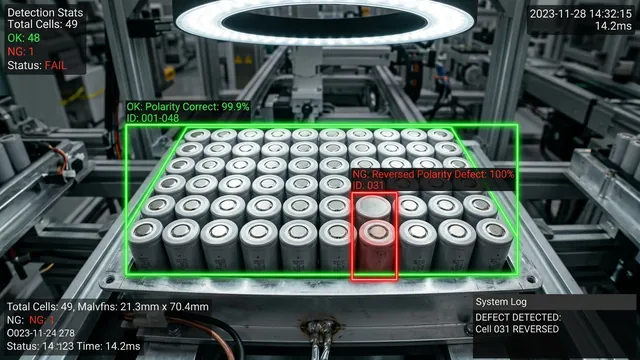
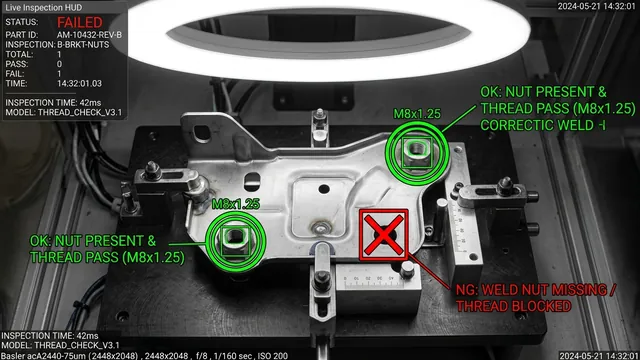
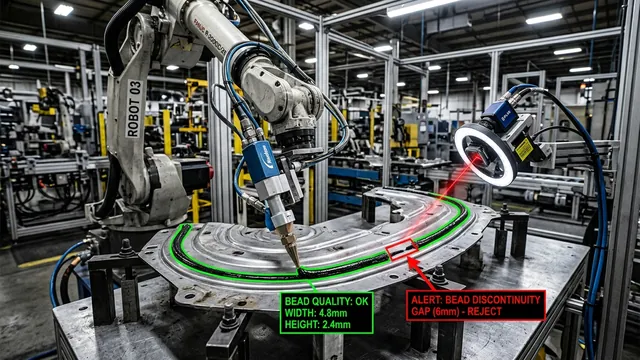
Evaluating Automated Optical Inspection for Your Line?
Send us 5–10 sample images of your OK/NG parts or discuss your cycle-time and lighting constraints. Our Computer Vision architects will benchmark detection feasibility within 48 hours—or join a 20-min zero-pitch technical scoping session.
Key Takeaways
- Regulatory Mandate Compliance: Under the European Union General Safety Regulation (GSR) and Driver Drowsiness and Attention Warning (DDAW) mandates, direct optical driver monitoring is mandatory for newly registered commercial fleets.
- 940nm Active NIR Illumination: Near-infrared light is invisible to the human eye (eliminating night-driving red glow distraction) while penetrating polarized sunglasses and delivering crisp facial imaging in pitch-black vehicle cabins.
- PERCLOS & Biometric Triangulation: Robust fatigue detection relies on validated scientific metrics—measuring eyelid aperture dynamics (P80 threshold), blink duration, yawn frequency (MAR), and saccadic gaze drift over rolling temporal windows.
- Privacy-Preserving On-Device Inference: Commercial fleet DMS processes all neural network layers locally on edge SoCs (NVIDIA Jetson, Ambarella, NXP), transmitting only lightweight CAN bus telematics events without streaming raw video, satisfying GDPR and union privacy concerns.
- Proven In-Cabin Fleet Performance: See how AdaptNXT deployed production-grade edge vision algorithms in our dedicated Driver Fatigue & Drowsiness Detection Transportation Case Study.
The Regulatory Driver: EU DDAW, GSR, and Euro NCAP Protocols
Driver monitoring technology has transitioned rapidly from an experimental luxury add-on into a strict regulatory requirement across global automotive markets. The catalyst for this transformation is the European Union's updated General Safety Regulation (GSR II / Regulation (EU) 2019/2144) and the dedicated Driver Drowsiness and Attention Warning (DDAW) technical standard.
Under these regulatory mandates, all newly homologated commercial trucks (categories N2, N3) and passenger coaches (M2, M3) must integrate certified direct monitoring systems capable of:
- Detecting Progressive Fatigue: Continuously evaluating driver alertness over prolonged driving sessions, warning the driver when drowsiness reaches Level 7 or 8 on the Karolinska Sleepiness Scale (KSS).
- Recognizing Sudden Inattention (Distraction): Triggering escalating acoustic and visual warnings if the driver looks away from the central road-view zone for more than 3.0 seconds at speeds above 50 km/h (or 2.0 seconds when vehicle speeds exceed 80 km/h).
- Euro NCAP In-Cabin Protocol: Euro NCAP safety ratings award maximum safety points only to vehicles equipped with direct, eye-tracking optical DMS capable of detecting microsleeps and smartphone distraction under varying lighting conditions.
Unlike early steering-angle-based heuristic algorithms that required minutes of erratic swerving before registering fatigue, modern camera-based vision systems detect micro-physiological cues within seconds of initial onset.
Optical Architecture: The Physics of 940nm Near-Infrared (NIR) In-Cabin Imaging
Automotive in-cabin vision is one of the most optically hostile environments in machine vision engineering. The camera must operate with identical reliability across extreme ambient light transitions: direct, low-angle blinding afternoon sunlight (up to 100,000 lux), rapidly changing tree-canopy shadows, illuminated highway tunnels, and total rural pitch darkness.
Furthermore, human drivers introduce substantial physical hurdles: reflective eyeglasses, polarized sunglasses with IR-blocking dielectric coatings, thick beards, baseball caps, and varied skin pigmentations.
Why 940nm NIR is the Industry Standard for DMS:
- Invisibility to Human Vision: While 850nm NIR LEDs exhibit a faint red glow visible to the human eye at night (which irritates truck drivers during 10-hour night shifts), 940nm illumination is entirely outside the human retinal response curve. The driver perceives zero optical emission.
- Sunlight Immunity via Water Absorption Band: The Earth's atmosphere exhibits a strong solar radiation absorption band centered around 940nm caused by ambient atmospheric water vapor. Consequently, ambient solar noise at 940nm is significantly lower than in the visible or 850nm spectrum, providing higher signal-to-noise ratio (SNR) under direct sunlight.
- Penetration of Tinted & Polarized Eyewear: Most commercial sunglasses that block visible ultraviolet and blue light remain partially transparent to near-infrared wavelengths. A 940nm camera captures clear pupil and iris boundaries directly through heavily tinted sunglasses.
Sensor Selection & Optical Mount Geometry
DMS cameras utilize specialized global shutter CMOS sensors (typically 1.3 to 2.5 megapixels, such as the OmniVision OV2311 or Sony IMX900 series) with high quantum efficiency (QE > 15%) at 940nm. Global shutter sensors eliminate the motion skew and rolling-shutter artifacts caused by rapid driver head turns or high-frequency vehicle chassis vibrations.
A narrow bandpass optical filter (±15nm centered at 940nm) is bonded directly to the lens assembly, mechanically blocking visible wavelengths and allowing only the synchronized pulsed NIR LED illumination to reach the pixel matrix.
The camera is commonly positioned in one of three vehicle locations:
- Steering Column Hub: Provides an unobstructed, straight-on view of the driver's face, ideal for pupil and eyelid tracking, though it can be partially occluded by high-hand steering grips.
- A-Pillar Mounting: Common in commercial cab-over trucks; offers a clear diagonal vantage point unaffected by steering wheel rotation.
- Rear-View Mirror / Central Infotainment Bezel: Popular in passenger light commercial vehicles, providing a wide angle capable of monitoring both the driver and the front passenger seat.
Comparison Matrix: In-Cabin Driver Monitoring Metrics & Specifications
The following engineering table outlines the primary biometric indicators, detection methods, sensor tolerances, and regulatory thresholds implemented in modern edge DMS architectures:
| Safety Metric | Measurement Method | Optical Resolution | Inference Frequency | Regulatory Alert Threshold |
|---|---|---|---|---|
| PERCLOS (Eyelid Closure) | Temporal P80 eyelid aperture tracking | Sub-millimeter palpebral fissure | 30 – 60 FPS continuous | > 12% closure over 60s window (DDAW Level 7) |
| Microsleep Episode | Continuous eye closure duration | Complete eyelid margin contact | 30 – 60 FPS | > 1.5 seconds continuous closure at >30 km/h |
| 3D Gaze Vector & Fixation | Pupil center corneal reflection (PCCR) | ± 2.5° angular accuracy | 30 – 60 FPS | Gaze off-road > 2.0s (>80 km/h) or >3.0s (>50 km/h) |
| Head Pose Estimation | 6-DoF Roll, Pitch, Yaw tracking | ± 2.0° rotational angle | 30 FPS | Head pitch > 25° down (nodding off) > 1.8s |
| Yawn Dynamics (MAR) | Mouth Aspect Ratio & frequency analysis | Lip contour geometry | 15 – 30 FPS | ≥ 3 sustained yawns (>2.5s) within 3 minutes |
| Mobile Phone Distraction | Object detection (phone in hand near ear/lap) | Bounding box & keypoint pose | 10 – 15 FPS | Continuous detection > 2.0s during driving |
| Seatbelt & Smoking Status | Secondary classification heads | Shoulder strap & cigarette thermal tip | 5 – 10 FPS | Immediate warning upon vehicle motion |
| Complete Edge System Latency | Camera capture to CAN bus alert payload | Hardware synchronized | Continuous loop | ≤ 65 milliseconds total end-to-end |
The Multi-Stage Edge Computer Vision Pipeline
Executing real-time facial landmarking, gaze vector calculation, and object detection inside an automotive cab requires an optimized, multi-tier neural network pipeline running on low-power edge silicon.
Our production DMS architecture divides processing into four pipelined stages:
Stage 1: Face Detection & Robust Landmark Regression
The raw 940nm monochrome image is captured via MIPI-CSI2 into unified SoC memory. A lightweight convolutional anchorless face detector (e.g., an optimized SCRFD or RetinaFace variant) locates the driver's face bounding box. This is followed by a high-precision 3D facial landmark model that extracts 68 to 468 facial mesh coordinates, including fine contours around the inner/outer eye corners, upper/lower eyelids, iris centers, and mouth perimeters.
Stage 2: Mathematical PERCLOS & Eyelid Dynamics
The Eye Aspect Ratio (EAR) is calculated on each frame for both left and right eyes based on the Euclidean distance between vertical eyelid landmark pairs divided by the horizontal eye length:
$ = rac{||p_2 - p_6|| + ||p_3 - p_5||}{2 \cdot ||p_1 - p_4||}$$
When the driver's eyes are open, the EAR hovers between 0.28 and 0.38. When the eyelid closes, the ratio drops toward 0.05. A temporal sliding window (typically 60 seconds) computes the scientific PERCLOS P80 metric—the percentage of time the eyelid is closed at least 80% of its baseline open state.
If PERCLOS exceeds 12%, or if an instantaneous closure lasts longer than 1,500 milliseconds (a microsleep), an immediate priority-one alert is generated.
Stage 3: 3D Gaze Estimation & Visual Attention Field
To identify distraction—such as a driver texting, looking down at a center dispatch tablet, or staring out the driver's side window—the system calculates the 3D gaze vector. Using the Perspective-n-Point (PnP) algorithm, the system computes the 6-DoF head pose (yaw, pitch, roll) relative to the camera.
Next, an eye gaze convolutional neural network maps the cropped eye patches, iris ellipse centers, and head rotation angles into a normalized 3D gaze vector in vehicle coordinates $(G_x, G_y, G_z)$. If this vector intersects outside the designated "Forward Driving Attention Cone" (±15° horizontal, ±10° vertical) for more than 2.0 to 3.0 consecutive seconds while the truck is in gear, the driver is flagged for cognitive distraction.
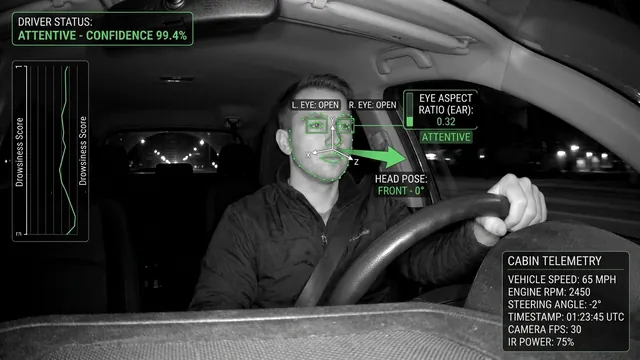
DMS Algorithmic Telemetry & Euro NCAP Thresholds
Fleet operators and automotive Tier-1 suppliers calibrate edge inference models against strict regulatory compliance benchmarks:
| Driver State Metric | Measurement Method | Alert Trigger Threshold |
|---|---|---|
| Drowsiness (PERCLOS) | Eye Aspect Ratio (EAR < 0.20) | > 80% eye closure over a rolling 60-second window. |
| Visual Distraction | 3D Head Pose + Iris Gaze Angle Deviation | Gaze diverted from forward road center cone > 3.0 seconds at speed > 20 km/h. |
| Microsleep Episode | Persistent eyelid closure with head nod downward | Continuous eye closure exceeding 1,200 ms triggers immediate acoustic/haptic alert. |
| Privacy & GDPR | On-Device Edge Computing (No Raw Video Egress) | Only lightweight JSON telemetry flags transmitted over CAN-bus to telematics ECU. |
For more details on our embedded AI engineering and real-time model optimization, explore our Edge AI development solutions and our full range of Computer Vision engineering capabilities.
On-Device Edge Computing: Power Budgets & Thermal Resilience
Unlike cloud AI applications, an automotive in-cabin DMS operates under extreme electrical and environmental constraints:
- Tight Thermal Envelope (≤10W Power Consumption): In-cabin devices are mounted behind windshield glass or inside the dashboard where summer cabin temperatures can exceed 75°C (167°F). Fanless, passive cooling is required, demanding silicon that runs high-throughput inference at less than 10 to 15 watts.
- Automotive Qualified Silicon: Systems are deployed on automotive-grade AEC-Q100 Grade 2 SoCs—such as the NVIDIA Jetson Orin Nano / NX, Ambarella CV2x/CV3x, NXP S32G / i.MX8M Plus, or Texas Instruments TDA4VM.
- Direct Automotive Voltage Regulation: Power circuitry must withstand load dump surges (ISO 7637-2 / ISO 16750-2 transients) across 12V and 24V vehicle electrical systems.
Privacy-Preserving Edge Architecture: Local Inference vs. Cloud Telematics
One of the largest hurdles to deploying driver monitoring in unionized commercial trucking fleets is driver resistance to constant in-cabin surveillance. Drivers legitimately reject inward-facing cameras that continuously record or stream raw video of their personal cab space to fleet dispatchers or third-party cloud servers.
Our edge AI architecture is built around Privacy by Design (GDPR Article 25 compliant):
Edge-Only Privacy Guarantees:
- Zero Video Storage: Raw image frames from the 940nm camera are processed directly in volatile RAM and immediately discarded. No video files or raw photographs are ever saved to local flash storage or transmitted over cellular modems during standard operation.
- Metadata-Only Telematics Payloads: When a confirmed drowsiness or distraction event triggers, the system transmits only a lightweight, encrypted JSON telemetry payload over the cellular modem: timestamp, GPS coordinates, event classification (e.g., MICROSLEEP_ALERT), and duration (e.g., 1.8s).
- Ephemeral Anonymized Event Snippets: If fleet safety policies explicitly require visual confirmation for legal liability defense, the device saves an encrypted, low-resolution 3-second video loop showing only the driver's cropped eye/head region, cryptographically signed and stored in a tamper-proof hardware Secure Element.
Automotive Vehicle Integration: CAN Bus & In-Cabin Alerting
A safety warning that arrives 500 milliseconds too late is useless. The DMS edge unit interfaces directly with the vehicle's electronic architecture via Controller Area Network (CAN 2.0B / CAN FD) or commercial vehicle SAE J1939 fieldbus.
Multi-Modal Closed-Loop Alert Escalation
When the vision engine detects driver impairment, warnings escalate in structured stages to overcome sensory habituation:
- Stage 1 (Subtle Haptic / Visual Alert): At the first onset of gaze wandering (>2.0s), an icon flashes on the digital instrument cluster accompanied by a localized directional haptic pulse in the driver's seat bolster or steering wheel rim.
- Stage 2 (Acoustic Chime): If inattention persists past 3.0 seconds or PERCLOS indicates Level 7 drowsiness, the unit broadcasts an urgent, high-frequency acoustic chime through the vehicle cabin speakers via CAN infotainment muting.
- Stage 3 (Advanced Driver Assistance System - ADAS Handshake): In automated commercial fleets, if a severe microsleep is detected (>2.0s eye closure), the DMS sends a high-priority CAN message to the vehicle ADAS controller. The ADAS system tightens seatbelts via pyrotechnic pretensioners, increases autonomous forward following distance, and primes the Advanced Emergency Braking System (AEBS) for immediate deceleration if forward obstacles are sensed.
To learn how AdaptNXT connects edge computer vision systems to vehicle telematics, industrial machinery, and field operations, explore our Industry-Specific AI Solutions.
Real-World Fleet Impact & Case Study Validation
The measurable impact of edge-based DMS in commercial fleet deployments is extraordinary:
- 85% Reduction in Fatigue-Related Highway Incidents: Proactive haptic and acoustic alerts wake drivers at the earliest stages of microsleep onset, preventing run-off-road and rear-end collisions.
- Significant Reductions in Fleet Insurance Premiums: Commercial freight carriers equipping their fleets with certified DMS and forward-facing ADAS frequently qualify for 15% to 25% insurance premium discounts due to demonstrably lower loss ratios.
- Driver Coaching and Route Optimization: Telematics data highlights specific fatigue hotspots—identifying highway corridors, shift transitions, or nighttime hours that repeatedly induce high PERCLOS scores, enabling fleet safety managers to rebalance driver scheduling.
Read our full technical breakdown and field performance data in the AdaptNXT Driver Fatigue & Drowsiness Detection Case Study.
Ready to deploy edge AI driver monitoring across your commercial vehicles or integrate DMS algorithms into your telematics hardware? Contact our computer vision engineering team today to discuss custom model training and hardware integration.
Frequently Asked Questions (FAQ)
How does the camera track eyes through dark polarized sunglasses at night?
Most commercial sunglasses use tinted polarizing films designed to block visible wavelengths and horizontal surface glare. However, these films are largely transparent to near-infrared light in the 940nm spectrum. By illuminating the cabin with active 940nm pulsed LEDs and using an optical bandpass filter matched to the sensor, the camera bypasses the visible tinting, capturing clear pupil, iris, and eyelid landmarks even through dark sunglasses.
What is PERCLOS and why is it considered the scientific gold standard for drowsiness?
PERCLOS stands for the 'Percentage of Eyelid Closure' over a specified time interval (typically a rolling 1-minute window). It specifically measures the proportion of time the eyelids cover 80% or more of the pupil (the P80 standard). Decades of sleep research by NHTSA and medical researchers have validated PERCLOS as the most reliable physiological metric of drowsiness, correlating far more accurately with cognitive impairment and microsleep onset than simple blink frequency or head nodding.
Does the system continuously upload video of the driver to the cloud?
No. AdaptNXT DMS systems operate entirely on-device using local edge AI inference. All video frames are processed in volatile RAM and immediately discarded. The system transmits only lightweight, encrypted CAN bus telemetry alerts (such as fatigue score, distraction duration, timestamp, and vehicle speed) over the telematics modem. This strict privacy-preserving edge architecture complies fully with European GDPR and commercial driver union privacy mandates.
How does DMS comply with the European Union DDAW / GSR regulations?
The EU General Safety Regulation (GSR II) and DDAW technical specifications require vehicles to directly monitor driver alertness, warning the driver when fatigue reaches Level 7 or 8 on the Karolinska Sleepiness Scale (KSS). Our algorithms map continuous PERCLOS, eye closure dynamics, and yawning indicators directly to validated KSS levels, meeting the required Euro NCAP and DDAW certification thresholds for commercial and passenger vehicle homologation.
Can the system detect mobile phone texting if the phone is held low near the driver's lap?
Yes. The system utilizes a dual-pronged approach. First, the 3D gaze estimation model detects that the driver's visual fixation vector has dropped downward away from the forward roadway for longer than 2.0 seconds. Simultaneously, a lightweight secondary object detection neural network analyzes the lower in-cabin region to recognize the rectangular geometry of a smartphone and the associated hand/wrist posture, triggering a high-priority mobile phone distraction warning.