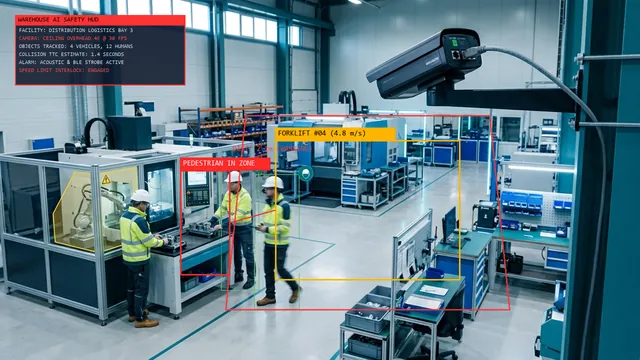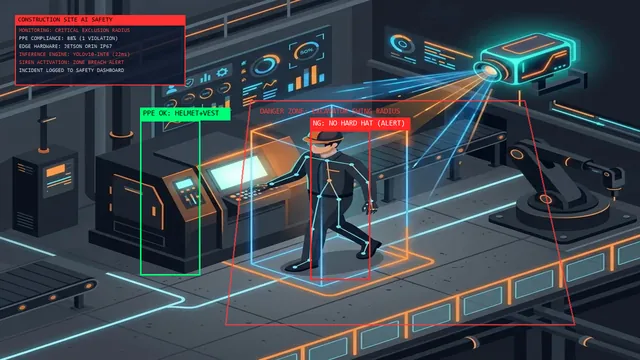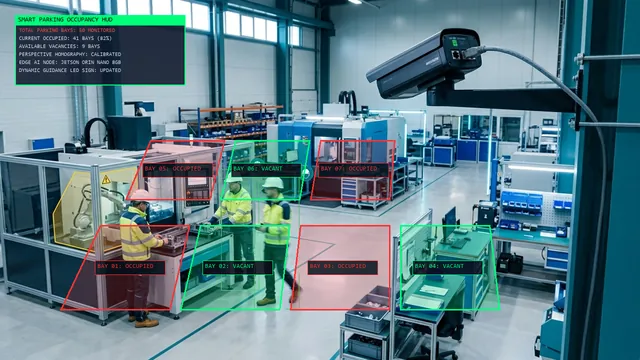

The architectural decision of where to process visual data is the most consequential choice engineers face when designing intelligent vision systems. The debate between cloud vs edge computer vision is not simply a matter of preference; it is a complex optimization problem balancing latency, bandwidth costs, privacy regulations, and computational power. As the proliferation of high-resolution cameras continues to generate unprecedented volumes of video data, organizations must carefully evaluate their specific use cases to determine the most effective deployment strategy. This comprehensive analysis deconstructs the technical and economic trade-offs inherent in both approaches and explores the emerging paradigm of hybrid architectures.
Key Takeaways
- Cloud computer vision offers infinite scalability for complex analytics but is constrained by bandwidth costs and network latency.
- Edge computing enables real-time deterministic decision-making by processing data locally, drastically reducing latency.
- Edge processing enhances privacy and regulatory compliance (e.g., GDPR) by analyzing and discarding footage locally.
- Hybrid architectures provide the best of both worlds, using the edge for real-time filtering and the cloud for heavy compute tasks.
The Cloud Computing Paradigm: Centralized Power
Cloud-based computer vision relies on streaming raw video feeds or compressed images from on-site cameras to centralized datacenters for processing. This architecture leverages the virtually limitless compute and storage resources provided by major cloud service providers. For computationally intensive tasks, such as training massive deep learning models or executing complex, multi-modal inferencing across vast historical datasets, the cloud remains unmatched.
Advantages of the Cloud
- Infinite Scalability: Cloud architectures allow organizations to spin up thousands of GPU instances on demand, facilitating the rapid analysis of massive datasets without significant upfront capital expenditure on hardware.
- Simplified Model Management: Centralized processing vastly simplifies the deployment of model updates. A new version of an algorithm can be pushed to the cloud environment instantly, immediately affecting all connected cameras without the need to update remote endpoint devices.
- Complex Analytics: By aggregating data from diverse geographical locations into a central repository, organizations can perform complex macro-level analytics, uncovering long-term trends and correlations that would be invisible in isolated edge deployments.
The Constraints: Latency and Bandwidth
However, the cloud architecture is fundamentally constrained by physics and economics. Streaming continuous, high-definition video to the cloud demands immense network bandwidth. For organizations with hundreds or thousands of cameras, these recurring bandwidth costs can quickly become exorbitant, often eclipsing the cost of the compute resources themselves. Furthermore, the inherent network latency—the time required for data to travel to the datacenter, be processed, and for the response to return—makes the cloud unsuitable for truly real-time, deterministic applications. In scenarios like autonomous driving or high-speed manufacturing, a delay of even a few hundred milliseconds can be catastrophic.
Evaluating Automated Optical Inspection for Your Line?
Send us 5–10 sample images of your OK/NG parts or share your cycle-time and lighting constraints. Our Computer Vision architects will benchmark detection feasibility within 48 hours—or join a 20-minute technical scoping session.
The Edge Computing Paradigm: Localized Intelligence
Edge computing addresses the shortcomings of the cloud by moving the processing power directly to the data source. In an edge architecture, sophisticated AI models are deployed on embedded devices (such as smart cameras or localized edge gateways) physically co-located with the sensors. This localized approach is rapidly becoming the standard for modern computer vision services.
Real-Time Determinism and Cost Reduction
By eliminating the need to traverse the internet, edge inferencing drastically reduces latency, enabling near-instantaneous decision-making crucial for robotic control and rapid anomaly detection. Equally important, edge computing effectively neutralizes the bandwidth bottleneck. Because the video is processed locally, only the resulting metadata (e.g., "person detected," "defect found") or critical exception clips need to be transmitted over the network. This localized filtering results in massive reductions in ongoing telecommunication and cloud storage costs.
Privacy and Regulatory Compliance
Perhaps the most compelling argument for edge computing in public or sensitive environments is privacy. Under strict data protection regulations like GDPR or CCPA, transmitting and storing personally identifiable information (PII), such as facial data captured on video, presents significant legal and ethical challenges. Edge computing elegantly solves this problem by adhering to the principle of data minimization. The video is analyzed in real-time within volatile memory, the necessary insights are extracted, and the raw footage is immediately discarded without ever being saved to a persistent storage medium or leaving the local premise. This "privacy by design" approach significantly reduces organizational risk.
The Synthesis: Hybrid Architectures
In reality, the most effective deployments rarely rely exclusively on one extreme or the other. Modern system design increasingly embraces hybrid architectures that intelligently partition workloads to leverage the unique strengths of both paradigms.
"The future of computer vision is not edge vs. cloud; it is a highly orchestrated continuum where deterministic inference happens at the edge, while heavy compute tasks like model retraining and aggregate analytics are relegated to the cloud."
In a hybrid model, the edge devices act as intelligent filters. They process the raw video stream in real-time, executing lightweight models for immediate action and discarding irrelevant data. When a significant event or anomaly is detected, the edge device transmits a small snippet of high-resolution video, along with the associated metadata, to the cloud. The cloud server then utilizes its superior compute power to run heavier, more complex models on that specific snippet for deeper analysis, and aggregates the metadata across all endpoints for global reporting and continuous model retraining. This orchestrated approach maximizes responsiveness while minimizing costs and preserving privacy.
| Architecture Model | Latency | Bandwidth Cost | Best For |
|---|---|---|---|
| Cloud-Only | High | High | Batch processing, deep learning training |
| Edge-Only | Low (Real-time) | Low | Robotics, autonomous vehicles, high-speed QC |
| Hybrid | Variable | Medium | Smart retail, complex surveillance, IoT |
Conclusion
Choosing between cloud and edge computer vision architectures requires a nuanced understanding of application requirements. While the cloud offers unparalleled scalability for complex analytics and model training, its latency and bandwidth limitations make it unsuitable for many real-time applications. Edge computing provides the deterministic performance and cost-efficiencies necessary for localized control, while simultaneously mitigating profound privacy concerns. Ultimately, the most robust and future-proof solutions will increasingly rely on hybrid architectures that seamlessly integrate the localized intelligence of the edge with the centralized power of the cloud, creating a synergistic ecosystem capable of addressing the most demanding visual computing challenges.
Frequently Asked Questions (FAQ)
Why is edge computing necessary for real-time computer vision?
Edge computing eliminates network latency by processing visual data directly at the source, allowing for near-instantaneous decision-making required for robotics, autonomous driving, and real-time alerts.
Does edge computer vision help with GDPR compliance?
Yes. Edge computing analyzes video feeds in volatile memory to extract metadata and discards the raw footage immediately. This prevents the storage or transmission of Personally Identifiable Information (PII), supporting strict privacy regulations like GDPR.
What is a hybrid computer vision architecture?
A hybrid architecture uses edge devices to perform real-time, lightweight inference and filter irrelevant data, while transmitting complex events and metadata to the cloud for heavy computation, historical analytics, and model retraining.