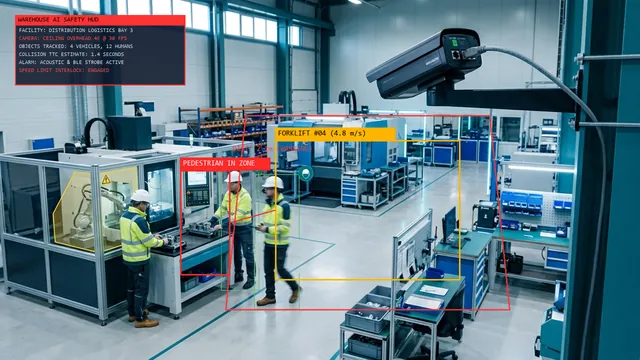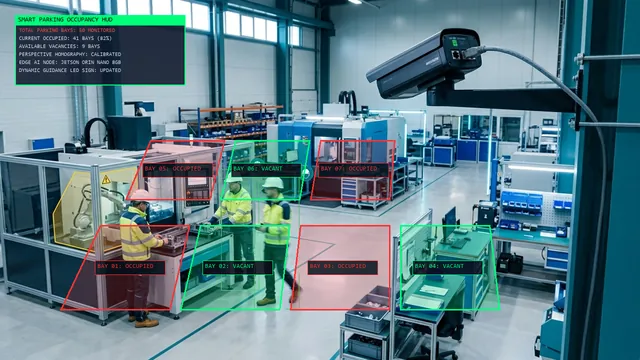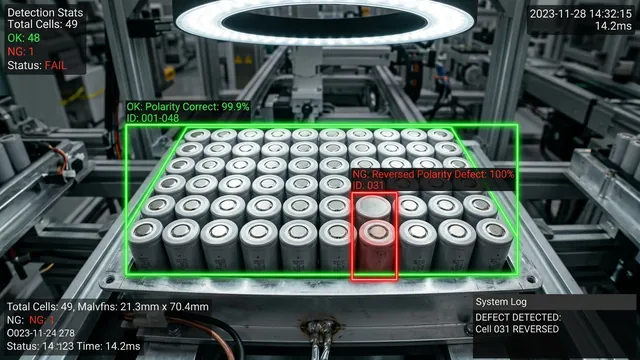

Key Engineering Takeaways: Construction sites present dynamic, high-hazard environments where manual safety inspections fail to prevent "Fatal Four" accidents (falls, struck-by, caught-in-between, and electrocution). Deploying edge-native AI CCTV systems provides sub-100ms automated detection of multi-class Personal Protective Equipment (hard hats, high-vis vests, harnesses, goggles) and dynamic heavy machinery geofencing around excavators, telehandlers, and cranes. Operating autonomously via solar-powered LiFePO4 battery banks and 5G/LTE telemetry, these systems eliminate reliance on temporary site power or fragile fiber lines while generating immutable, audit-ready OSHA compliance and near-miss analytics.
Commercial construction sites, industrial civil engineering projects, and infrastructure mega-builds are amongst the most hazardous operational environments in the modern economy. According to the Occupational Safety and Health Administration (OSHA), struck-by hazards and falls from elevation consistently lead workplace fatalities in the construction sector, representing over 60% of all site deaths. Traditionally, site safety management has relied on human safety officers conducting periodic clipboard audits, visual inspections at morning toolbox talks, or reviewing passive CCTV footage only after a catastrophic injury has already occurred.
These legacy safety practices are fundamentally reactive, intermittent, and incapable of continuously monitoring hundreds of subcontracted workers dispersed across multi-acre, multi-level jobsites. The integration of Computer Vision (CV) and Edge AI CCTV systems fundamentally shifts construction safety from retrospective post-mortems to deterministic, real-time hazard interception. By streaming optical and thermal feeds into optimized deep learning neural networks deployed directly on-site, modern AI surveillance autonomously enforces PPE compliance, establishes dynamic spatial exclusion zones around heavy earthmoving machinery, and builds verifiable safety audit trails.
Evaluating Automated Optical Inspection for Your Line?
Send us 5–10 sample images of your OK/NG parts or share your cycle-time and lighting constraints. Our Computer Vision architects will benchmark detection feasibility within 48 hours—or join a 20-minute technical scoping session.
Key Takeaways
- Continuous OSHA Compliance: Computer vision automates continuous site monitoring for hard hats, high-vis vests, and safety harnesses across large commercial jobsites.
- Dynamic Machinery Buffer Zones: Real-time tracking calculates dynamic exclusion zones around excavators, cranes, and heavy earthmovers to prevent blind-spot crush fatalities.
- Ruggedized Solar/5G Edge AI: Edge vision appliances operate reliably off-grid with local AI inference, eliminating bandwidth bottlenecks and downtime.
- Proactive Hazard Prevention: Shift site safety from reactive post-incident review to instant automated alert dispatch in under 200 milliseconds.
1. Hierarchical Real-Time PPE Compliance Detection Pipeline
Detecting whether a worker is wearing appropriate Personal Protective Equipment (PPE) is substantially more complex than generic human detection. On an active construction site, workers assume diverse postures (stooping, kneeling, operating jackhammers, scaling ladders), navigate varying elevations, and are frequently partially occluded by scaffolding, rebar cages, and building materials. Furthermore, PPE items are visually small relative to the total camera field of view—a hard hat may occupy fewer than 30x30 pixels on an elevated 4K security feed.
To achieve high precision and recall while minimizing false alarms, state-of-the-art vision systems utilize a hierarchical multi-stage detection pipeline rather than a single monolithic detector.
Stage 1: Person Localization & Pose Estimation
The primary neural backbone—typically a heavily quantized YOLOv8, YOLOv10, or custom lightweight CNN—first isolates all human workers within the frame. Rather than generating simple bounding boxes, the system runs 17-point Human Pose Estimation to detect anatomical keypoints (head, neck, shoulders, elbows, wrists, hips, knees, ankles). Pose estimation provides critical geometric spatial anchors:
- The Cranial Anchor defines the exact coordinate region where a hard hat must be positioned.
- The Torso Keypoints (shoulders to hips) bound the precise region of interest (ROI) where high-visibility safety apparel must be worn.
- The Wrist and Hand Keypoints define the search area for safety gloves and tool lanyards.
- The Dorsal / Chest Keypoints identify the anchor coordinates for full-body fall arrest harness webbing and dorsal D-rings.
Stage 2: Fine-Grained Multi-Class Sub-Networks
Once the anatomical ROIs are cropped and normalized, specialized downstream convolutional classifiers or segmentation heads evaluate compliance for individual PPE items:
- Hard Hat Detection (OSHA 1926.100): The sub-classifier differentiates between standard Type I/Type II industrial hard hats, baseball caps, hoods, and bare heads. Advanced models verify the presence of tightened chin straps on workers operating at heights exceeding six feet.
- High-Visibility Apparel (ANSI/ISEA 107 Class 2/3): The model does not merely look for bright colors; it extracts color histograms in the HSV/Lab color space to verify fluorescent yellow-green or orange-red chromaticity. Crucially, it runs edge-filter convolutions to verify the presence of standardized retroreflective tape patterns across the chest and waist, distinguishing an approved safety vest from a standard yellow t-shirt.
- Fall Protection Harness & Lanyard Tie-Off (OSHA 1926.502): For workers detected on elevated slabs, scaffolding, or boom lifts, the network identifies harness shoulder/leg straps and verifies whether the shock-absorbing lanyard is physically anchored to a structural tie-off point or lifeline.
- Eye & Face Protection (Safety Goggles / Face Shields): At closer focal ranges (such as entry turnstiles, tool cribs, or designated hot-work grinding zones), localized facial landmark models verify ANSI Z87.1 certified protective eyewear.
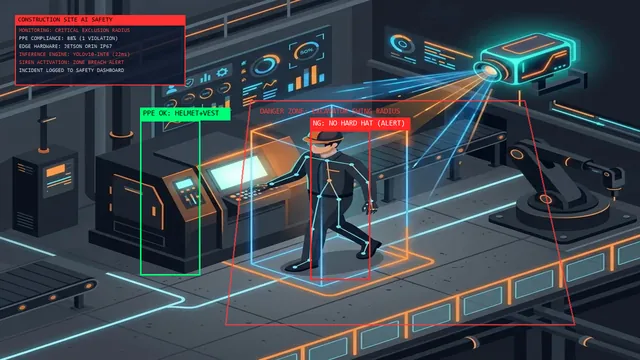
Construction Safety Computer Vision Specifications
| Safety Enforcement Domain | Computer Vision Metric | Jobsite Protocol |
|---|---|---|
| Personal Protective Equipment (PPE) | Hard hat and high-visibility vest classification | Instantaneous supervisor push notification upon entering site without required gear. |
| Heavy Equipment Exclusion Radii | Dynamic swing radius polygon around cranes/excavators | Triggers loud site horn when unauthorized ground personnel enter within 8 meters. |
| Leading Edge & Trench Fall Hazards | Geofenced edge boundary tracking | Verifies tether harness attachment for workers near unprotected perimeters. |
| Ruggedized Edge Hardware | IP67 solar-powered Jetson Orin edge appliance with 5G | Continuous operation in extreme dust, rain, and temperatures without fixed internet. |
2. Dynamic Heavy Machinery Geo-Fencing & Exclusion Zones
The collision between heavy mobile machinery (hydraulic excavators, wheel loaders, mobile cranes, skid steers, and telehandlers) and ground personnel represents the single most severe cause of non-fall fatalities on civil worksites. Large earthmoving equipment possesses notorious blind spots: a 30-ton excavator operator cannot see ground personnel standing within 5 meters of the rear counterweight or the right-side engine cowl.
While static geofencing relies on fixed coordinates drawn on a digital map, construction machinery is continuously in motion. Computer vision solves this through Dynamic Kinematic Exclusion Zones.
Dynamic Zone Shaping Based on Kinematic State
A static circular perimeter around an excavator is inadequate; if the exclusion zone is set too large, workers 15 meters away trigger constant nuisance alarms, leading operators to disable the safety system. If it is too small, an excavator rapidly slewing its upper chassis at 10 RPM will strike a worker before an alert can sound.
Computer vision systems dynamically adjust the exclusion boundary in real time based on:
- Slew-Ring Rotation Speed: Tracking the angular velocity of the excavator cab. As the chassis rotates, the lateral danger zone balloons outwards in the direction of the tail swing.
- Travel Direction and Velocity: Tracking track/wheel motion vectors. The forward or rearward safety zone extends proportionally to machine braking distance.
- Boom, Stick, and Bucket Articulation: Estimating the 3D elevation and reach of the digging attachment. The front hazard perimeter extends dynamically to encompass the full reach radius of the hydraulic bucket.
- Crane Suspended Load "Drop Cone": Overhead cameras mounted on tower crane trolleys track the suspended hook block and rigging. The vision system projects an inverted conic ground-plane exclusion zone beneath the suspended load, alerting ground personnel who walk beneath suspended steel girders or concrete buckets.
Spatial Projection via Inverse Perspective Mapping (IPM)
To accurately measure distance between machines and personnel, 2D pixel coordinates from wide-angle or fisheye cameras must be mapped onto the physical ground plane. The vision system computes a Homography Matrix (H) based on camera intrinsic parameters (focal length, optical center, radial lens distortion) and extrinsic parameters (mounting height, pitch, roll, and yaw angles relative to the ground):
[X_world, Y_world, 1]^T = H * [u_pixel, v_pixel, 1]^T
By transforming the bottom-center pixel coordinate of a worker’s feet and the outer perimeter of the machine tracks onto this metric ground plane, the system calculates true Euclidean distances in meters with sub-10cm accuracy. If a worker penetrates within the 3-meter critical buffer, the edge controller triggers an on-machine strobe and directional horn within 50 milliseconds, alerting both the equipment operator and the ground worker simultaneously.
3. Off-Grid Edge Architecture: Solar-Powered 5G/LTE Camera Pods
Civil infrastructure developments, highway expansions, and greenfield industrial builds have zero permanent electrical grid infrastructure or wired fiber optic networks. Relying on diesel generators for continuous CCTV power introduces refueling downtime, carbon emissions, and fire hazards. Furthermore, transmitting continuous high-definition RTSP streams over commercial cellular uplinks would consume hundreds of gigabytes per camera daily, rapidly incurring exorbitant cellular bandwidth bills.
To operate reliably in remote, rugged terrain, modern construction safety systems utilize autonomous Solar Edge AI Pods (Mobile Camera Towers):
Physical & Electrical Hardware Topology
Each autonomous edge pod is engineered as a self-sustaining tactical surveillance unit:
- Photovoltaic Solar Generation: Dual 200W to 400W monocrystalline solar panels mounted on a telescoping mast, connected to a Maximum Power Point Tracking (MPPT) solar charge controller with over 98% efficiency.
- Lithium Iron Phosphate (LiFePO4) Energy Storage: A 12V/24V 200Ah LiFePO4 battery bank delivers up to 96 hours (4 full days) of continuous system autonomy during prolonged overcast or stormy conditions. Unlike standard lithium-ion, LiFePO4 chemistry features thermal stability up to 60°C and incorporates built-in internal heating blankets to enable cold-weather charging down to -20°C.
- Ruggedized Edge AI Compute: An industrial, fanless IP67-rated enclosure houses an embedded system-on-module (e.g., NVIDIA Jetson Orin NX 16GB or Jetson Orin Nano). Operating at 15W to 25W TDP, the unit provides up to 100 TOPS of INT8 sparse AI compute, processing 4 to 6 concurrent 1080p camera feeds at 25 FPS locally.
- Dual-SIM Industrial 5G/LTE Gateway: An industrial router equipped with dual eSIM failover (e.g., AT&T and Verizon / regional tier-1 carriers) and high-gain omnidirectional MIMO antennas ensures uninterrupted uplink connectivity.
Bandwidth-Optimized Edge Telemetry Strategy
To eliminate bandwidth bottlenecks, the edge node acts as an intelligent visual filter:
- Raw 1080p/4K video feeds never leave the edge pod’s internal gigabit switch.
- The neural network processes frames in RAM via zero-memory-copy hardware decoders (NVDEC to NVMM buffers).
- When a verified safety breach occurs (e.g., a worker without a hard hat enters an active excavator swing zone), the edge pod extracts a lightweight telemetry package:
- A 5KB JSON metadata payload (timestamp, GPS coordinates, camera ID, violation type, confidence score).
- A high-resolution, cropped snapshot of the violation event.
- A 10-second compressed H.265 incident video clip (5 seconds pre-buffer, 5 seconds post-buffer).
- This lightweight event packet is transmitted over secure MQTT/TLS or HTTPS webhooks to the cloud dashboard, consuming less than 15MB of cellular data per 24-hour shift while preserving comprehensive audit trails.
4. Automated Safety Auditing, OSHA Reporting & Near-Miss Analytics
In safety management science, Heinrich’s Accident Triangle demonstrates that for every fatal accident, there are approximately 30 major injuries, 300 minor injuries, and over 3,000 near-miss incidents. Traditional construction sites only record the catastrophic events at the top of the triangle because near-misses go unrecorded. Workers and sub-contractors naturally avoid reporting minor slips, close equipment passes, or momentary lapses in PPE compliance for fear of reprimand or project delays.
Automated AI CCTV transforms safety culture by systematically logging near-miss telemetry objectively and without bias:
Quantifying Near-Miss Velocity
By continuously tracking spatial proximity between personnel and active plant machinery, the vision system records every instance where a worker approached within 1.5x of the minimum safe distance. If a specific subcontractor or work zone registers a sudden spike in near-miss velocity over a 72-hour period, site superintendents can intervene with targeted safety stand-downs and operational layout changes before an actual strike occurs.
Automated OSHA Compliance & Legal Defense Logs
When an incident or OSHA inspection occurs, general contractors face crippling stop-work orders, steep fines, and protracted legal liabilities. The AI safety system automatically compiles cryptographic, tamper-evident digital records:
- Time-Stamped Photographic Verification: Proving that mandatory PPE protocols were continuously monitored and enforced.
- Audit Trails for Subcontractors: Detailed compliance scoring by subcontractor trade (e.g., steel erectors vs. electrical trades vs. concrete crews), allowing general contractors to enforce contractual safety clauses.
- Insurance Premium Reductions: Forward-thinking construction firms leverage verified AI safety telemetry to negotiate substantial discounts on Builder’s Risk and Commercial General Liability (CGL) insurance policies.
5. Technical Comparison: Construction Safety Monitoring Methodologies
The matrix below compares traditional human safety management against active wearable RFID/UWB systems and autonomous Edge AI CCTV:
| Evaluation Dimension | Manual Safety Officers | Wearable RFID / UWB Tags | Passive CCTV (Post-Mortem) | Autonomous Edge AI CCTV |
|---|---|---|---|---|
| Real-Time Intervention | Low (Delayed human reaction) | High (Buzzer triggers) | None (Retrospective only) | Instantaneous (< 100ms) |
| PPE Verification | Periodic visual checks | Cannot verify (Tags only detect proximity) | Manual video scrubbing | Continuous 100% visual verification |
| Dynamic Machinery Geofencing | Inconsistent spotter hand signals | Fixed radial distance around beacon | No active alerting | Dynamic kinematic boundary based on machine motion |
| Worker Friction & Compliance | High friction (Interpersonal tension) | High (Workers forget, lose, or fail to charge tags) | Zero friction (Passive) | Zero friction (100% non-intrusive optical monitoring) |
| Infrastructure Requirements | On-site payroll | Tag charging stations + on-vehicle receivers | Permanent power & high-bandwidth DVRs | Solar-powered portable masts with 5G edge telemetry |
| OSHA Audit Readiness | Subjective paper clipboards | Proximity logs without visual proof | Unindexed massive video files | Automated digital incident reports with video proof |
6. Overcoming Rugged Jobsite Optical & Environmental Edge Cases
Deploying optical AI in construction environments exposes systems to severe weather, dust, and visual corruption that would disable standard office security cameras. Production systems implement specialized engineering controls:
- Mud Splatter and Particulate Occlusion: Excavators and concrete mixers kick up dense dust clouds and slurry. Camera pods utilize industrial PTZ and bullet enclosures equipped with hydrophobic, scratch-resistant nano-coatings and internal motorized lens wipers. Furthermore, an onboard background texture-variance algorithm monitors optical contrast; if a camera lens becomes heavily soiled, an automated maintenance ticket is dispatched to the field technician.
- Severe Backlighting and Direct Sunlight: Jobsites experience extreme solar angles at dawn and dusk. Cameras feature 1/1.8" ultra-large optical sensors with True Wide Dynamic Range (WDR > 130dB) and auto-iris DC lenses, ensuring high contrast between workers silhouetted against blinding sunlight and shaded trench excavations.
- Night Work & Dual Optical-Thermal Fusion: 24-hour infrastructure concrete pours require nighttime operation. In addition to high-power 850nm matrix infrared illuminators, edge nodes can fuse optical video with uncooled Long-Wave Infrared (LWIR) thermal sensors. Even in total darkness, dense diesel exhaust smoke, or blizzard conditions, thermal emission signatures cleanly reveal human body heat against cold earth and machinery.
To design and implement a bespoke safety monitoring infrastructure tailored to your active jobsite, partner with our specialized Edge AI Development Company, explore custom Computer Vision Services, or discover our enterprise Manufacturing & Heavy Industry AI Solutions.
Frequently Asked Questions
How does the AI differentiate between visitors, subcontractors, and authorized personnel?
The system evaluates safety compliance universally across all individuals entering active hazard zones, regardless of employer. However, integration with jobsite access control turnstiles or optional optical badge readers can correlate safety compliance events with specific subcontractor worker IDs, facilitating automated trade-level safety scoring.
Can the system operate if the jobsite loses 5G/LTE cellular coverage?
Yes. All safety critical inference (PPE compliance evaluation, heavy machinery exclusion zone breach detection, and local alarm actuation) executes 100% on-premises within the edge computer. Incident logs and video clips are stored in encrypted local flash storage and automatically synced to the cloud whenever cellular connectivity is restored.
Does dynamic heavy machinery geofencing cause operator alert fatigue?
No. Unlike crude proximity sensors or uncalibrated RF tags that beep incessantly whenever a worker is within 10 meters, our computer vision system employs dynamic kinematic vectoring. Alarms only sound if a worker's trajectory intersects with the machine's active travel vector, swing-radius slew direction, or blind zone, virtually eliminating false alarms.
Is worker privacy protected under local labor and biometric privacy regulations?
Yes. The system is designed strictly for PPE compliance and spatial safety analytics rather than biometric surveillance. Real-time inference models utilize anonymized keypoints and bounding boxes. At the edge level, face-blurring filters can be automatically applied to all stored video clips, ensuring full compliance with GDPR, CCPA, and union labor agreements.