
In the rapidly evolving landscape of artificial intelligence and machine learning, two terms are often used interchangeably, leading to widespread confusion among technical leaders, product managers, and even some software engineers: Computer Vision and Image Processing. While they are intimately related and frequently operate in tandem within modern automated systems, they represent fundamentally distinct technological paradigms, methodologies, and computational objectives. Understanding the critical technical boundaries between these two domains is essential for organizations looking to architect robust visual AI systems, optimize their computational pipelines, and select the appropriate technology stack for their specific business use cases. This comprehensive guide will dissect the nuances, define the boundaries, and explore the underlying mechanics that separate basic pixel manipulation from advanced spatial understanding.
To truly grasp the difference, one must first recognize the varying levels of abstraction at which these technologies operate. Image processing is primarily concerned with the transformation of an image from one state to another—an image goes in, and a modified image comes out. It is a lower-level, deterministic process. In stark contrast, computer vision is focused on extraction, understanding, and decision-making—an image goes in, and structured data, actionable insights, or semantic understanding comes out. Computer vision systems aim to replicate, and often surpass, the capabilities of human visual perception by comprehending the context, relationships, and significance of the visual data. As we delve deeper into the technical specifics, the lines of demarcation will become abundantly clear, revealing how image processing often serves as the foundational preprocessing step upon which complex computer vision algorithms are built.
Key Takeaways
- Image processing involves pixel-level manipulation (e.g., blurring, sharpening) where the input and output are both images.
- Computer vision extracts semantic meaning (e.g., object detection, classification) where the input is an image and the output is data.
- Image processing relies on deterministic, handcrafted mathematical filters and kernels (like Sobel operators).
- Computer vision relies heavily on deep learning and neural networks (like CNNs, YOLO) to learn hierarchical spatial patterns.
The distinction between these two fields is not merely an academic exercise; it has profound implications for hardware requirements, algorithmic selection, and system architecture. Implementing a simple image processing pipeline might only require standard CPUs and well-established mathematical libraries, whereas deploying a state-of-the-art computer vision model demands significant GPU acceleration, complex neural network architectures, and vast datasets for training and validation. By exploring the depths of filters, convolutions, edge detection, Convolutional Neural Networks (CNNs), object detection frameworks like YOLO, and semantic segmentation, this article will equip technical professionals with the knowledge required to make informed architectural decisions in the visual AI domain.
Understanding the Foundational Definitions: What Are They?
At its core, Image Processing is a discipline of signal processing that treats images as two-dimensional signals and applies standard mathematical operations to them. The fundamental goal is to improve image quality, enhance specific features, or extract specific metrics without inherently understanding the semantic content of the image. The input is an image, and the output is typically another image. This can involve operations such as noise reduction, contrast enhancement, color space conversion, and geometric transformations. The algorithms used in image processing are generally deterministic, relying on predefined mathematical formulas and matrices (kernels) to manipulate pixel values based on their spatial neighborhood.
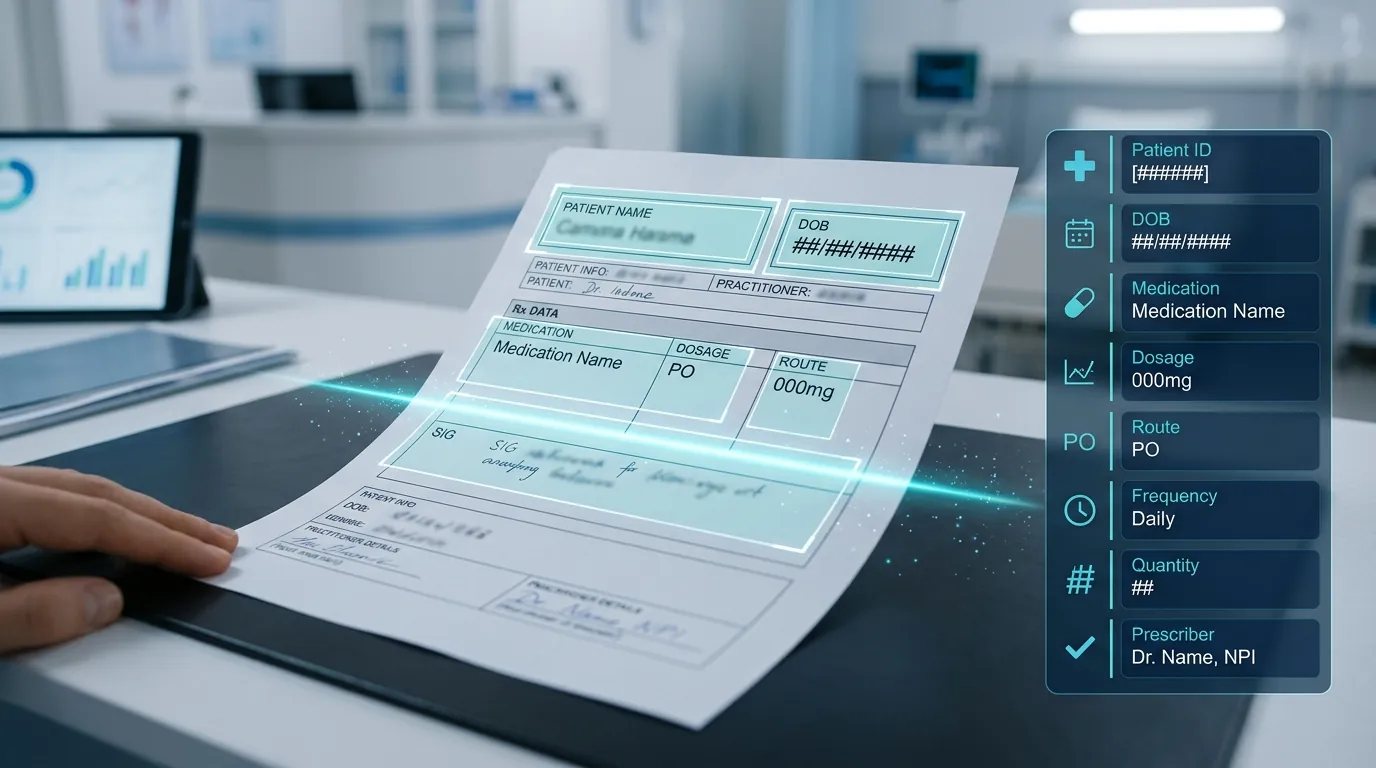
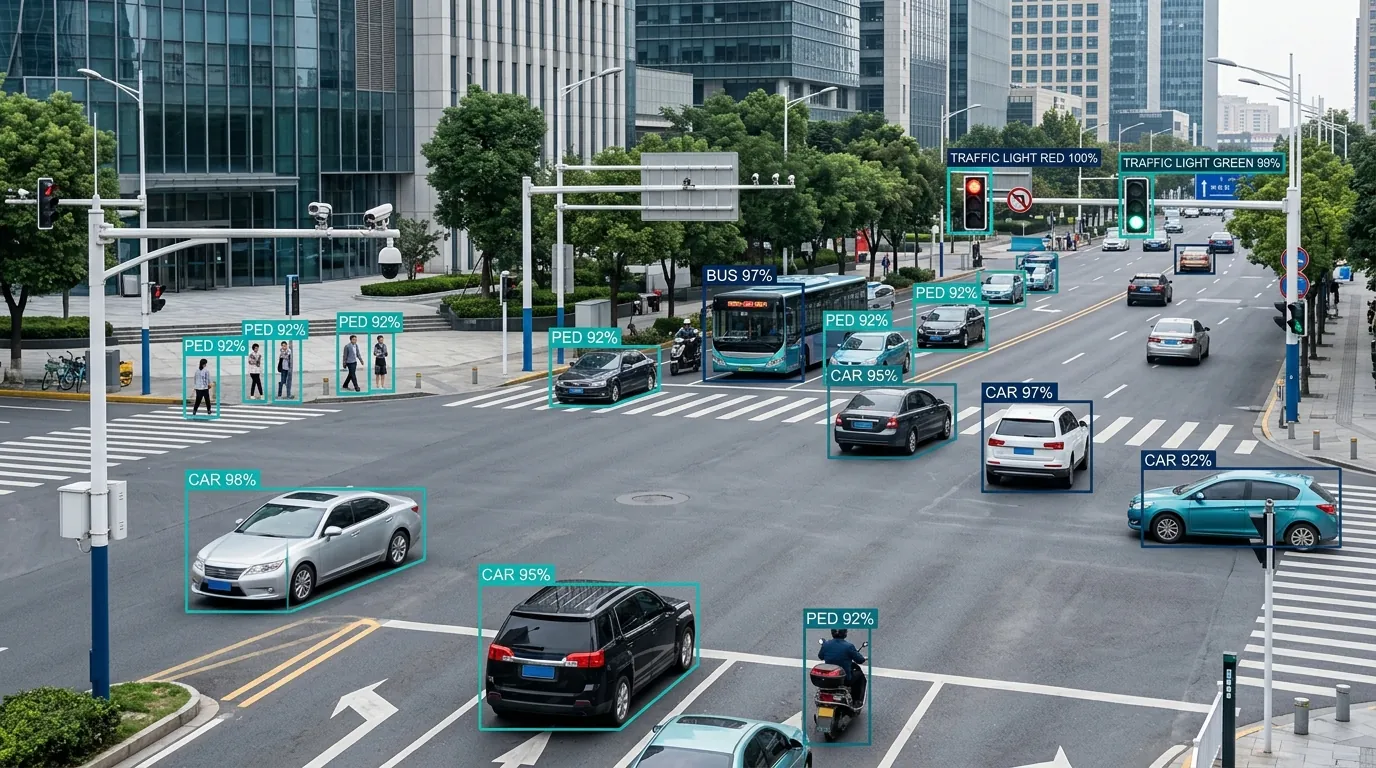
Computer Vision, on the other hand, is a subfield of Artificial Intelligence (AI) and Machine Learning (ML) that seeks to enable computers to extract high-level understanding from digital images or videos. The objective is not merely to alter the image, but to automate tasks that the human visual system can do. The input is an image, but the output is an interpretation: a classification label, a set of bounding boxes, a dense pixel-wise segmentation map, or a 3D reconstruction. Computer vision systems "see" by identifying patterns, recognizing objects, understanding spatial relationships, and contextualizing scenes. Modern computer vision is overwhelmingly driven by deep learning, specifically relying on massive datasets to "teach" neural networks how to infer meaning from raw pixel data.
The relationship between the two can be conceptualized as a hierarchy of abstraction. Image processing sits at the base, providing the tools to clean, normalize, and prepare visual data. Computer vision sits atop this foundation, leveraging the processed data to perform complex cognitive tasks. For instance, before a computer vision model can accurately identify a license plate on a speeding vehicle, an image processing pipeline might first be employed to adjust the brightness, reduce motion blur, and increase the contrast of the raw camera feed. In this scenario, image processing is the enabler, while computer vision is the ultimate decision-maker.
Deep Dive into Image Processing: Pixel-Level Manipulation
The technical heart of image processing lies in its algorithmic approach to pixel manipulation. One of the most fundamental operations is convolution, a mathematical operation on two functions that produces a third function expressing how the shape of one is modified by the other. In image processing, this involves sliding a small matrix, known as a kernel or filter, over the entire image. At each position, the kernel's values are multiplied by the underlying pixel values, and the results are summed to produce a new pixel value in the output image. This simple yet powerful mechanism forms the basis for a vast array of image processing techniques.
Filters are the practical application of convolution. Depending on the values within the kernel, different effects can be achieved. For example, a Gaussian blur filter uses a kernel with values that approximate a Gaussian distribution, effectively averaging neighboring pixels to reduce high-frequency noise and smooth the image. Conversely, a sharpening filter uses a kernel that amplifies the differences between adjacent pixels, highlighting edges and fine details. These deterministic filters are computationally efficient and highly predictable, making them ideal for real-time video processing streams and embedded systems where computational resources are constrained.
Edge detection is another critical image processing technique, designed to identify points in a digital image where the image brightness changes sharply or has discontinuities. Algorithms like the Canny edge detector, Sobel operator, and Prewitt operator utilize specific convolution kernels to calculate the gradient magnitude and direction at each pixel. By thresholding these gradients, the algorithms can isolate the boundaries of objects within the image. While edge detection provides structural information, it is important to note that the image processing algorithm itself does not "know" what the edges represent—it merely identifies the mathematical discontinuities. It is up to subsequent computer vision layers to interpret these edges as a car, a face, or a pedestrian.
The Rise of Computer Vision: Spatial Understanding and Deep Learning
While traditional image processing relies on handcrafted features and deterministic algorithms, modern computer vision is dominated by deep learning, specifically Convolutional Neural Networks (CNNs). CNNs represent a paradigm shift in how machines process visual data. Instead of relying on human engineers to design specific kernels for edge detection or texture analysis, CNNs learn optimal hierarchical features directly from massive datasets during a rigorous training process. The network consists of multiple layers of convolutions, pooling operations, and non-linear activations, culminating in fully connected layers that output the final prediction.
In the lower layers of a CNN, the network automatically learns to detect basic features like edges and simple textures—ironically, replicating the very operations that traditional image processing engineers used to hand-code. However, as the data progresses deeper into the network, these simple features are combined to form increasingly complex and abstract representations, such as object parts, shapes, and eventually entire semantic concepts like "dog," "car," or "stop sign." This ability to learn hierarchical spatial understanding is what allows computer vision systems to generalize across diverse environments, handle significant variations in lighting and scale, and achieve near-human (and sometimes superhuman) accuracy on specific visual tasks.
Advanced architectures within computer vision have enabled breakthroughs in complex tasks like object detection and semantic segmentation. Frameworks such as YOLO (You Only Look Once) and Faster R-CNN do not merely classify an entire image; they localize multiple objects within the scene, drawing precise bounding boxes around them and assigning class probabilities in real-time. Semantic segmentation models, such as U-Net and Mask R-CNN, take this a step further by assigning a class label to every single pixel in the image, providing a dense, granular understanding of the scene's composition. These deep learning-based approaches require immense computational power, typically relying on powerful GPUs or specialized AI accelerators (TPUs, NPUs) for both training and inference.
Key Architectural Differences and Technical Boundaries
The architectural disparities between image processing pipelines and computer vision systems are stark, reflecting their distinct objectives and methodologies. Image processing architectures are generally characterized by their sequential, pipeline-based design. Data flows linearly through a series of discrete, well-defined mathematical transformations. These pipelines are often implemented using highly optimized, low-level libraries such as OpenCV, which leverage SIMD (Single Instruction, Multiple Data) instructions and multi-threading on standard CPUs to achieve high throughput and low latency. The memory footprint is typically small, as operations are often performed in-place or require minimal intermediate buffering.
Conversely, computer vision architectures are centered around deep neural networks, representing highly complex, non-linear graphs of mathematical operations. The architecture is defined by the specific neural network topology (e.g., ResNet, EfficientNet, Vision Transformers). Inference in computer vision involves massive matrix multiplications and extensive memory bandwidth requirements. Unlike image processing, which can often run efficiently on a CPU, deploying modern computer vision models typically necessitates dedicated hardware acceleration (GPUs, specialized AI chips) to achieve acceptable inference speeds. Furthermore, computer vision systems often require a significant memory footprint to store the model weights and intermediate feature maps during execution.
The boundary between the two is most evident in how they handle failure and ambiguity. An image processing algorithm like a Sobel filter will execute deterministically; if there is a sharp gradient in pixel values, it will output an edge, regardless of whether that edge belongs to a shadow, a real object, or sensor noise. It has no semantic context. A computer vision model, however, deals in probabilities and learned context. It might suppress an edge detection if its learned features indicate the edge is merely a shadow, demonstrating a higher-level spatial understanding. This contextual awareness is the defining technical boundary: image processing operates on pixels, while computer vision operates on the semantic concepts represented by those pixels.
| Characteristic | Image Processing | Computer Vision |
|---|---|---|
| Primary Objective | Enhance, transform, or filter images | Extract semantic meaning and actionable data |
| Input → Output | Image → Image | Image → Insights (Labels, Bounding Boxes, etc.) |
| Methodology | Deterministic math, predefined kernels | Probabilistic models, deep learning, CNNs |
| Contextual Awareness | None (acts entirely on pixel values) | High (understands spatial relationships and objects) |
Real-World Applications and the Future of Visual AI
In real-world applications, these two technologies are rarely isolated; they are highly synergistic. Consider an automated license plate recognition (ALPR) system used in toll booths. The initial camera feed is often subjected to rigorous image processing: histogram equalization to correct for poor lighting, morphological operations to remove noise, and affine transformations to align the plate. Only after this preprocessing step is the image passed to a computer vision model—perhaps an Optical Character Recognition (OCR) CNN—which then extracts the alphanumeric text. The image processing ensures the data is clean, while the computer vision performs the complex cognitive extraction.
Similarly, in medical imaging, image processing algorithms are extensively used to reconstruct images from raw sensor data (e.g., CT or MRI scans), enhance contrast, and remove artifacts. However, when it comes to identifying anomalies, detecting tumors, or segmenting organs, deep learning-based computer vision models are deployed to analyze the processed images, assisting radiologists in making critical diagnostic decisions. The synergy is clear: image processing prepares the canvas, and computer vision interprets the masterpiece.
Looking ahead, the boundary between image processing and computer vision is beginning to blur in certain advanced research areas. Deep learning techniques are increasingly being applied to tasks traditionally dominated by deterministic image processing, such as super-resolution, denoising, and image restoration. End-to-end neural networks are learning not only to interpret the image but also to perform their own optimal preprocessing implicitly. However, for the foreseeable future, understanding the fundamental technical distinctions between pixel-level manipulation (Image Processing) and spatial understanding (Computer Vision) will remain essential for engineering robust, efficient, and intelligent visual systems across all enterprise sectors.
Frequently Asked Questions (FAQ)
What is an example of image processing versus computer vision?
Increasing the contrast of a dark photo is image processing. Identifying that the photo contains a dog is computer vision.
Can computer vision work without image processing?
Technically yes, but in practice, image processing is almost always used as a preprocessing step to clean, normalize, and align visual data before passing it to a computer vision model for analysis.
Do both fields require deep learning?
No. Image processing relies primarily on deterministic mathematical operations and linear algebra. Computer vision, while it previously used handcrafted algorithms, is now overwhelmingly driven by deep learning and neural networks.