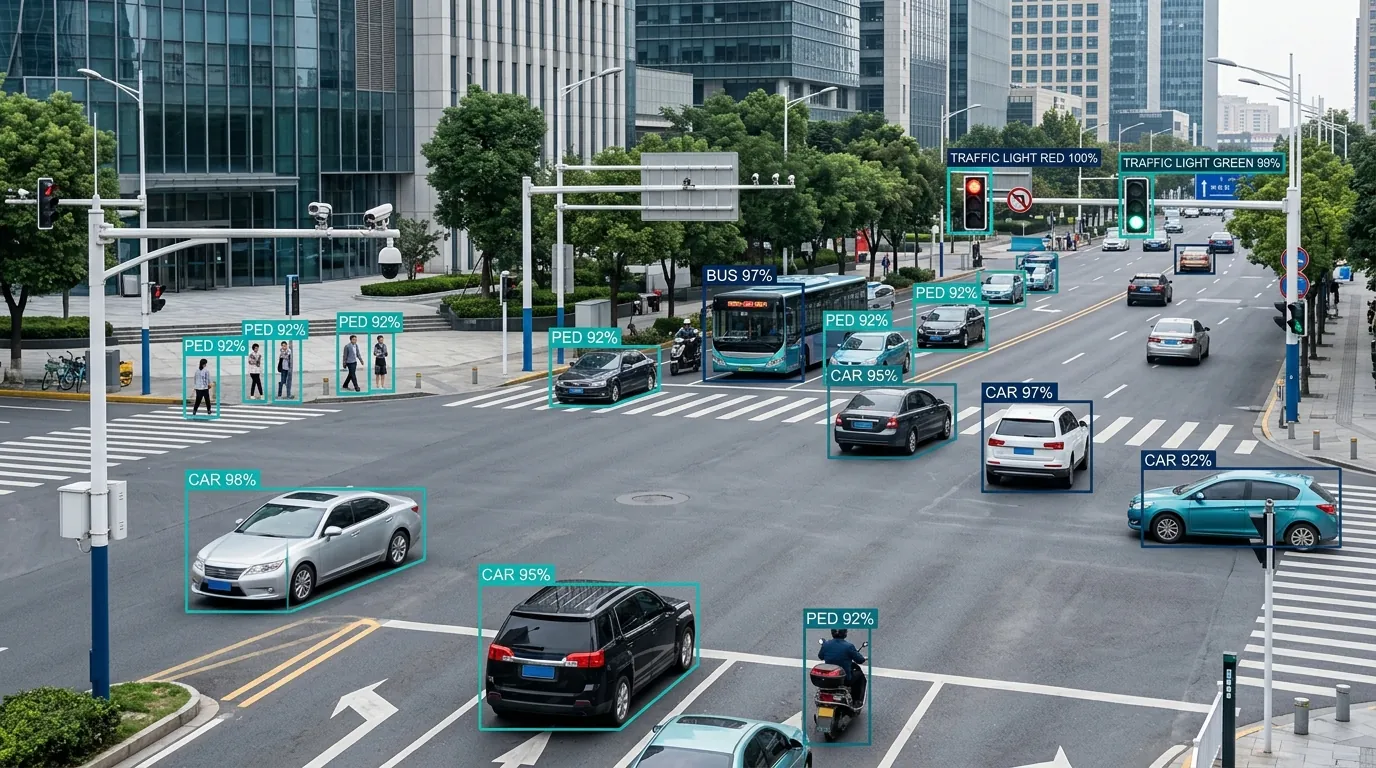

Deploying computer vision pipelines into production environments presents a multifaceted set of challenges that extend far beyond the initial algorithmic design and model training phases. In the realm of enterprise artificial intelligence, computer vision stands out as one of the most computationally demanding and operationally complex domains. As organizations attempt to scale these solutions from isolated proof-of-concept demonstrations to mission-critical operational deployments, they inevitably encounter a series of formidable hurdles. These challenges require a sophisticated, multidisciplinary approach to resolve, encompassing deep expertise in machine learning engineering, data architecture, hardware provisioning, and continuous system monitoring. The transition from controlled laboratory conditions—where datasets are meticulously curated and inference environments are unconstrained—to the chaotic, unpredictable reality of real-world application is fraught with peril. A model that achieves state-of-the-art accuracy on a benchmark dataset may completely falter when exposed to the nuanced variability of an industrial factory floor, a bustling retail environment, or an outdoor surveillance setting subject to changing weather patterns.
While lighting and calibration are major hurdles, we cover those separately in our comprehensive deep dive. For a detailed analysis of environmental illumination and camera optics, please refer to our guide on beyond the algorithm: lighting and camera calibration in computer vision. In this analysis, we will instead focus our attention on the core systemic and architectural challenges that engineering teams must navigate to achieve scalable, reliable, and performant computer vision deployments in the enterprise sector. Specifically, we will explore the pervasive and often insidious problem of dataset bias, the architectural compromises inherent in hardware inference bottlenecks when choosing between edge and cloud computing topologies, the critical necessity of robust edge-case handling for safety and reliability, and the inevitable degradation of model performance over time due to model drift. Understanding and mitigating these primary hurdles is essential for any organization seeking to unlock the transformative business value promised by computer vision technologies.
Key Takeaways
- Dataset bias remains a primary hurdle, requiring robust data augmentation and synthetic data integration.
- Choosing between edge and cloud inference involves architectural compromises regarding latency, bandwidth, and cost.
- Edge-case handling demands uncertainty estimation and system-level fail-safes to ensure production safety.
- Continuous monitoring via MLOps pipelines is vital to detect and mitigate model drift over time.
The Pervasive Challenge of Dataset Bias in Computer Vision
Dataset bias represents one of the most fundamental and pernicious challenges in the development of robust computer vision systems. A machine learning model is inherently a reflection of the data upon which it was trained. When that training data fails to accurately represent the full spectrum of variability present in the target deployment environment, the model's predictive performance will inevitably degrade, often in unpredictable and highly problematic ways. In the context of enterprise computer vision, dataset bias can manifest across numerous dimensions. For instance, an object detection model trained primarily on images captured in brightly lit, uncluttered environments will struggle significantly when deployed to a manufacturing facility characterized by poor illumination, dense machinery, and complex backgrounds. This discrepancy between the training distribution and the inference distribution—often referred to as domain shift—is a primary cause of catastrophic failure in production computer vision systems.
Addressing dataset bias requires a proactive and comprehensive data engineering strategy. It begins with a rigorous analysis of the target operational environment to identify all potential sources of variance. This includes variations in object appearance (scale, rotation, occlusion, deformation), environmental conditions, and sensor characteristics. Once these dimensions of variability are understood, data collection efforts must be carefully orchestrated to ensure adequate representation across all critical strata. However, purely empirical data collection is rarely sufficient to eliminate bias entirely, as the combinatorial explosion of potential environmental conditions makes it impossible to capture every conceivable scenario. Therefore, organizations must employ advanced data augmentation techniques to synthetically expand the diversity of their training datasets. This can involve geometric transformations, color space manipulations, and the application of synthetic noise. Furthermore, the integration of synthetic data generated via advanced rendering engines or generative adversarial networks (GANs) is becoming an increasingly vital strategy for addressing specific data deficits and mitigating bias in long-tail scenarios where collecting real-world data is prohibitively expensive or dangerous.
Beyond data collection and augmentation, the mitigation of dataset bias also requires the implementation of robust evaluation frameworks. Standard aggregate metrics, such as mean average precision (mAP) or overall accuracy, can easily mask significant performance disparities across different subgroups within the data. To truly understand a model's robustness, engineering teams must conduct granular, disaggregated evaluations, analyzing performance across various metadata attributes. For example, a facial recognition system must be rigorously evaluated across diverse demographics to ensure equitable performance and avoid discriminatory outcomes. Similarly, an autonomous navigation system must be tested across a multitude of weather conditions and time-of-day scenarios. The development of specialized benchmark datasets tailored to the specific operational constraints of the enterprise application is critical for providing a reliable assessment of model readiness. Only through this combination of rigorous data curation, advanced augmentation, and disaggregated evaluation can organizations hope to overcome the pervasive challenge of dataset bias and build computer vision systems that perform reliably in the real world.
Hardware Inference Bottlenecks: The Edge Versus Cloud Conundrum
The computational demands of modern deep learning architectures pose a significant challenge when deploying computer vision systems to production. State-of-the-art convolutional neural networks (CNNs) and vision transformers require massive amounts of matrix multiplication operations, translating to substantial requirements for memory bandwidth and processing power. This computational intensity forces enterprise architects to carefully evaluate their inference deployment strategy, balancing the competing demands of latency, bandwidth, privacy, and cost. This evaluation inevitably leads to the complex architectural conundrum of whether to process visual data locally at the edge or to transmit it to centralized cloud infrastructure for inference. Both approaches present distinct advantages and profound challenges, and the optimal solution often involves a hybrid, distributed architecture carefully tailored to the specific constraints of the application.
| Deployment Strategy | Advantages | Disadvantages |
|---|---|---|
| Edge Computing | Ultra-low latency, reduced bandwidth usage, high privacy | Hardware constraints, optimization requirements, complex device management |
| Cloud Computing | High scalability, unlimited computational power, easier model updates | Network latency dependencies, continuous bandwidth costs, privacy concerns |
| Hybrid Approach | Balances edge speed with cloud analytics and retraining | Increased architectural complexity, requires advanced MLOps orchestration |
Cloud-based inference leverages the virtually limitless computational resources of centralized data centers, enabling the deployment of massive, highly accurate models without the constraints of localized hardware limitations. This approach is particularly advantageous for applications that require complex, multi-stage processing pipelines or the aggregation of data from numerous distributed sensors. However, cloud inference introduces significant challenges related to network latency and bandwidth utilization. Transmitting high-resolution video streams from hundreds or thousands of cameras to the cloud requires substantial network infrastructure, incurring significant ongoing operational costs. Furthermore, the round-trip latency associated with cloud processing makes it unsuitable for real-time control applications where immediate response is critical, such as autonomous robotics or high-speed manufacturing inspection. Additionally, transmitting sensitive visual data across public networks raises profound privacy and security concerns, often conflicting with stringent enterprise data governance policies and regional regulatory requirements.
Conversely, edge computing pushes inference capabilities directly to the physical location where the data is generated, utilizing specialized hardware accelerators such as GPUs, TPUs, or custom ASICs deployed on local gateways or directly integrated into smart cameras. Edge inference drastically reduces latency, minimizes bandwidth consumption by transmitting only metadata or aggregated insights rather than raw video, and enhances privacy by keeping sensitive data localized. However, deploying computer vision at the edge introduces substantial hardware bottlenecks. Edge devices operate under strict constraints regarding power consumption, thermal dissipation, and physical form factor. Consequently, deploying state-of-the-art models on edge hardware requires aggressive optimization techniques, such as model quantization, pruning, and knowledge distillation, to reduce the computational footprint without unacceptably compromising accuracy. Managing a fleet of distributed edge devices also introduces profound operational complexities related to provisioning, monitoring, and remote software updates. Navigating this edge versus cloud conundrum requires a deep understanding of the specific application requirements, continuous profiling of hardware performance, and the utilization of sophisticated orchestration frameworks capable of managing distributed inference workloads.
The Unpredictability of Edge-Case Handling in Production
One of the most daunting challenges in enterprise computer vision is the sheer unpredictability of the real world and the subsequent necessity for robust edge-case handling. Machine learning models are fundamentally inductive inference engines; they learn patterns from historical training data and attempt to generalize those patterns to unseen examples. However, the real world is incredibly complex, dynamic, and frequently generates scenarios that lie far outside the distribution of the training dataset. These out-of-distribution (OOD) events, or edge cases, can cause even the most advanced computer vision models to fail in spectacular, unpredictable, and potentially dangerous ways. In a controlled academic setting, an edge case might merely result in a misclassification error. In a mission-critical enterprise deployment, such as autonomous vehicle navigation, automated medical diagnosis, or robotic surgery, a failure to handle an edge case appropriately can have catastrophic consequences.
The challenge of edge cases is exacerbated by the "long tail" nature of real-world data distributions. While the majority of visual encounters might fall into a relatively small number of common, easily recognizable categories, there exists an infinite, long-tail distribution of rare, anomalous, or highly unusual events. Collecting sufficient training data to cover this long tail is practically impossible. Therefore, computer vision systems must be engineered not only to make accurate predictions on common data but also to gracefully handle situations they have never encountered before. This requires the implementation of sophisticated uncertainty estimation techniques. A robust model should output not just a prediction, but a calibrated measure of its confidence in that prediction. When the model encounters an edge case and its confidence drops below a predefined threshold, the system must be capable of recognizing its own uncertainty and triggering appropriate fallback mechanisms. This might involve escalating the decision to a human operator, transitioning to a safe operational state, or requesting additional sensor data.
Implementing effective edge-case handling also demands a rigorous approach to system-level fail-safes and redundancy. Computer vision models should rarely operate in isolation; they must be integrated into broader decision-making architectures that incorporate deterministic logic, traditional sensor fusion, and established safety protocols. For example, an automated guided vehicle (AGV) in a warehouse might rely on computer vision for primary navigation and obstacle avoidance. However, this vision system must be backed up by redundant, deterministic sensors, such as LiDAR or ultrasonic rangefinders, providing a fail-safe mechanism in the event that the vision model encounters a confusing optical illusion, extreme glare, or a highly unusual obstacle. Continuous monitoring and anomaly detection are also critical components of a robust edge-case handling strategy. By continuously analyzing the statistical properties of the input data stream and the model's output distributions, engineering teams can identify novel edge cases as they occur in production, capture the relevant data, and use it to iteratively retrain and improve the model. The ability to gracefully fail, alert operators, and continuously learn from novel situations is what distinguishes a robust enterprise computer vision system from a fragile academic prototype.
Mitigating Model Drift in Dynamic Real-World Environments
A successful computer vision deployment is not a static achievement but a continuous, evolving process. Once a model is deployed into a production environment, its performance is virtually guaranteed to degrade over time. This phenomenon, known as model drift or concept drift, occurs because the statistical properties of the real world are constantly changing, while the model's internal parameters remain fixed to the distribution of the historical data upon which it was trained. In enterprise computer vision applications, model drift can be triggered by a wide variety of factors. Changes in the physical environment, such as seasonal variations, degradation of infrastructure, or modifications to factory layouts, can alter the visual appearance of the target domain. Furthermore, changes in the objects of interest themselves—such as the introduction of new product packaging, variations in manufacturing materials, or evolving fashion trends in retail analytics—can quickly render a previously accurate model obsolete. Failure to proactively monitor and mitigate model drift will inevitably lead to deteriorating system performance, reduced operational efficiency, and a loss of business value.
The first step in mitigating model drift is the implementation of robust, continuous monitoring infrastructure. Engineering teams cannot rely solely on the initial validation metrics obtained prior to deployment; they must establish automated pipelines to track the model's performance on live production data. This involves continuously calculating key performance indicators (KPIs) and comparing them against established baselines. However, in many computer vision applications, obtaining ground-truth labels for live production data in real-time is impossible. Therefore, monitoring strategies must frequently rely on proxy metrics and statistical techniques to detect drift. This can involve monitoring the distribution of the model's confidence scores, analyzing the statistical properties of the extracted feature representations, or employing specialized drift detection algorithms that compare the input data distribution to the original training distribution. When significant deviations are detected, the monitoring system must automatically trigger alerts, initiating an investigation by the engineering team.
Once model drift has been identified, the mitigation process typically involves retraining or fine-tuning the model using newly acquired data that reflects the current operational reality. This requires a highly automated data pipeline capable of continuously ingesting production data, identifying informative samples (e.g., edge cases, low-confidence predictions, or data from new domains), and routing them for manual or semi-automated annotation. The integration of active learning techniques is particularly valuable in this context, allowing the system to intelligently select the most impactful samples for labeling, thereby minimizing annotation costs while maximizing the effectiveness of the retraining process. Furthermore, the deployment of updated models must be managed through rigorous MLOps practices, utilizing techniques such as shadow deployments or A/B testing to ensure that the new model genuinely improves performance without introducing regressions. The mitigation of model drift is an ongoing operational requirement, demanding a paradigm shift from treating model development as a discrete project to managing it as a continuous lifecycle process.
Orchestrating Robust Pipelines for Scalable Enterprise Computer Vision
Successfully navigating the myriad challenges of computer vision deployment—from dataset bias and hardware bottlenecks to edge cases and model drift—ultimately requires the orchestration of robust, scalable, and highly automated pipelines. Enterprise computer vision cannot be managed through ad-hoc scripts and manual processes; it demands a mature, disciplined approach to Machine Learning Operations (MLOps). A comprehensive MLOps infrastructure provides the connective tissue that links data engineering, model training, deployment, and continuous monitoring into a cohesive, iterative lifecycle. This orchestration is essential for ensuring reproducibility, maintaining quality control, and enabling engineering teams to scale their computer vision initiatives across diverse operational domains and hardware environments.
At the core of a robust computer vision pipeline is a centralized, version-controlled repository for both data and models. Data versioning is critical for tracking the lineage of training datasets, ensuring that specific model versions can be traced back to the exact data upon which they were trained. This is essential for debugging performance regressions, ensuring regulatory compliance, and managing the iterative process of dataset augmentation and refinement. Similarly, model versioning allows engineering teams to track experiments, manage hyperparameter configurations, and maintain a history of deployed models, facilitating rapid rollbacks in the event of a catastrophic failure in production. The orchestration pipeline must also automate the complex workflow of model training, evaluation, and packaging, ensuring that models are consistently compiled and optimized for the specific target hardware architecture, whether that is a cloud-based GPU cluster or an ultra-low-power edge device.
The final crucial component of this orchestration is the deployment and monitoring infrastructure. Deploying computer vision models to a distributed fleet of edge devices or a highly scalable cloud microservices architecture requires sophisticated deployment strategies. Containerization technologies, such as Docker, and orchestration platforms, such as Kubernetes, are typically employed to manage the lifecycle of inference services, ensuring high availability, fault tolerance, and dynamic scaling in response to fluctuating workloads. Furthermore, the pipeline must seamlessly integrate with the continuous monitoring systems described previously, closing the loop between production performance and model retraining. By establishing these robust, automated pipelines, organizations can transcend the complexities of isolated technical challenges and build a sustainable, scalable capability for delivering transformative computer vision solutions across the enterprise. The investment in rigorous MLOps orchestration is the foundational requirement for turning theoretical computer vision potential into enduring business reality.
Frequently Asked Questions (FAQ)
What causes dataset bias in computer vision?
Dataset bias occurs when the training data does not accurately reflect the diversity of the real-world environment where the model will be deployed, leading to performance degradation in edge cases.
How can organizations mitigate model drift?
Organizations mitigate model drift by establishing robust MLOps pipelines to continuously monitor performance metrics, identifying deviations, and periodically retraining models with fresh production data.
Is edge computing better than cloud for computer vision?
It depends on the specific use case. Edge computing is superior for low-latency, high-privacy tasks, while cloud computing is better suited for resource-intensive, highly scalable analytical workloads.
Ready to streamline your operations and drive growth? Contact our team today to explore how our advanced solutions can be tailored to your business needs, or discover your potential savings with our ROI Calculator.